










NEW YORK — To the outside world, Mariana and her husband lived an enviable life. Having relocated to New York from Mexico in 2016, her husband secured a position as a highly accomplished director at a multinational firm, providing a comfortable lifestyle filled with material security. Yet behind closed doors, Mariana navigated a starkly different reality, marked by a cycle of sudden and constant anger where she served as the primary target.
For security reasons, her identity has been safeguarded. Mariana, who has spent periods attending psychological therapy to cope with the emotional toll, recalled a recent morning when her husband lost his temper in front of their five-year-old child. The escalation began simply because she stood up from the breakfast table to finish packing their son’s snack for summer camp, an action he perceived as a lack of attention. What followed was a volatile outburst of yelling, punched walls, slammed doors, and a chair violently thrown to the floor.
When she asked him to calm down out of concern for their terrified child, the aggression escalated further. As he left to prepare for work, she grabbed a dress from the laundry room, scooped up her son, and left their home an hour earlier than planned. Later, finding her young son hiding in a corner of his room asking why she was so nervous and in such a hurry, the psychological weight of the situation deepened. She lives with the constant fear that her son is becoming increasingly aware of these episodes.
The stark contrast between her husband’s polished, professional public persona and his behavior at home left her questioning how she remained in the relationship for years, eventually giving up her own professional path.
"I don’t know what crossed my mind to actually stay with him for so long, and on top of everything, give up my own life," Mariana reflected, describing how their dynamic follows a familiar pattern of outbursts, periods of silence, and eventual reconciliation.
Compounding her distress is the reality of her legal status. Mariana’s U.S. visa is entirely tied to her husband’s employment, leaving her feeling trapped, overwhelmed, and uncertain of how to leave the household or whether to return to Mexico. Because he has never physically struck her, she admits the abuse has been more difficult to process.
"I don’t know how, but I’ve adapted to living like this. Maybe because everything material is provided, too," she said. Yet beneath the surface, she recognizes the unsustainability of the dynamic. "Inside, he’s just a fearful boy, dismissed and underestimated by his father. He needs my attention 100% of the time to fill his emotional voids… That’s why I feel this relationship is a dead end."
The Cycle of Domestic Violence and the Vulnerability of Immigrant Latinas
Though Mariana is an educated middle-class woman, she initially found it difficult to classify herself as a victim of abuse. Experts emphasize that such experiences are part of a broader, systemic issue that transcends socioeconomic backgrounds.
Irina Faneite, a psychologist with 18 years of experience in gender-based violence and founder of the Houston-based nonprofit Corazones of Courage Foundation, noted that violence often targets those who initially believed it could never happen to them.
"The truth is it can happen to anyone, really," Faneite said. "In our program, we’ve seen how women who felt very confident in themselves… still ended up in these situations. The problem is that we’re often dealing with a highly manipulative partner, and you get caught in the cycle."
Faneite explained that victims slowly spiral downward as their self-esteem deteriorates, making abuse difficult to identify until it escalates. According to psychological research, victims of domestic violence often return to an abuser multiple times before successfully breaking free.
This dynamic is frequently understood through the framework of the Cycle of Domestic Violence, a concept pioneered by American psychologist Dr. Lenore E. Walker in her 1979 book The Battered Woman. The cycle outlines a predictable pattern that moves from a tension-building phase—where an abuser becomes moody or controlling—to the acute abuse itself, followed by a "honeymoon phase" of apologies, gifts, and promises of change, before a temporary calm precedes the return of tension.
For immigrant Latinas, these psychological barriers are often compounded by cultural, financial, and legal challenges. Faneite pointed to cultural frameworks rooted in machismo, familismo, and marianismo, alongside traditional religious values, which often pressure survivors to endure and remain silent. Furthermore, normalized ideas of romantic love can obscure controlling or jealous behaviors.
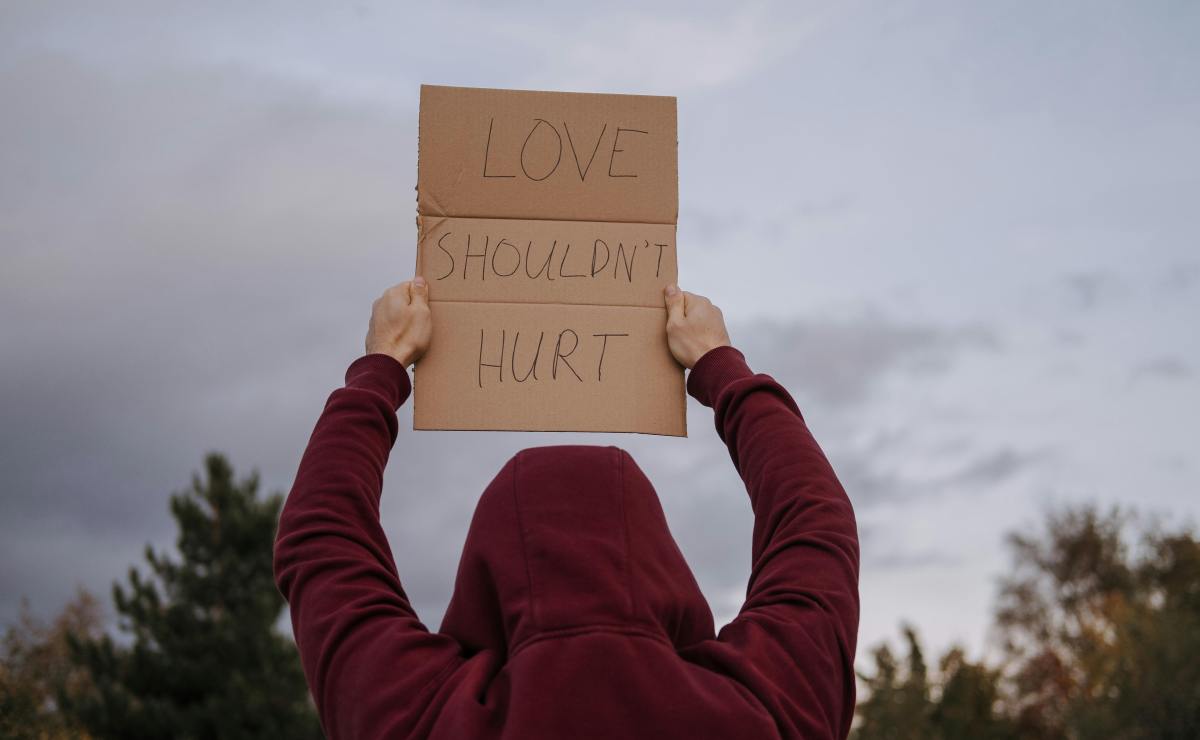
Statistics from the Centers for Disease Control and Prevention (CDC) indicate that approximately 42% of Latinas, or 7.6 million women, experience sexual violence, physical violence, or stalking by an intimate partner in their lifetime. Research also shows that domestic violence recurrence rates among Latinx couples can reach up to 59%, compared to 37% for white couples.
Immigrant survivors face unique hurdles, including language barriers, a lack of health care insurance, and profound fears of deportation. Abusive partners frequently exploit these vulnerabilities, using immigration status and the threat of child custody separation as control tactics. According to data from the nonprofit Esperanza United and other regional studies, Latina and Black survivors are statistically less likely to seek mental health services or institutional help compared to their white counterparts, driven by historical trauma, discrimination, and distrust of service providers.
Alicia Martínez and Her Fight for Freedom
Despite these formidable obstacles, advocates stress that breaking the cycle is possible with community support, legal resources, and resilience. One prominent example is Alicia Martínez, a Mexican immigrant whose journey through severe gender-based abuse ultimately led her to legal residency and advocacy.
"I’m grateful to be alive to tell my story. Others don’t survive," Martínez said in a phone interview from Sacramento, California.
Martínez originally arrived in the United States in November 2001 after meeting a dual U.S. and Mexican citizen who pursued her in Mexico. Trusting his promises of marriage and a shared life in California, she agreed to enter the country unconventionally after he claimed standard paperwork would take too long.
Upon arrival, the situation deteriorated rapidly. She was frequently isolated and locked inside empty homes without food while her husband was away. Subjected to severe psychological and physical control—including a coerced medical procedure and unprescribed medication—she eventually discovered she had been trafficked for sexual purposes after being brought to a gathering under false pretenses.
Her escape came after she managed to contact her sister in Sacramento while locked inside an office in Fresno. While searching for an address to give her sister, Martínez found a document from U.S. Citizenship and Immigration Services (USCIS) indicating her status was tied to a K-1 fiancé visa rather than a spousal petition, confirming her marriage had been a sham. She dialed the helpline listed on the paperwork to report that she was being held captive and unable to speak English, leading to her rescue by law enforcement.
Years later, after navigating a subsequent abusive relationship with a second partner involving economic and physical control, Martínez sought assistance through the nonprofit organization Mil Mujeres, which provides legal services and advocacy for immigrant women facing domestic and gender-based violence.
Johanna Fonseca, attorney and CEO of Mil Mujeres, emphasized the organization’s comprehensive approach to addressing the multifaceted needs of survivors, ranging from legal aid and emergency shelter referrals to emotional therapy and language classes. Fonseca noted that the organization’s staff is predominantly Latinx and immigrant, creating a culturally attuned environment where survivors feel safe to seek help.
With legal assistance supported by the Mexican Consulate and Mil Mujeres, Martínez successfully secured her green card through the Violence Against Women Act (VAWA), a federal statute allowing certain survivors of domestic violence to self-petition for legal status independently of an abusive partner. Today, Martínez shares her story publicly to encourage other women facing similar circumstances.
Speaking Up as the First Step
For organizations working directly with vulnerable communities, the primary message to survivors remains focused on overcoming isolation and seeking help, despite the fear involved.
"I would like to tell the women suffering violence to dare break the silence. I wouldn’t tell them not to be afraid, because fear will be there," Fonseca said. "However, if you are afraid, do it afraid. Get informed. It’s a long process, but it is possible to get out."