





As Argentine football legend Lionel Messi draws ever closer to his much-anticipated farewell from the national team, a whole generation of fans must come to terms with the impending loss of a talisman who has been a ubiquitous presence on the pitch for nearly twenty years. For millions around the globe and across Argentina, the national team without Messi feels almost unimaginable—a permanent fixture of modern football preparing to turn the page.
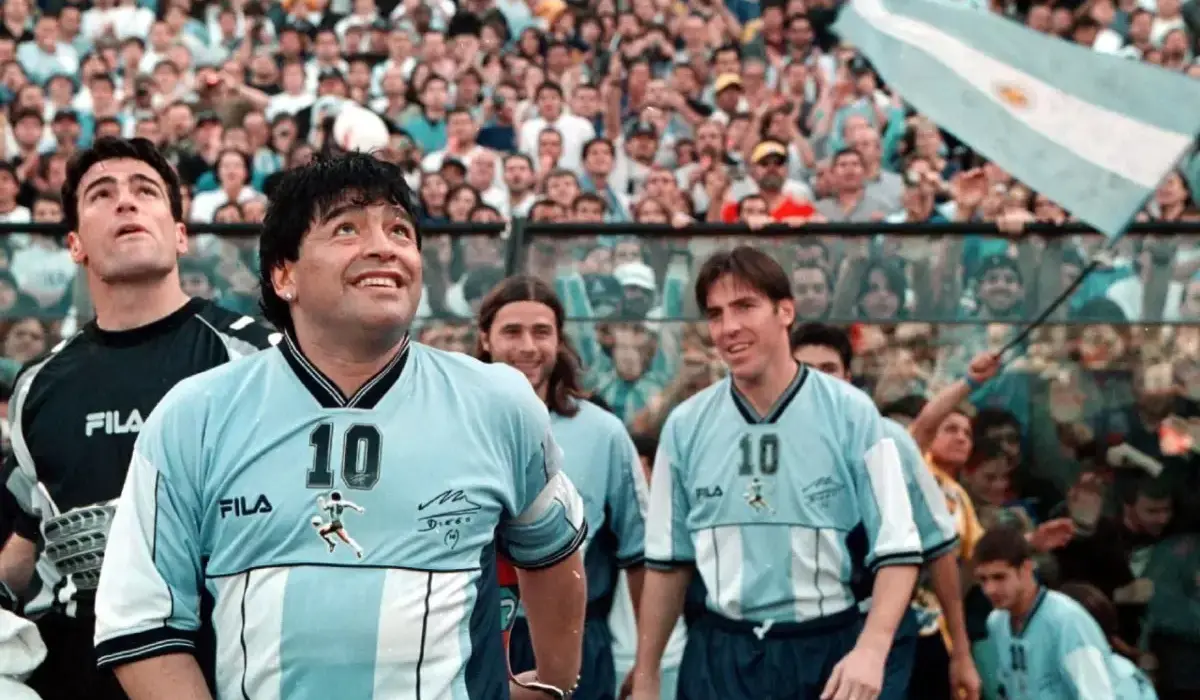
Yet, for older generations of Argentine supporters, this bittersweet sensation feels all too familiar. Less than twenty-five years ago, Diego Maradona—the iconic figure who defined the sacred Argentine No. 10 shirt long before Messi made it his own—bid his final emotional farewell not just to the Albiceleste, but to the sport of professional football as a whole.
With the Rosario-born star’s eventual bow out slated to rank among the most momentous sporting events of the year, it is a fitting moment to look back at the last time Argentine football bid farewell to its greatest historical star, alongside a series of other legendary sendoffs that have etched themselves into the collective memory of South American sports culture.
Not a Farewell
Messi’s eventual farewell to the national team will likely unfold much like the vast majority of milestones throughout his illustrious career: clean, sharp, and orderly. The Rosario-born maestro has made a lifetime habit of precision and perfection on and off the pitch. By contrast, Diego Maradona’s farewell to the game was anything but smooth, mirroring the turbulent, passionate, and often chaotic trajectory of his extraordinary life.
At the age of 41, El Diez was not significantly older than Messi will be when he dons the famous blue and white stripes for the final time. However, the tumultuous final chapters of Maradona’s career ensured that his exit from the professional game would be anything but a quiet sail into the horizon.
Following a high-profile suspension stemming from a doping case at the 1994 FIFA World Cup in the United States, Maradona made a dramatic return to Boca Juniors in 1995. His comeback was marked by middling individual performances, frequent battles with injuries, and an ongoing, highly publicized feud with club president Mauricio Macri. Just days away from turning 37, Maradona ultimately decided to hang up his boots following a fiercely contested Super clásico match against arch-rivals River Plate, a fixture in which he managed to play only the first half before being substituted.
After surviving a near-death health scare in January 2000 involving an overdose-induced heart failure, and subsequently undergoing an intensive rehabilitation process in Cuba, a formal farewell game was officially announced for November 20, 2001. Even then, the event resisted standard categorization; it could not truly be called a straightforward competitive farewell. Instead, Maradona’s inner circle and organizers insisted on framing the occasion as a grand "tribute match" to celebrate his peerless contribution to the sport.
The match, hosted passionately at Boca Juniors’ legendary home ground, La Bombonera Stadium, featured Maradona leading an Argentina selection comprised of many of the nation’s brightest stars of that era. Players such as playmaker Pablo Aimar, defensive stalwart Javier Zanetti, and midfield general Juan Sebastián Verón lined up alongside their idol to take on a carefully curated team of international icons from across the globe.
Standing opposite them was a squad featuring some of the most recognizable and gifted names in international football history. The global selection included Germany’s legendary midfielder Lothar Matthäus, Colombia’s charismatic playmaker Carlos Valderrama, Bulgaria’s lethal forward Hristo Stoichkov, and France’s enigmatic talisman Eric Cantona. Ironically, the very man destined to succeed Maradona as Boca Juniors’ iconic No. 10, Juan Román Riquelme, played that day for the Rest of the World team, primarily because he was not yet a regular fixture in the tactical plans of then-Argentina head coach Marcelo Bielsa.
The match itself was a quintessential Maradona-esque spectacle that had a little bit of everything. It featured unforgettable moments, such as Colombian eccentric goalkeeper René Higuita thwarting a long-range effort from Maradona by executing his trademark, gravity-defying airborne "scorpion kick" save. In a bizarre twist of stadium chaos, Argentine rock music legend Charly García somehow managed to get lost within the sprawling bowels of La Bombonera and accidentally wandered out onto the pitch mid-match to the roaring adulation of the bewildered fans. Meanwhile, Brazilian football immortal Pelé watched the proceedings and waved to the crowd from an executive box, only to be met with loud boos from the fiercely partisan home supporters.
Following the conclusion of the match, Maradona took center stage on the pitch to deliver what has since become one of the most unforgettable, emotionally raw speeches in the history of Argentine sports. In a dramatic gesture, he removed his Argentina shirt to reveal a classic Boca Juniors kit underneath, bearing Juan Román Riquelme’s name and number on the back.
"Football is the most beautiful, most pure sport in the world. Let there be no doubt about that," Maradona declared to a spellbound stadium. "Just because someone makes a mistake doesn’t mean football should pay the price. I made a mistake and paid for it, but the game remains untainted."
International Stars and a Gifted Goalpost
Maradona was hardly the sole footballing icon in Argentina’s storied history to receive a grand, historic sendoff from adoring fans. While none quite matched the sheer cultural magnitude and global spectacle of El Diez’s tribute match, the decades have yielded plenty of deeply emotional, tear-inducing moments for other domestic heroes.
The modern tradition of the grand Argentine club farewell arguably began with River Plate legend Norberto Alonso. On June 13, 1987, the creative heartbeat and tactical inspiration behind the Millonarios’ historic 1986 Copa Libertadores and Intercontinental Cup double stepped onto the hallowed turf of the Monumental stadium for one final time, performing in front of a capacity crowd of 80,000 roaring supporters.
"It was the first and only match where my legs were shaking," Alonso recalled years later when reflecting on the magnitude of the evening. "Seeing the stadium completely packed from end to end when I emerged from the tunnel was something truly breathtaking."
Decades later, on February 4, 2012, La Bombonera prepared to bid a formal farewell to another of Boca Juniors’ most beloved and prolific modern icons: Martín Palermo. As the undisputed top goalscorer in the history of Boca Juniors, Palermo netted an astonishing 236 goals across 404 official matches, helping the club secure 13 major titles, including two Copa Libertadores crowns and one Intercontinental Cup.
However, perhaps the single most emotionally resonant tribute of Palermo’s career occurred several months earlier, on June 12, 2011. Following his final official professional appearance with the Xeneize, the legendary striker was brought entirely to tears on the pitch as tens of thousands of Boca fans unified in a deafening, rhythmic chant of their historic tribute song: "Thank you Palermo, thank you, Palermo."
That memorable day, the club’s administration surprised the retiring forward by presenting him with one of the stadium’s actual goalposts as a permanent farewell gift—a massive piece of club history that now proudly sits at a sports complex owned by Palermo in his native city of La Plata.
More recently, the tradition of legendary sendoffs continued on June 25, 2023, with the long-awaited and emotionally charged official farewell for Juan Román Riquelme. With Lionel Messi himself gracing the pitch alongside a veritable galaxy of former Boca Juniors legends, Riquelme—who had officially retired from professional football a decade prior—waved an emotional goodbye to a completely packed La Bombonera. In a touching display of mutual respect, Riquelme mirrored the gesture Maradona had made toward him more than twenty years earlier, removing his shirt to reveal one bearing El Diez’s immortal name and number on the back, bridging generations of Argentine football royalty.