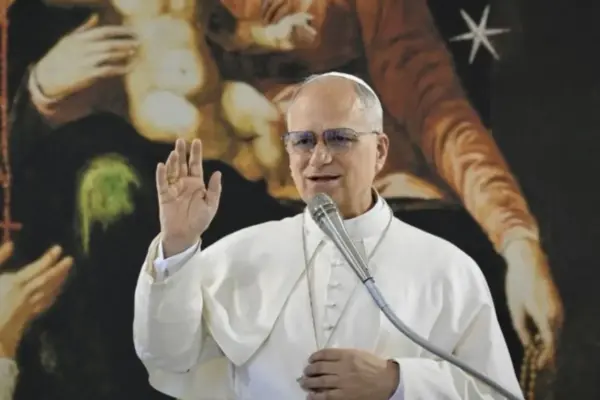








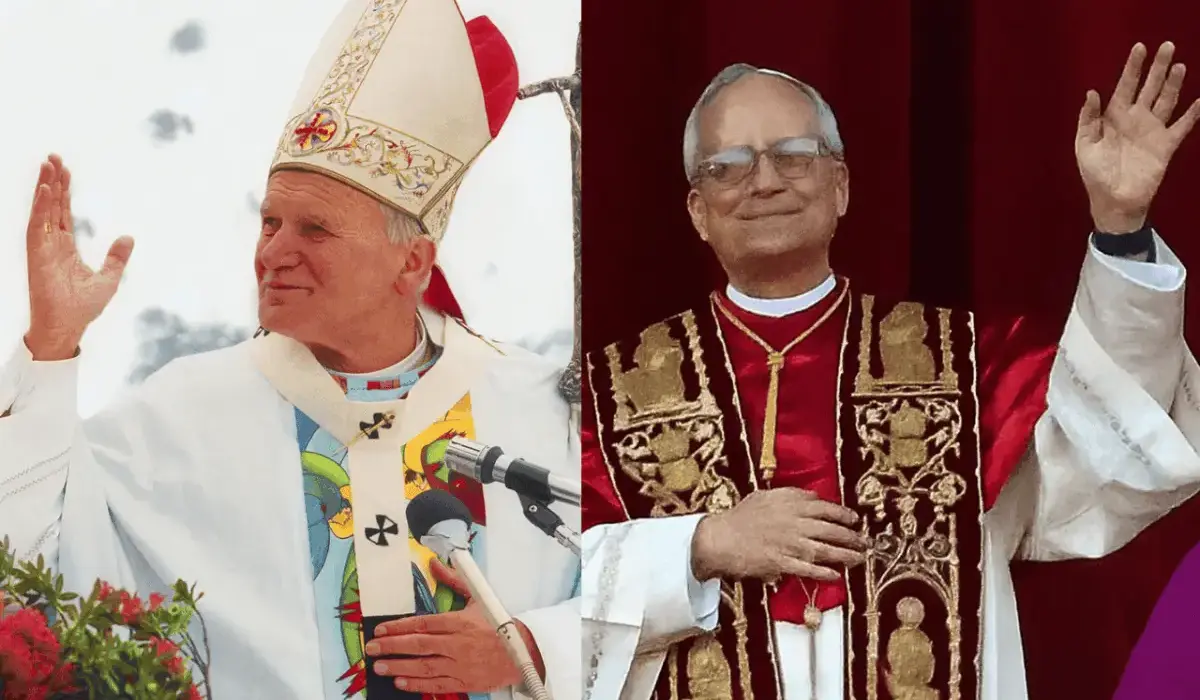
When Pope Leo XIV steps onto Argentine soil on November 8, he will achieve a rare distinction in modern ecclesiastical history, becoming only the second pontiff ever to visit the South American nation. The weight of this upcoming journey brings into sharp focus a rich historical tapestry, inviting comparisons to the only previous papal visits—those made by John Paul II during the turbulent decades of the 1980s.
While John Paul II’s historic arrivals unfolded against vastly different and often volatile political backdrops, Pope Leo XIV will encounter a nation that has evolved significantly over the decades. For the first time in its modern historical memory, Argentina is not recovering from a direct armed conflict and recently celebrated 40 consecutive years of uninterrupted democratic rule in 2023. Concurrently, demographic data reveals that while Catholicism remains an integral anchor of Argentine cultural identity, it no longer commands the absolute, undisputed driving force it once held in public life. Yet, enduring systemic challenges persist, most notably the nation’s chronic economic struggles, which continue to dominate daily headlines and shape the socio-political climate.
War and a Nascent Democracy Under Pressure
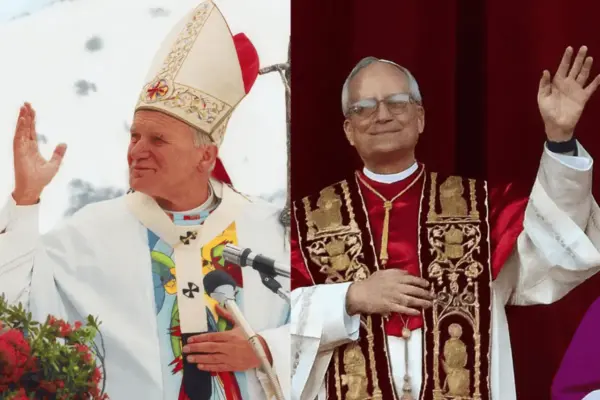
To understand the weight of a papal visit to Argentina, historians often look back to June 11, 1982. Karol Wojtyla arrived in Buenos Aires carrying the mantle of a self-described "messenger of peace," stepping into a nation embroiled in the bitter South Atlantic conflict over the Malvinas Islands. The visit had been hastily arranged to avoid any perception of political favoritism, as a journey to Great Britain was already locked into the pontiff’s schedule.
During that high-stakes, 30-hour peace pilgrimage, John Paul II held private discussions with military dictator Leopoldo Galtieri and delivered an outdoor mass witnessed by an estimated two million people. He also sought spiritual refuge at the Basilica of Our Lady of Luján, the nation’s premier Marian shrine situated in Buenos Aires province. Just two days after his departure, Argentine forces surrendered, etching the visit deeply into the national consciousness.
Five years later, John Paul II returned for a much more extensive seven-day journey from April 6 to 12, 1987. This second visit is permanently woven into Argentina’s collective memory, spanning ten cities from Buenos Aires to Salta, Mendoza, and Viedma, drawing massive, emotional crowds at every stop. President Raúl Alfonsín had been leading the country for just over three years, steering a delicate transition following the darkest and most vicious dictatorship in modern Argentine history. For a populace scarred by years of state repression, forced disappearances, and aggressive censorship, the restoration of democracy carried immense moral resonance.
However, the prevailing optimism of the era was already fraying by the time the Polish pontiff departed. On April 15, 1987—merely three days after John Paul II left the country—a military uprising erupted at the Campo de Mayo base. Led by insurgent military officers known as the carapintadas (painted faces), the rebellion exposed the alarming fragility of civilian oversight over the armed forces and became one of the defining political crises of Alfonsín’s administration.

When Pope Leo XIV arrives for his scheduled November 8 to 11 itinerary—which features key stops in Buenos Aires City, Córdoba, and Luján—he will enter a country where democratic institutions are thoroughly entrenched. Even so, ghosts of the past linger in a different form. Inflation, escalating economic hardships, and persistent labor unrest, which steadily eroded Alfonsín’s political capital in the late 1980s, remain front-and-center concerns for contemporary Argentines.
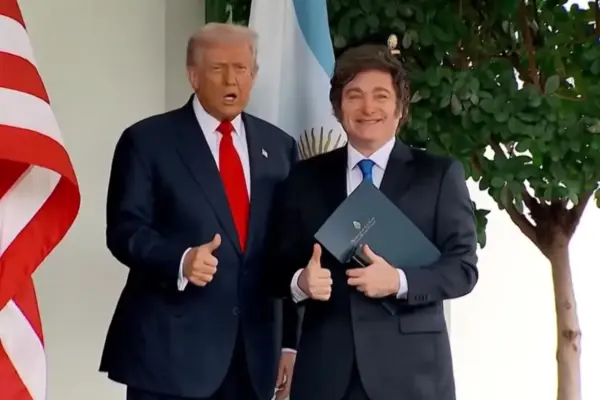
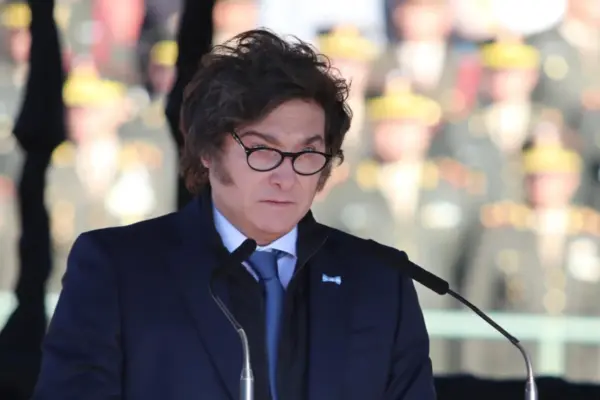
When President Javier Milei assumed office in late 2023 on a bold platform designed to radically slash the state’s footprint in the economy, annual inflation was running at a staggering rate exceeding 200%. Although his aggressive austerity program has successfully reined in headline inflation figures, it has simultaneously introduced profound social costs, drawing sharp and vocal criticism from the Catholic Church.
Economic Measures and Social Costs
President Milei’s electoral platform promised that the fiscal adjustment would fall squarely on the shoulders of the traditional "political caste." In practice, however, vulnerable segments of society—including pensioners, public-sector workers, public universities, and individuals living with disabilities—have shouldered a disproportionate share of the burden.
At the same time, falling purchasing power, driven higher by steep increases in utility tariffs, public transportation fares, and gasoline prices, has severely compressed domestic consumption and ordinary household budgets.
Buenos Aires City Archbishop Jorge García Cuerva has repeatedly used his platform to spotlight the human cost of these sweeping economic adjustments on marginalized populations. Without directly naming the president, the archbishop has also publicly criticized the administration’s confrontational rhetoric.
As preparations for Pope Leo XIV’s visit advance—including a highly anticipated bilateral meeting with President Milei—the Herald spoke with Father Máximo Jurcinovic, spokesperson for the Argentine Episcopal Conference, regarding the delicate balance the Church must strike. Observers have questioned whether the institution can maintain a functional, cooperative relationship with the sitting government while simultaneously advocating for citizens battered by austerity policies.
"Naturally, the Church can maintain a constructive relationship with the government at this time, as we are working toward a shared goal: the pope’s visit. At the same time, the Church remains free to continue its own mission and preaching," Jurcinovic stated.

"The fundamental role of the Church is always to shed light on reality through the lens of the Gospel, not to engage in partisan politics. Consequently, with this administration, just as with many others, we have sought to foster a relationship characterized by both complementarity and autonomy, in keeping with the Church’s principles."
Are Argentines Still Catholic?
While systematic national surveys tracking religious affiliation were sparse during John Paul II’s 1980s visits, available historical data indicates that Catholicism held a far more dominant, unchallenged position in Argentina’s public identity than it does today. The final national census to incorporate a direct inquiry regarding religion took place in 1960, at which time an overwhelming 90% of the population identified as Catholic.
While the Church continues to exercise considerable cultural and moral authority, the religious landscape has undergone a profound transformation. According to the National Survey of Religious Beliefs and Attitudes, carried out by researchers at the National Scientific and Technical Research Council (CONICET) across 2008 and 2019, the proportion of Argentines identifying as Catholic declined from 76.5% to 62.9%.
Over that exact same timeframe, the percentage of individuals reporting no religious affiliation climbed from 11.3% to 18.9%, while those identifying as evangelical Protestants grew from 9% to 15.3%. These trends were further reinforced by a 2024 Pew Research Center study, which reported that 58% of Argentine adults identified as Catholic—a notable drop from the 71% recorded in 2013–2014. Concurrently, citizens identifying as religiously unaffiliated more than doubled, reaching 24%.
When asked whether the Argentine Church anticipates that Pope Leo XIV’s visit might reverse these trends and draw disengaged individuals back into active religious practice, the Episcopal Conference spokesperson offered a broader perspective.
"We firmly believe that the visit of Pope Leo—in his capacity as the Supreme Pontiff—will renew our faith. Anyone who observes Pope Leo’s preaching and considers the impact of his latest encyclical can see that his message is not intended solely for those who actively practice their religion but for everyone," Jurcinovic explained.
At the same time, the spokesperson pushed back against the narrative that the country’s Catholic identity is in terminal decline. "We do not see a declining percentage of individuals who identify as Catholic. In our communities, we continue to see young people and families who are still having their children baptized," he noted.

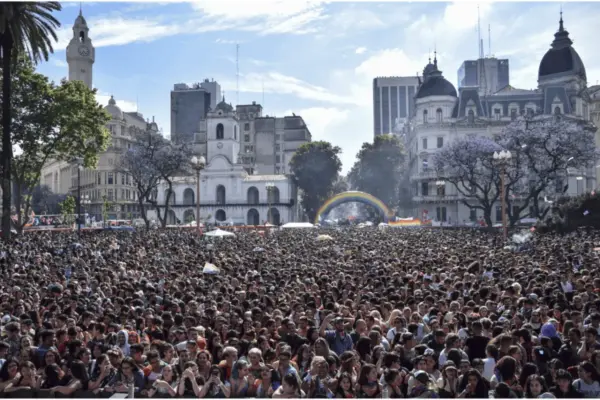
"While their relationship with the Church may be less institutional, our people are a people of faith, as we have just witnessed with the more than two and a half million people who took part in the pilgrimage to Luján," he added, pointing to massive turnouts at shrines nationwide as evidence of enduring spiritual devotion. "It is highly likely that the pope will be met by a great multitude, as we frequently see such large gatherings at many of our faith-based events."
From a Polish Pontiff to an Argentine Pope’s Successor
Beyond the religious and sociopolitical dimensions, the upcoming visit carries immense emotional significance for millions of Argentines. For years, a quiet sense of disappointment lingered over the country due to the fact that Leo’s predecessor, Francis—the first pontiff in history born in Argentina—never once returned to his homeland during his 12-year papacy. Francis’s historic ascension gave Argentina an unprecedented place in the global Catholic imagination, making his absence from domestic soil a frequent topic of public discussion and quiet sorrow.
Pope Leo XIV, elected in May 2025, arrives as Francis’s direct successor. Born Robert Prevost in the United States, Leo shares the distinction of being only the second pontiff from the Americas. Many theological and political observers anticipate that Leo will consciously sustain the core pastoral priorities championed by Francis throughout his tenure.
That continuity is expected to be visibly reflected not only in Leo’s high-level engagements with political leaders and civil society representatives, but also in his carefully chosen itinerary. Planned stops include the Cottolengo Don Orione—an institution providing specialized care and permanent housing for individuals with severe physical and intellectual disabilities—as well as a correctional facility, alongside dedicated gatherings with youth and local workers.
These symbolic stops are widely viewed as offering clear indications of how the new pontiff intends to approach pressing modern dilemmas: structural inequality, social cohesion, environmental stewardship, and the ethical responsibilities of governance. These were the defining themes of Francis’s papacy, and they remain intensely relevant to the daily reality of contemporary Argentina.