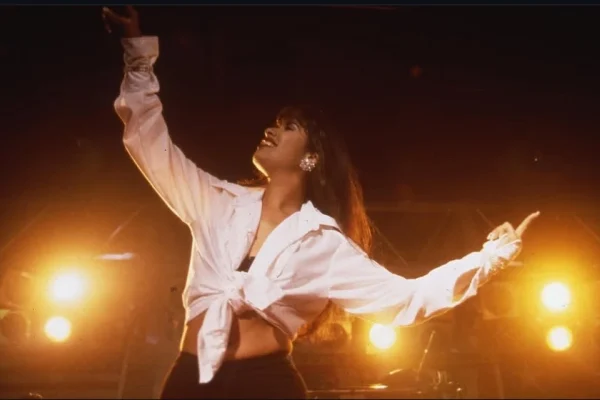








The song offers a fascinating glimpse into a formative era for the legendary singer, illustrating a time of youthful discovery, relentless perseverance, and a working-class family whose exceptional resourcefulness extended far beyond the stage and straight into their wardrobe. In 1985, Selena y Los Dinos stepped onto the set of The Johnny Canales Show to perform “Oh Mamá,” marking an early and crucial introduction for television audiences to the burgeoning star. At the time, the glittering, highly stylized performance costumes that would later become synonymous with her signature fashion aesthetic were still years away. Instead, Selena and her bandmates appeared in matching white outfits that had been dramatically splattered with paint. Unable to afford high-end designer stage clothes in the early days of their career, the family took matters into their own hands, creatively decorating the garments themselves to transform simple, everyday clothing into something vibrant, striking, and unmistakably their own. This DIY approach reflected the broader reality of Selena y Los Dinos during those formative years: a family enterprise built on grit, imagination, and an unwavering commitment to making an impression, no matter how modest their initial resources might have been.
The significance of “Oh Mamá” stretches deep into the timeline of the artist’s early catalog. In a poignant 1995 interview with renowned television host Don Francisco on the wildly popular Univision variety program Sábado Gigante, Selena reflected on her rich history in the music industry and singled out “Oh Mamá” as the very first song she ever recorded. This recording timeline predates its prominent television broadcast; the self-titled debut album of Selena y Los Dinos was released in 1984, laying the groundwork for subsequent television appearances like their memorable 1985 set on The Johnny Canales Show.
A full decade after those early days of regional touring and television spots, Selena sat down with Don Francisco on Sábado Gigante to look back on the remarkable path that had brought her to international stardom. During the 1995 interview, she opened up about the deeply personal challenges and triumphs of her upbringing, discussing how she began singing as a young child under the meticulous guidance and vision of her father, Abraham Quintanilla Jr. She also spoke candidly about the process of learning Spanish specifically for her music—a linguistic and cultural bridge-building effort that ultimately helped shape her into the quintessential Mexican American artist that millions of fans across generations came to know, love, and deeply identify with.
From its earliest inception, Selena’s career was fundamentally a family undertaking. Her siblings were by her side every step of the way, with her sister Suzette Quintanilla holding down the rhythm on the drums and her brother A.B. Quintanilla III laying down the basslines and eventually writing and producing many of the group’s future chart-topping hits. Together, alongside their father and the various musicians who cycled through the band, Selena y Los Dinos traversed the grueling Texas highway system, performing at weddings, quinceañeras, local fairs, and Tejano clubs where female artists were rarely given the spotlight. Through sheer talent, charisma, and relentless touring, they steadily built a devoted fan base that eventually allowed Selena to break out of the regional circuit and expand her influence far beyond the traditional boundaries of the Tejano music scene, capturing the hearts of mainstream listeners across the United States, Mexico, and Latin America.
The trajectory of Selena’s extraordinary life and career was tragically cut short when she was killed on March 31, 1995, at the tender age of 23 in Corpus Christi, Texas. Her untimely passing sent shockwaves through the global music community, prompting an outpouring of grief and cementing her status as a cultural icon whose influence has only grown in the decades since her passing. Yet, even as retrospectives frequently focus on her massive crossover hits, posthumous honors, and enduring status as a fashion and musical pioneer, revisiting a piece like “Oh Mamá” brings the focus back to where it all began. It serves as a lasting reminder of the humble roots of a young singer navigating her first time in a recording studio, supported by a close-knit family band, wearing paint-splattered outfits designed to stand out under the harsh lights of a local television studio. Long before the global superstardom, the posthumous albums, the biographical films, and the countless cultural tributes, there was already an unmistakably gifted performer on stage, entirely determined to make an impression on the world.