





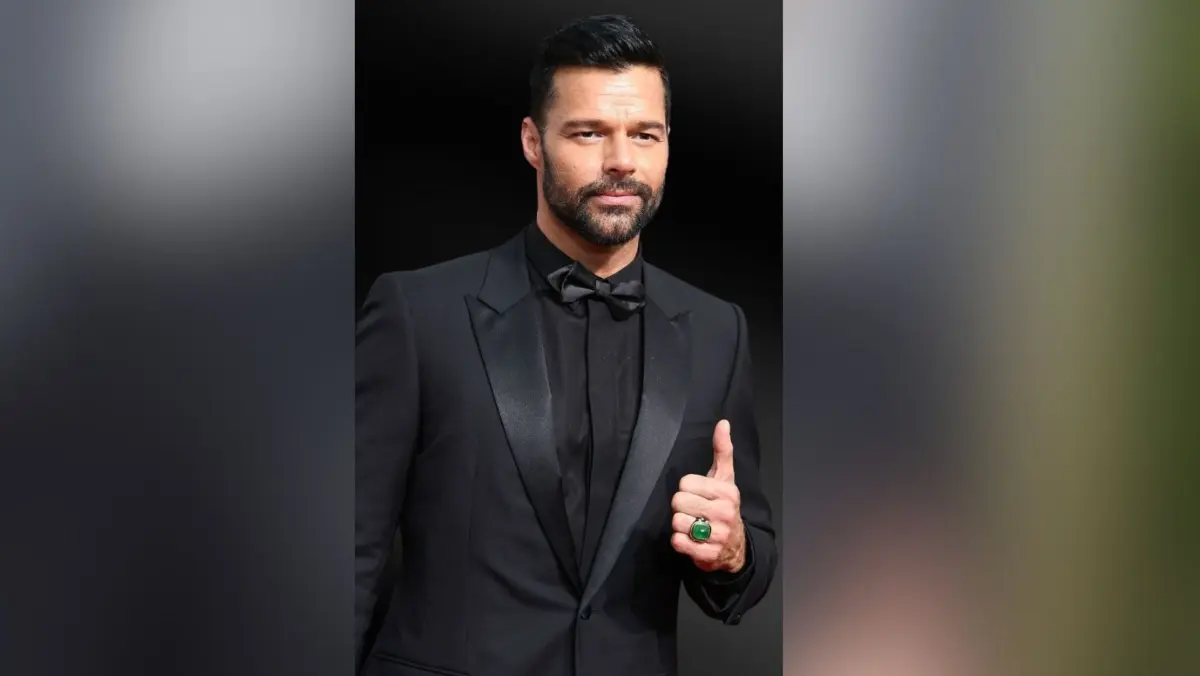
The 83rd Venice Film Festival has brought together some of the most anticipated cinematic projects of the year, and among its notable out-of-competition screenings is Hombre al Agua, the latest directorial effort from acclaimed Mexican filmmaker and actor Gael García Bernal. Held against the historic backdrop of the Venice Lido during the Mostra—which runs from September 2nd through September 12th—the festival has served as a gathering point for a diverse array of international talent. Among the notable names gracing the festival circuit this year is Puerto Rican singer and actor Ricky Martin, who joined the cast of García Bernal’s new film to present a project that leans heavily into meta-narrative, identity, and performance.
At 54 years old, Martin arrived in Venice as part of an ensemble that brings together heavyweights from across the Spanish-speaking film world. Also present at the festival are Penélope Cruz and Javier Bardem, who are competing with their own film, Bunker. Yet, it was Martin’s reflective presence and his distinct role in Hombre al Agua that drew considerable attention from international media. Sitting down with the Spanish news agency EFE during the festival, the multifaceted artist spoke with an openness that has increasingly defined how he approaches his creative life. Describing storytelling as his ultimate refuge, Martin explained that it remains the place where he feels most fundamentally himself, regardless of whether he is working in music, television, film, or literature.
Hombre al Agua weaves a complex narrative centering on a Cuban lifeguard whose life undergoes a dramatic transformation after he rescues a wealthy Mexican businessman. The lifeguard eventually goes to work for the businessman and marries his daughter, only to discover that his seemingly idyllic new reality is not entirely what it appears to be. Gael García Bernal steps in front of the camera to star as the lifeguard, anchoring the narrative’s emotional core. Meanwhile, Martin takes on a fascinating supporting role, portraying an actor hired by the protagonist’s wife to play her husband in a biographical production functioning as a film within the film. This layered concept aligns neatly with Martin’s longstanding appreciation for work that allows performers to play simultaneously with identity, illusion, and public perception.
The Role That Only Took One Day to Film
Despite the thematic complexity of Hombre al Agua, Martin’s contribution to the production was remarkably concise. The singer and actor completed all of his scenes for the film in a single day of shooting. Rather than diminishing his connection to the project, the brevity of the shoot seems to have left a lasting positive impression, which he spoke about with palpable enthusiasm. He characterized the film as genuinely fun to make and praised Gael García Bernal’s leadership as a director, crediting him with creating an environment that encourages actors to play and contribute their own creative energy while maintaining the structural discipline necessary to keep production moving smoothly.
When asked about the initial invitation to join the project, Martin indicated that the decision required very little deliberation, describing it as an opportunity he would never have considered turning down. Furthermore, he noted that the film continues to reveal new dimensions upon repeated viewing, suggesting that the intricate layers built into the narrative offer a richness that simpler productions often lack. For an artist who has spent three decades navigating the rigorous demands of the global music industry, television, and film across multiple languages and markets, the ability to instantly recognize a project with such narrative depth—and to say yes to it without hesitation—is a skill he has carefully cultivated over the years.
Storytelling as the Thread That Runs Through Everything
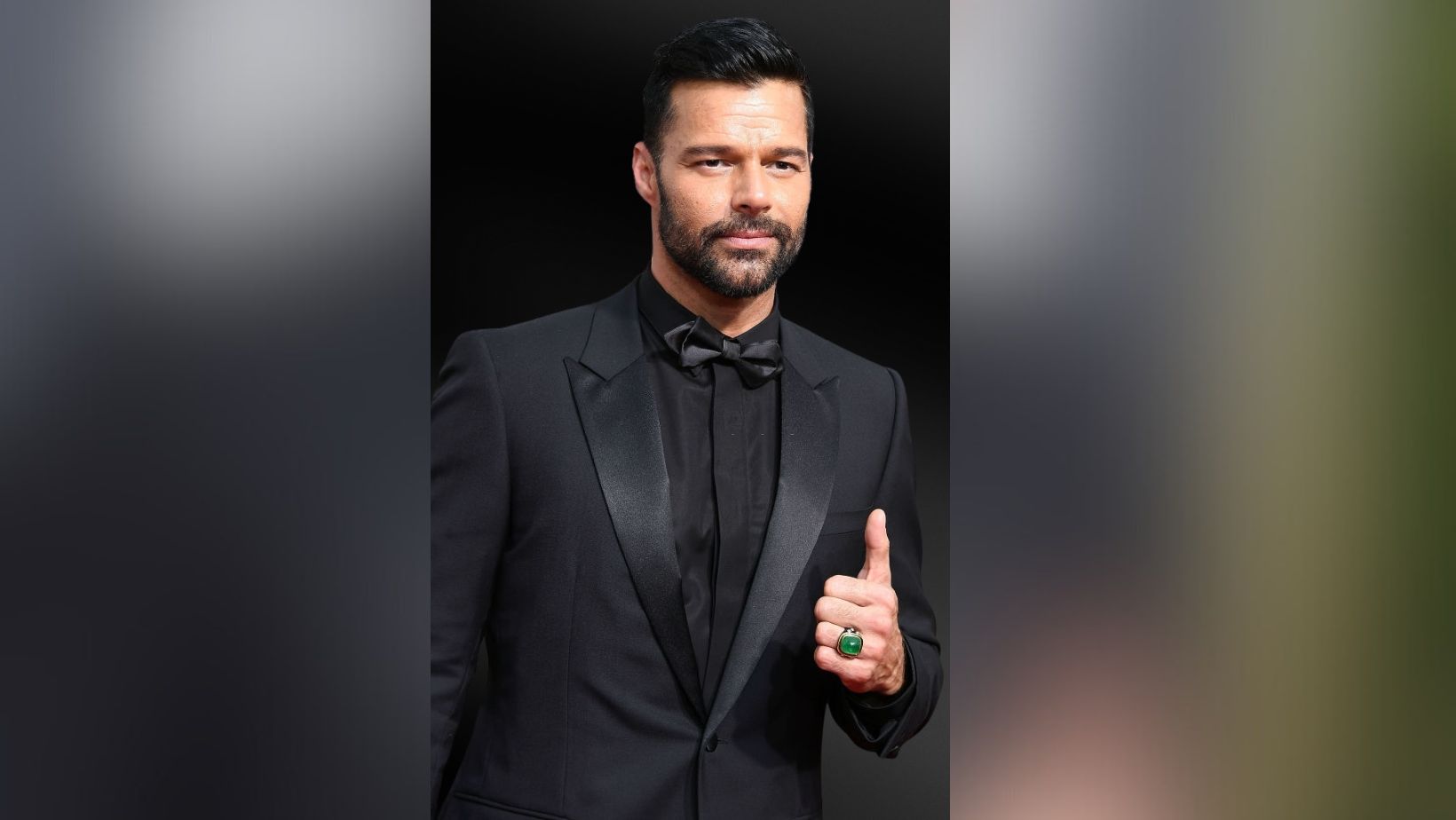
To fully understand Martin’s diverse career trajectory, which has spanned decades and crossed numerous artistic boundaries, one must examine his perspective on storytelling as the central thread connecting all of his creative endeavors. During his conversation with EFE, he emphasized that finding vulnerability is the key to convincing an audience of something lived or witnessed. Rather than viewing performance purely as a mechanism for entertainment, he expressed a desire to spark genuine conversation through that shared vulnerability.
As the creative force behind global pop anthems such as “María,” “La Copa de la Vida,” and “Livin’ la Vida Loca,” Martin has spent much of his adult life demonstrating through his artistic choices that his ambitions extend far beyond pop stardom. His appearance at the Venice Film Festival alongside García Bernal serves as yet another clear data point in that ongoing evolution.
Martin elaborated on his creative philosophy by expressing a continuous desire to seek out stories, create them, and make other people’s narratives his own. He treats music, film, theater, and literature not as mutually exclusive silos, but as equally valid containers for the same fundamental human impulse. Whether writing books, stepping onto the theatrical stage, or accepting unique film roles, these diverse pursuits all feed the same creative hunger. Martin speaks about this continuity with an ease that suggests he stopped needing to justify the broad range of his interests a long time ago, viewing his multidisciplinary approach as a natural expression of who he is as an artist.
On Parenthood and Staying Open
One of the most reflective moments of Martin’s dialogue with EFE centered on the profound influence of his children in keeping him intellectually and emotionally adaptable. He reflected on how the decisions he made a decade ago differ drastically from the choices he makes today, attributing a significant portion of that personal evolution to the daily recalibration required by parenthood. According to Martin, his children regularly present him with fresh perspectives and narratives that challenge his assumptions in ways he could not have anticipated, a dynamic he views as an essential gift rather than a challenge to resist.
He observed that artists can sometimes become exceedingly rigid in their habits and viewpoints, making the conscious effort to stay open both a creative and a personal necessity. The Venice Film Festival, renowned for showcasing some of the most daring and celebrated films of the year, provided an ideal backdrop for Martin to articulate this philosophy. His willingness to dedicate a single day to filming a supporting role in a project directed by Gael García Bernal simply because the creative invitation felt right is, in many ways, a living expression of that openness. The resulting conversations surrounding his artistic priorities at Venice suggest that his instincts continue to serve him well as he navigates the next chapter of his storied career.