


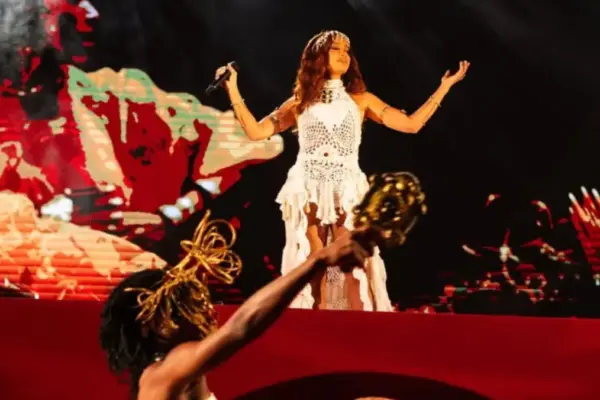


When Gap launched its latest high-profile campaign featuring Puerto Rican music star Young Miko, industry observers immediately noted a distinct shift in the iconic American brand’s creative direction. The collaboration feels entirely different from the straightforward, classic commercial formulas that long defined Gap’s advertising identity. It is not simply about who is standing in front of the camera to model the clothing; rather, it reflects a profound change in who is sitting behind the decision-making table, shaping the strategic vision, and dictating how the brand interacts with contemporary global culture.
Faby Torres, Gap’s Chief Marketing Officer, has been a driving force behind this cultural evolution. Under her executive leadership, the brand has transformed how it shows up in the cultural zeitgeist, moving past superficial trend-chasing to forge intentional, deep-rooted alignments with diverse global icons. Her presence at the executive level proves that modern representation is far from performative—it is visibly integrated into every layer of the corporate decision-making process. From the viral global success of the KATSEYE campaign to the meticulous, co-creative partnership with Young Miko, Gap is leaning into multicultural storytelling in a way that resonates authentically with modern consumers, and that intentionality starts directly at the top.
Reflecting on her journey to the helm of one of fashion’s most recognizable brands, Torres embraces her heritage not as a barrier, but as a wellspring of inspiration and professional strength. As a Latina woman who grew up in Mexico with grand aspirations, she retains the curiosity, thoughts, and ambitious drive that defined her youth. Her leadership philosophy rejects the notion of centering identity as a limitation. Instead, throughout her extensive career, she has masterfully reframed what it means to be a Latina operating within high-level global corporate environments, using her background to expand her worldview and fundamentally improve how she builds and positions major brands.
Explaining this unique perspective, Torres notes that she chose to view her heritage as her ultimate superpower. Armed with a deep mastery of brand marketing, boundless curiosity, and a natural creative streak, she recognizes that her multicultural background simply enhances her professional capabilities rather than boxing her in. This distinctive vantage point is precisely what imbues campaigns like the one with Young Miko with such a fresh, unmistakable energy.

This collaboration is far more superficial than simply casting a prominent Latina artist for the sake of demographic checkboxes. Instead, it demonstrates a profound understanding of the cultural weight the artist carries, coupled with the willingness to give her the creative space to show up fully in her own language, distinct sound, and authentic energy. Torres makes it clear that this milestone moment was neither accidental nor rushed; rather, it was a long-overdue convergence of talent, brand identity, and cultural timing. Describing the decision, she notes that it is the right time and the right moment, observing that the brand had not genuinely collaborated with a Latin artist in its modern era, and that Young Miko simply fit the creative brief to perfection.
What is even more telling about this new era at Gap is the collaborative framework used to build these campaigns. Under Torres’s guidance, inclusion is never treated as a final, superficial step or an afterthought added just before launch; rather, it is deeply embedded into the very fabric of the production process. From the earliest brainstorming sessions in the boardroom to the diverse group of creative professionals shaping the final product, she emphasizes the critical importance of ensuring every unique voice contributes meaningfully to the final outcome.
Torres firmly believes that all the voices in a room need to be heard, noting her desire to ensure that her team members and younger voices have a platform, because everyone ultimately learns from one another. This inclusive ethos translates directly into the tangible quality of the work produced. In the case of the Young Miko campaign, this meant much more than just featuring the artist as the primary face of the collection. It involved heavily investing in her artistry by co-producing music content, building an entire immersive world around her persona, and ensuring that the entire supporting cast reflected the same level of authenticity.
The supporting cast, particularly the dancers, played a crucial role in bringing the campaign’s vision to life. Torres points out that many of the dancers are Latinos, viewing their inclusion as a vital opportunity to demonstrate genuine care while injecting the authentic energy, movement, and distinct swag that defines the Gap brand.
What Faby Torres is systematically building at Gap serves as a powerful reminder that true representation at the executive level is never merely symbolic—it is fundamentally structural. It directly dictates who receives visibility, how complex cultural stories are told, and whether culture is treated merely as a temporary aesthetic trend or respected as a lived, breathing human experience. Through her leadership, it has become abundantly clear that when Latinas are present in the room making pivotal executive decisions, the resulting creative work does not just look different; it fundamentally feels different, setting a new standard for modern global marketing.