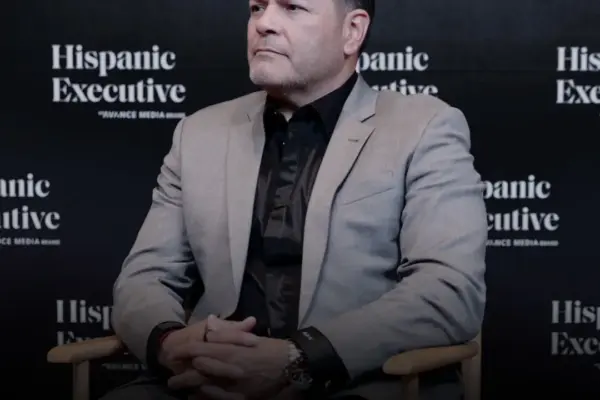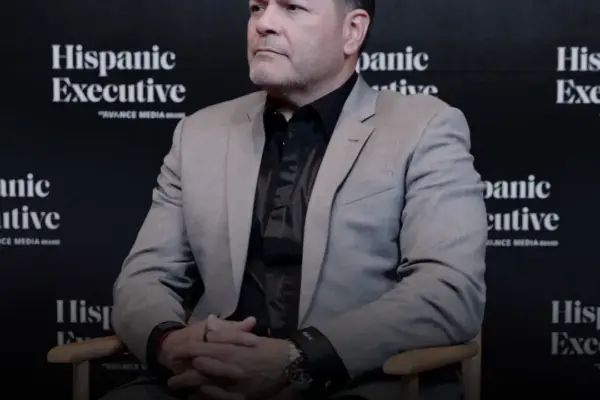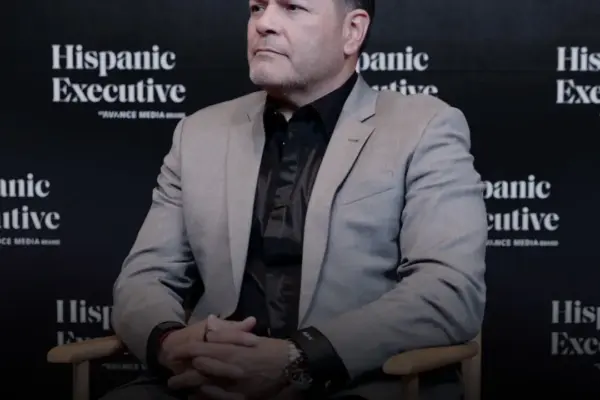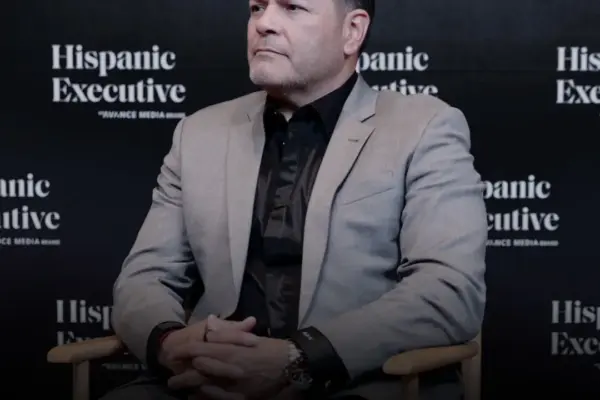











The cultural resonance of cultural touchstones often extends far beyond entertainment, tapping into deeper narratives of identity, struggle, and perseverance. Recently, Sergio Barajas, executive director of the National Hispanic Construction Alliance, found himself reflecting on these enduring themes while watching Felix Contreras—NPR’s longtime Alt.Latino host and the coordinator of the "El Tiny" series—introduce the legendary regional Mexican band Los Tigres del Norte ahead of their celebrated Tiny Desk Concert.
For Barajas, whose career spans three decades in housing development, construction, and financing, the moment served as a poignant reminder of the foundational truth that has always driven the Hispanic experience in America: the relentless ethic of work.
Across generations, the narrative has remained remarkably consistent. Hispanic communities in the United States work hard, log long hours, build physical infrastructure, launch enterprises, and raise families. More often than not, these efforts are anchored by a singular, forward-looking aspiration: to forge a better life and secure greater opportunities for the generations that follow.
It is this exact spirit of perseverance and contribution that inspired Barajas to coin a new rallying cry: Operation We Back.
The phrase is deliberately crafted as a purposeful play on a painful and deeply scrutinized chapter in American immigration history—"Operation Wetback," the 1950s federal immigration enforcement campaign that led to the mass deportation and removal of hundreds of thousands of Mexicans and Mexican Americans. Historically, that mid-century initiative swept up not only undocumented individuals but also many people who were legally present in the United States or held full American citizenship, leaving a generational scar of fear and mistrust within Hispanic communities.
Today, as contemporary immigration enforcement once again commands national headlines and impacts communities across the United States, the surrounding political and social environment can feel profoundly unsettled. While the modern circumstances and policy frameworks differ, the underlying emotional climate—marked by uncertainty, anxiety, and fear—feels uncomfortably familiar to many families navigating daily life.
Yet, Barajas emphasizes that there is another vital narrative running parallel to the political debate—one that deserves equal, if not greater, attention.
It is the story of people who came to work.
It is defined by individuals who wake up before the sun rises, pull on their work boots, and head directly to the job site. It encompasses those who master demanding trades, establish independent businesses, hire local employees, pay their taxes and bills faithfully, purchase homes, and invest deeply in the social and economic fabric of their neighborhoods. It represents people who consistently strived to do things the right way within a complex society.
In evaluating these communities, Barajas notes that accountability and nuance are essential. Have individual mistakes been made along the way? Absolutely. Have there been instances where individuals failed to follow established rules? Of course. However, he cautions that society must exercise extreme care to avoid conflating the fundamental, human desire to work and provide for one’s family with criminal intent.
For generations, the core motivation driving Hispanic immigrants and their descendants has remained remarkably simple and universal: work, provide, build, and move forward.

The Physical Foundation: Building America Brick by Brick
That industrious spirit is perhaps nowhere more visible today than in the American construction industry.
A walk onto virtually any major job site across the country reveals a profound reality. Hispanic workers, tradespeople, and contractors form the backbone of the nation’s physical infrastructure. They are actively helping to build the residential homes where families live, the expansive highway networks that drive commerce, the educational institutions where children learn, and the vibrant local communities that citizens call home.
These workers are not looking for handouts or unearned privileges. Rather, they are asking for a fair chance to compete, prove their capabilities, and contribute meaningfully to the economy.
This philosophy forms the heartbeat of "Operation We Back," which seeks to reframe public perception and policy support around real people and tangible contributions.
Under this framework, supporters back the individual who wakes up every morning without fail and commits to a hard day’s labor. They back the independent contractor who started out with little more than a single pickup truck and a modest set of tools, laboring tirelessly to grow a sustainable business enterprise. They back the mother and father who willingly endure grueling hours and physical exhaustion because they are determined to give their children access to horizons broader than their own. And, ultimately, they back the local communities that grow measurably stronger, safer, and more prosperous because these families chose to invest their time, innate talent, and financial resources locally.
This perspective does not gloss over historical hardships or pretend that the journey has ever been flawless. It has not. Instead, it asks the public to recognize the pure intent driving the journey itself.
In the traditional working-class vernacular, the ethos is best captured by the phrase Pico y Pala—pick and shovel. It represents a posture of head down, hands working, family first, and community always.
We work. We build. We contribute.
We Back.
About Sergio Barajas
Sergio Barajas serves as the executive director of the National Hispanic Construction Alliance, where he spearheads the organization’s mission to expand capacity building, secure broader access to capital, and unlock new business opportunities for Hispanic contractors and construction professionals nationwide.
Over a distinguished 30-year professional career spanning housing development, general construction, and financial services, Barajas has held leadership and strategic roles with prominent organizations, including the National Association of Hispanic Real Estate Professionals (NAHREP), Freddie Mac, the National Community Stabilization Trust, and the Los Angeles Housing Department. Based in San Diego, California, Barajas writes and advocates extensively on topics related to workforce development, industry advocacy, and the indispensable role of the Hispanic construction workforce in shaping a stronger, more equitable American economy.