








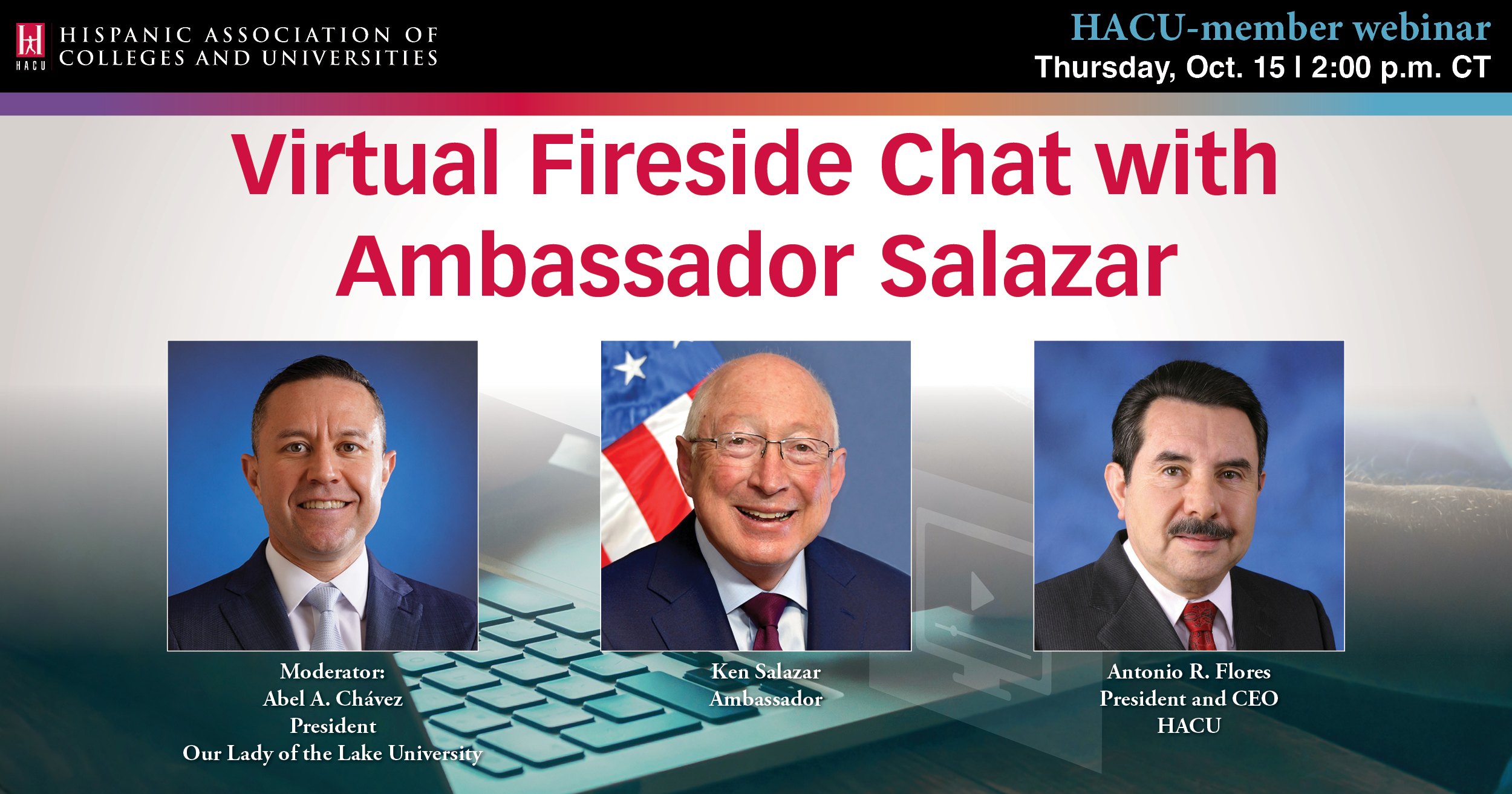
The Hispanic Association of Colleges and Universities (HACU) recently convened an engaging and far-reaching virtual conversation, bringing together academic leaders, students, and public servants for a special fireside chat with Ambassador Ken Salazar. Held on October 15, 2026, the event served as a platform to discuss leadership, public service, and the future of an inclusive American society, drawing heavily from the themes of Salazar’s celebrated book, Borderlands: My Fight for an Inclusive America.
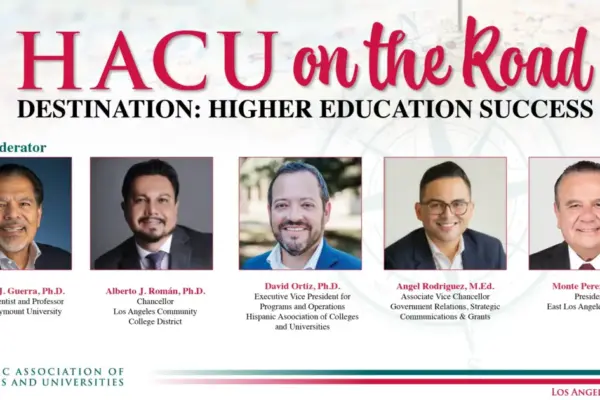
The virtual gathering featured HACU President and CEO Antonio R. Flores, who joined Ambassador Salazar in the high-profile discussion. The dialogue was expertly moderated by Abel A. Chávez, President of Our Lady of the Lake University, guiding a conversation that resonated deeply with educators, administrators, and emerging student leaders from Hispanic-Serving Institutions (HSIs) across the United States.
A Journey from the San Luis Valley to the Global Stage
The discussion naturally touched upon the remarkable personal and professional journey of Ambassador Salazar, whose life story mirrors the very themes of opportunity, perseverance, and civic duty highlighted in Borderlands. Growing up on his family’s ranch nestled in Colorado’s picturesque San Luis Valley, Salazar was part of a tight-knit community deeply rooted in the American West. As the first member of his family to attend college, his entry into higher education marked a significant milestone that would eventually pave the way for a lifetime of distinguished public service.
Salazar’s career stands as a testament to the transformative power of education and dedication. Over decades of public life, he has broken barriers and taken on some of the highest-ranking roles in both state and federal government. He served the people of Colorado as their attorney general before moving to the national stage as a United States Senator. Following his tenure in the Senate, Salazar answered the call to executive leadership as the United States Secretary of the Interior, overseeing vast public lands, natural resources, and indigenous affairs. Most recently, he extended his diplomatic footprint on the international stage by serving as the United States Ambassador to Mexico.
Throughout Borderlands: My Fight for an Inclusive America, Salazar reflects upon these extensive experiences, offering readers a candid look behind the scenes of high-stakes governance and diplomacy. More than just a memoir, the book makes a passionate and compelling case for a stronger, more inclusive America—one that honors its diverse cultural heritage and embraces its interconnected future. During the HACU fireside chat, these literary themes were brought to life, serving as a foundation for broader discussions about the responsibilities of modern citizenship and the vital importance of representation in public life.
The Role of Higher Education in Shaping Future Leaders
A central theme of the virtual fireside chat was the profound influence of family background and educational access on the development of public servants. Ambassador Salazar and the panel explored how institutions of higher learning, particularly Hispanic-Serving Institutions, occupy a unique and influential position in American society. By providing accessible, high-quality education to historically underserved communities, HSIs do more than just award degrees—they actively cultivate the next generation of civic, business, and political leaders.
The conversation examined practical strategies for how HSIs can continue to empower their student bodies, ensuring that young scholars are equipped not only with technical and academic expertise but also with the leadership qualities necessary to navigate an increasingly complex world. President Flores and Ambassador Salazar discussed the unique assets that first-generation and Hispanic students bring to higher education, noting that cultural resilience, multilingual abilities, and community-oriented perspectives are invaluable leadership traits in both domestic and international arenas.
Furthermore, the dialogue addressed the ongoing challenge of bridging political and cultural divides within the United States. In an era often characterized by polarization, the speakers emphasized that higher education institutions must serve as safe havens for open dialogue, critical thinking, and mutual understanding. By fostering inclusive campus environments, HSIs help students learn how to engage across differences, find common ground, and build coalitions that address pressing societal challenges.
Strengthening Bilateral Ties and Cross-Border Collaboration
Given Ambassador Salazar’s extensive background in international diplomacy and his tenure as U.S. Ambassador to Mexico, the fireside chat naturally expanded to encompass international relations, specifically focusing on the vital partnership between the United States and Mexico. The leaders discussed how strengthening bilateral ties is not merely a matter of federal diplomacy, but a collaborative effort that relies heavily on educational and cultural exchanges.
The conversation highlighted the immense potential for expanding opportunities for cross-border collaboration in education, academic research, and workforce development. Educational institutions on both sides of the border, the speakers noted, can act as engines of economic growth and social mobility. By fostering joint research initiatives, student exchange programs, and industry partnerships, universities can help prepare a globally minded workforce capable of addressing shared regional challenges, from environmental sustainability to economic competitiveness.
These cross-border partnerships reinforce the core message of Borderlands, illustrating that borders should not be viewed solely as barriers that divide, but as dynamic regions of contact, exchange, and mutual enrichment. The dialogue underscored the responsibility of colleges and universities to champion programs that tear down isolationism and build bridges of cooperation between neighboring nations.
Bringing Borderlands to Classrooms Through "One Book, More Voices"
Toward the conclusion of the event, Ambassador Salazar introduced a concrete initiative designed to bring the lessons of his book directly into academic environments. He shared details regarding One Book, More Voices, a newly established effort stemming from the Borderlands New North American Alliance Fund.
This initiative is structured to support colleges, universities, and community organizations by providing matching copies of Borderlands: My Fight for an Inclusive America for integration into classrooms, campus libraries, and student leadership programs. By making the book widely accessible to students, the initiative aims to spark meaningful campus conversations about civic engagement, social equity, and the ongoing evolution of the American identity.
Through this collaborative effort, educational institutions can utilize Salazar’s lived experiences and reflections as a pedagogical tool, encouraging students to critically examine their own roles in shaping an inclusive society. The virtual fireside chat concluded with a renewed sense of commitment among participating academic leaders to continue fostering environments where diverse voices are heard, valued, and empowered to lead.