









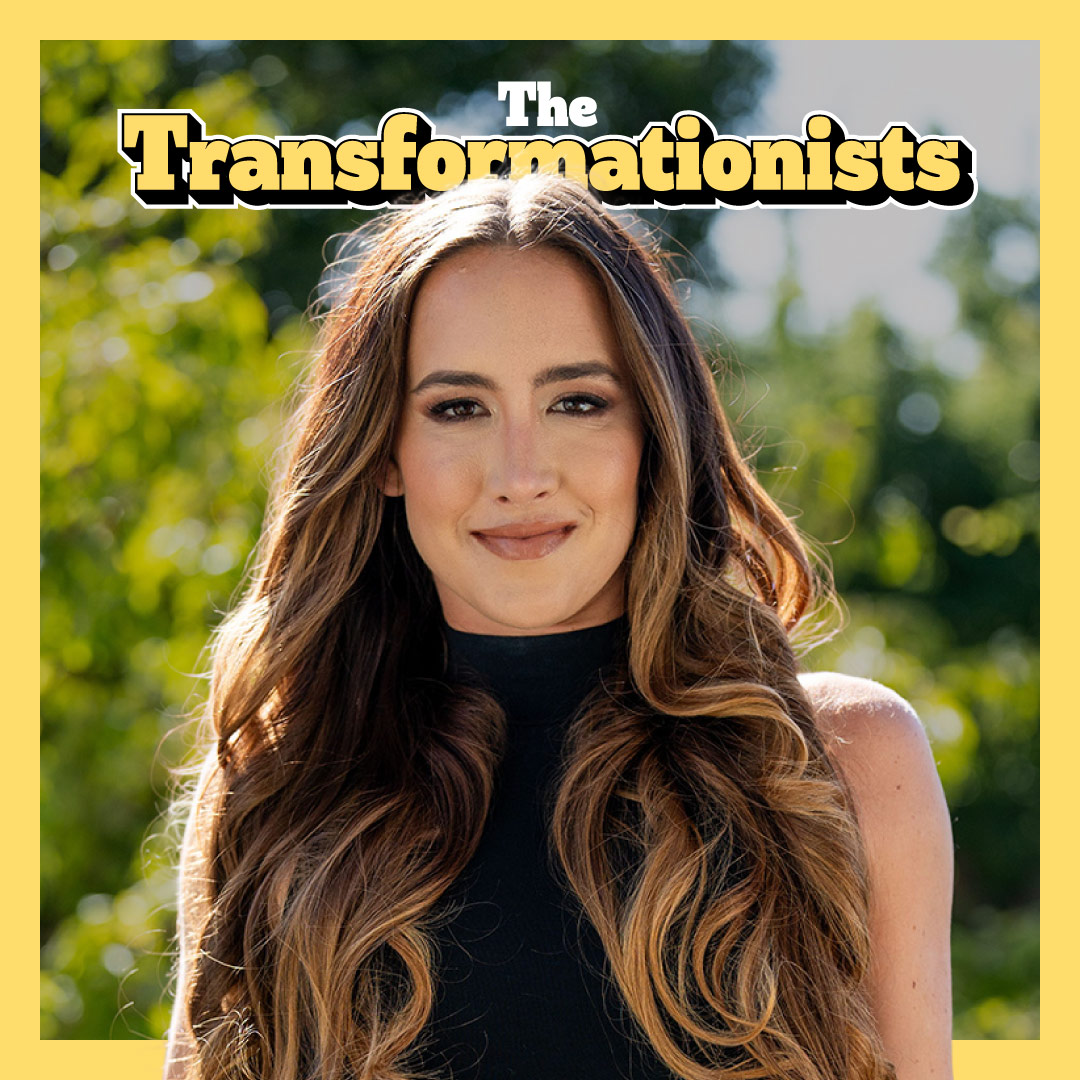
Codie Sanchez knows what it feels like to check your bank account before making a purchase, praying that your debit card will not trigger an overdraft fee. Long before she commanded an online audience of 130 million viewers and built a sprawling portfolio of enterprises, she was just a public-school kid from Phoenix, Arizona. Raised by a small business owner father and a mother who spent three decades as a special education teacher, Sanchez learned the value of hard work early in life.
She eventually carved out a path that took her straight into the elite corridors of Ivy League-dominated financial institutions, outworking peers from Cornell and Stanford alike. As the founder and CEO of Contrarian Thinking—an investment and advisory firm boasting more than 13 million followers—she achieved the exact version of professional success her parents had always dreamed of for her. She secured the high-powered job, wore the sharp suits, and ultimately earned a paycheck that outpaced her upbringing.
Yet, despite scaling the heights of Wall Street, success began to feel hollow.
“I think I was probably what every Hispanic mother and father wants for their kid,” Sanchez reflects. “I got the job, wore the suits, and I was a professional who was able to make more than they did. That’s what we all aspire to. The problem was it felt empty. The shine wore off very quickly. I didn’t want my tombstone to read, ‘She was excellent at finding discounts to exploit in the marketplace.’”
That profound realization catalyzed a radical pivot. Today, alongside her husband—a former Navy SEAL—Sanchez has shifted her life’s work toward empowering everyday entrepreneurs. Through strategic investments and hands-on advisory frameworks, they focus exclusively on partnering with small business owners to help them scale enterprises they built with their own hands.
The Power of a Small Business
For Sanchez, modern venture capitalism often overlooks the foundational pillars of local economies in favor of high-growth tech disruptors. Contrarian Thinking Capital, her venture firm alongside her role as owner of Main Street Holding Company—a portfolio spanning professional and home service businesses—proudly champions what she calls the “dull, dirty, dumb, and dangerous.” These are the unglamorous, essential businesses that communities rely on daily, yet traditional Wall Street investors routinely ignore.
Her journey into this asset class started with a humble laundromat, an acquisition that taught her firsthand the immense societal value of unpretentious commerce.
“Hispanics probably understand this better than most, but the laundromat is a critical place for many people in urban centers,” Sanchez explains. “They’re really important not only because many people don’t have these machines in their home, but they’re also a place that has some kind of accommodations for kids. It needs to be safe. It needs to be well-lit. The machines have to work, because losing quarters isn’t an option for people who don’t have a lot of extra money.”
It is a business that provides tangible utility to a community, proving that enterprises do not need to be disruptive technology startups to be deeply impactful. Through her flagship educational program, the Growth Boardroom, Sanchez has channeled this philosophy into action, teaching 14,000 owners how to systematically scale their small businesses. Rather than extracting value from companies remotely, Sanchez and her team take equity stakes specifically designed to help founders build enduring local wealth.
“We have a belief that small businesses that are owned by the business owners who created them, who work inside of them, are better for society than the big ones,” she says.
Own or Be Owned
As an author and entrepreneur who previously penned the New York Times bestseller Main Street Millionaire, Sanchez has dedicated her latest work to addressing the silent struggles of modern entrepreneurship. Her upcoming book, Own or Be Owned, speaks directly to founders and employees who think like owners, yet find themselves trapped by the very ventures they launched.
Too many entrepreneurs, Sanchez observes, discover that their business has them by the throat rather than providing the economic freedom they initially sought. Issues like owner dependency, severe burnout, and inefficient operational scaling routinely prevent small businesses from realizing their potential.
“What I’ve found is that small businesses often do the basics wrong,” Sanchez notes. “They don’t pick up their phone quickly enough. Speed to lead is the number one reason why a small business will outperform another. The things that are going to unlock your next six, seven, or eight figures are things that people don’t pay enough attention to because they’re chasing the next shiny object.”
As an illustration, she points to the current obsession with artificial intelligence. While many founders pitch elaborate, complex AI models, Sanchez often finds herself questioning why they lack basic digital infrastructure, such as a functional website chatbot. In her view, mastering operational fundamentals far outweighs chasing fleeting technological trends.
In Own or Be Owned, Sanchez introduces a diagnostic framework known as the 12 P’s process to help business owners untangle operational bottlenecks. The framework covers pricing, persona, problem, product, profit, pitch, people, present—referring to sales execution—process, predicament, path, and protect. According to the CEO, if an entrepreneur cannot clearly articulate their core problem or the strategic path ahead, their business stands little chance of survival.
This systematic approach is intentionally designed to alleviate the overwhelm often experienced by first-generation business owners. By offering a structured roadmap, Sanchez hopes to restore a sense of genuine autonomy to founders.
“I just want to help business owners feel like they own their businesses, not that they’re owned by them,” Sanchez explains. “I want to help people build a profitable, consistent, enjoyable business.”
In an era where corporate culture increasingly encourages every executive to brand themselves as a visionary world-changer akin to Steve Jobs, Sanchez proudly embraces a different identity.
“I’m not Steve Jobs,” she says plainly. “I’m not a visionary product CEO with an end product that’s going to change the entire world forever. I am a workhorse. I will keep going until I find the problem and I solve it, and I’ll iterate on it long enough to get very good at it.”
Everything to Lose
Sanchez’s uncompromising work ethic and pragmatic outlook were forged long before her days on Wall Street. Her unconventional career trajectory began on the border of El Paso and Juárez, where she started out as a journalist. Before she was even old enough to rent a car, she was reporting on human trafficking, kidnapping, murder, and mutilation in Juárez—an area grimly dubbed “Ciudad de la Muerte” and once widely regarded as the most dangerous city in the world.
While covering the region, Sanchez frequently encountered young female victims her own age who shared her background, her appearance, and even her last name. The stark contrast between their paths and her own left an indelible mark, driving her to examine the systemic roots of poverty and vulnerability.
“I saw that ownership and wealth could be used to combat that kind of life,” Sanchez says. “The more money you have, the more you can architect the world around you, and the best way to do that is to own a business.”
Despite her considerable success and the empire she has constructed, Sanchez remains deeply grounded, frequently reflecting on the pivotal moments and individuals who extended a chance when she needed it most. While attending a Latinos in Finance and Leadership conference early in her career, she found herself seated next to a recruiter from Vanguard—an encounter that ultimately provided her entry ticket into institutional finance.
Recalling her journey from a modest public-school upbringing in Phoenix to competing against graduates from elite universities, Sanchez maintains the perspective of someone who understood financial precarity intimately.
“I knew what it felt like to choose to use the debit card that I knew would charge me the least amount for an overdraft,” Sanchez recalls. “But I got a chance at Vanguard to go head-to-head with the Cornell and Stanford kids. I didn’t treat it like I had nothing to lose. I felt like I had everything to lose.”
Today, having achieved financial security that would allow her to step away entirely, Sanchez remains driven by a desire to multiply that opportunity. Her mission centers on cultivating as many resilient, community-focused business owners as possible—individuals who, much like herself, strive to build durable wealth while actively improving the world around them.