









Every time the author of a recent culinary feature encounters a meat tenderizer, memories of home immediately resurface. Specifically, those recollections center on a mother who, while somewhat wary of emotional vulnerability yet overflowing with affection—a classic combination for her generation—decided to channel her care into the meticulous preparation of Austrian pork schnitzel. In that household, the meat tenderizer acted as a translator for deep familial love. Looking back, that steel hammer served as one of the most reliable and essential cooking instruments in the kitchen, offering an approachable entry point for a young child accustomed to woodworking and artistic expression through dried beans.

While that particular tenderizer remains a cherished cornerstone of a personal kitchen ecosystem today, another cook’s essential tool might be a hand-me-down whisk, a precise Japanese chef’s knife, or a heavy-duty grill press. Determining which baseline implements truly deserve a permanent spot in constant rotation—the foundational peelers, knives, and spatulas that make a home cook feel exceptionally capable—is a subjective exercise. To explore this question, professional culinary educators with extensive experience mentoring novice cooks were consulted to identify the absolute best starter tools for the modern kitchen.
In addition to established personal preferences, insights were gathered from four seasoned culinary teachers working across diverse instructional environments. These included programs like Hot Bread Kitchen, a New York City-based nonprofit organization dedicated to helping immigrants and marginalized individuals launch sustainable careers in the food sector, as well as the prestigious Institute of Culinary Education. Through these conversations, culinary professionals weighed in on the relative nature of what constitutes an essential piece of kitchen equipment for beginners.

When embarking on the journey to equip a kitchen, experienced instructors emphasize a few guiding principles. Aspiring cooks are encouraged to look for versatile instruments that perform multiple functions rather than single-use gadgets, and to thoroughly research product reviews before making a purchase. At the same time, experts advise against overspending on basic utility items like tongs, while noting that inheriting a well-maintained heirloom knife from a family member remains an unmatched stroke of good fortune.
The best beginner cooking tools, according to Hot Bread Kitchen culinary teachers

Hot Bread Kitchen is widely recognized for its mission to uplift women, gender-expansive individuals, immigrants, and people of color by providing intensive culinary training that paves the way for professional opportunities in the food industry. Among the organization’s esteemed instructors are Kandy Williams and Charlene Johnson, both of whom offered definitive guidance on the ideal tools for kitchen novices.
When discussing foundational equipment, Williams highlights the humble spatula as an indispensable starting point. Spatulas are frequently introduced to young learners early on because they are inherently safe and straightforward to handle. Serving as an all-in-one implement, a good spatula is perfectly suited for flipping, stirring, and scraping every last trace of batter from a mixing bowl.

Williams notes that a flexible silicone spatula is particularly valuable for delicate baking tasks, such as gently folding whipped egg whites into a batter without deflating the mixture. As a professional baker, this utensil remains a daily necessity for preparing intricate buttercreams, cakes, and traditional confections like Peruvian alfajores, helping to preserve a light and airy texture. Johnson echoes these sentiments, emphasizing the practical utility of the tool not only during active food preparation but also when transferring ingredients and leftovers efficiently between containers.
Beyond baking, instructors emphasize the value of a dependable vegetable peeler. In home kitchens and classroom settings alike, a high-quality peeler drastically accelerates prep work for dishes ranging from mashed potatoes to traditional vegetable preparations. Instructors demonstrate safe handling techniques, teaching students to peel away from the body using short, controlled strokes. This tool is frequently utilized for processing potatoes, carrots, and winter squash, while also introducing novices to the tactile diversity of different vegetable textures.

Classic swivel peelers are praised for their precision and efficiency, proving useful far beyond produce preparation. Chefs note that a sharp peeler can effortlessly shave chocolate, grate hard cheeses, or yield delicate ribbons of citrus zest. Furthermore, the small loop or side extension commonly found on traditional peelers serves a specific mechanical purpose: effortlessly removing blemishes or eyes from potatoes.
Equally critical to the beginner’s arsenal is a reliable paring knife. Described by instructors as a small and versatile instrument tailored for precision tasks such as peeling, trimming, and slicing diminutive fruits and vegetables, the paring knife helps build foundational knife skills safely. Students frequently utilize paring knives for delicate operations like quartering strawberries, scoring tomatoes, or mincing fresh herbs. Because of its exceptional maneuverability, the paring knife is frequently characterized as a natural extension of the cook’s hand.

Complementing the smaller blades, an offset serrated knife is considered essential for managing foods with contrasting textures, featuring a tough exterior and a soft interior, such as artisanal loaves of bread or ripe tomatoes. The distinct design of an offset handle provides crucial clearance, ensuring that the user’s hand remains safely above the cutting board while the blade completes its downward stroke efficiently.
The best beginner cooking tools, according to Celine Beitchman of the Institute of Culinary Education

Founded in 1975, the Institute of Culinary Education operates prominent campuses in New York City and Los Angeles and has earned widespread recognition as a leading culinary institution in the United States. Celine Beitchman, director of nutrition and an instructor within the school’s plant-based culinary arts program, brings decades of professional experience spanning prep kitchens, catering operations, and private dining.
For individuals facing an unorganized knife drawer, Beitchman recommends beginning with an eight- to ten-inch chef’s knife. This foundational blade is vital for executing standard vegetable cuts and slicing everything from firm cheeses to baked goods. Because a quality knife represents a lasting investment, Beitchman advises selecting a model that offers a comfortable grip and a balanced weight that does not feel overly burdensome.

Alongside high-end options, affordable stainless steel chef’s knives offer remarkable cutting performance for budget-conscious home cooks. While such blades may require more frequent sharpening—typically every couple of months—they provide exceptional value and reliable precision for everyday kitchen tasks.
Another indispensable item highlighted by Beitchman is the spring-loaded pair of tongs. Featuring metal or rubber-coated tips, tongs are frequently employed to toss crisp salads with dressing or evenly coat vegetables in oil and seasonings before roasting. In professional environments, tongs often function as a direct extension of the cook’s reach along the line or near heating elements. Scalloped edges on stainless steel tongs enhance grip and control, allowing for precise handling whether turning individual vegetables in a skillet or managing delicate items on a grill.

Finally, Beitchman advocates for the inclusion of a bench scraper in every home kitchen. This remarkably versatile utensil facilitates the seamless transfer of chopped ingredients from cutting boards to pans or mixing bowls, while also proving indispensable for dividing dough, scraping work surfaces clean, and shaping bread loaves prior to baking.
The best beginner cooking tools, according to chef Vanessa Seder

With a multifaceted career encompassing roles as a chef, food stylist, cookbook author, and former editor for culinary publications, Vanessa Seder has shared her expertise extensively through teaching engagements at prominent culinary centers. While reinforcing the importance of sharp chef’s knives and versatile spatulas, Seder also champions several less conventional yet highly practical kitchen additions.
A high-quality wooden cutting board frequently goes overlooked during initial kitchen setups, yet it serves as a vital workspace. Heavy-duty butcher blocks provide a sturdy, stable surface for chopping vegetables or rolling out fresh pasta dough. Furthermore, a thick wooden board offers a slight elevation that can improve posture for taller cooks during extended prep sessions, while doubling as an attractive presentation platter when entertaining guests.

To maintain the longevity of essential cutlery, Seder strongly recommends investing in a whetstone. Regular sharpening preserves blade performance, saves money over commercial sharpening services, and ultimately enhances kitchen safety by preventing dangerous slippage caused by dull edges. Combination whetstones provide both coarse grit surfaces for resetting an edge and finer grits for final polishing, equipping home cooks to maintain their tools independently.
Additionally, Seder points to the enduring utility of the offset slotted fish spatula. Despite its specialized name, this flexible, angled utensil excels at handling delicate proteins, pancakes, and fragile vegetables alike. The slotted design allows excess cooking oils to drain cleanly away, making daily cooking tasks noticeably smoother and more efficient.

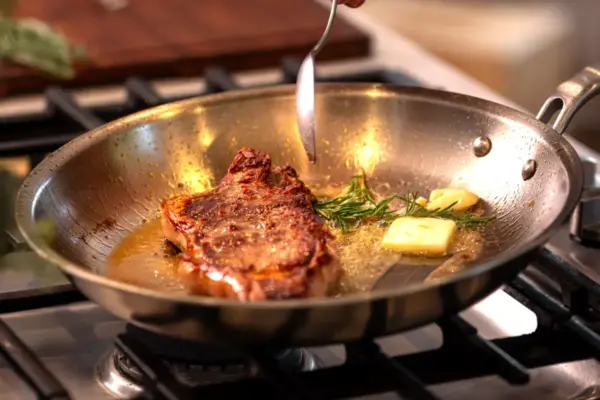
As home cooks progress in their culinary journeys, transitioning from basic nonstick pans to durable stainless steel cookware represents a significant milestone. Valued in commercial kitchens for their exceptional durability, rapid heat conductivity, and reliable retention, multi-ply stainless steel pans provide a dependable foundation for searing, frying, and simmering a wide variety of dishes, ensuring that foundational tools continue to perform reliably for years to come.