











The International Monetary Fund (IMF) has reached a strategic understanding with the administration of Argentine President Javier Milei regarding four critical areas of action designed to transition the country’s ongoing macroeconomic stabilization into tangible economic activity, private-sector investment, and job creation.
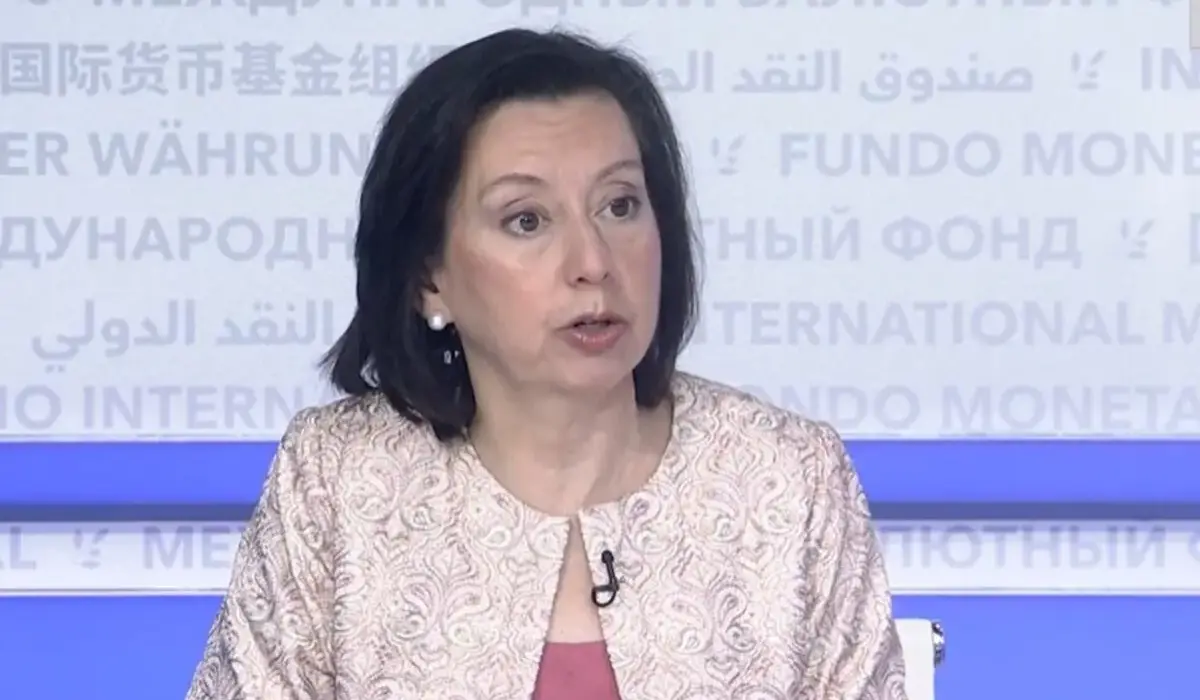
The announcement was delivered by IMF spokesperson Julie Kozack during her regular monthly press briefing on Thursday. The update came just two days after the Washington-based financial institution formally approved the third review of the current financial program established under President Milei’s administration, signaling continued international backing for the government’s economic trajectory.
According to Kozack, the IMF’s Executive Board is widely expected to grant final approval to the review in early December. This formal sign-off will automatically unlock a fresh disbursement of approximately US$900 million earmarked for the South American nation under the broader framework of the program agreed upon in April of last year.
Since President Milei took office in December 2023, the IMF has authorized a series of financial disbursements to Argentina. Some of these funds stem from the legacy 2018 agreement, while others are tied directly to the program renegotiated in 2025, which injected an additional US$20 billion in total funding to support the government’s rigorous fiscal adjustment. Cumulatively, the current administration has received just under US$18 billion in financial support from the multilateral lender.
During her remarks, Kozack emphasized that the latest round of discussions between IMF technical teams and Argentine authorities revealed a shared recognition that stabilizing the macroeconomic framework—while critical—must now be complemented by structural measures that foster broad-based growth.
There was a shared understanding, Kozack noted, of the urgent necessity to broaden the stabilization gains that have been achieved so far into stronger, more resilient economic growth and sustainable job creation. Building on this consensus, Kozack highlighted four specific, agreed-upon measures aimed at enhancing growth and ensuring that the benefits of economic stabilization permeate more deeply throughout Argentina’s broader economy.
The Four Pillars of the Growth Strategy
The first pillar of the agreed-upon agenda focuses on deepening Argentina’s capital and mortgage markets. Kozack explained that this initiative is specifically aimed at expanding access to domestic financing, supporting private investment, and, more broadly, stimulating domestic demand within the country. By reviving credit channels and capital markets, the government hopes to provide businesses and citizens with the financial tools necessary to drive long-term economic expansion.
The second measure involves enhancing labor market flexibility to actively support private-sector job creation. Kozack pointed out that modernizing and streamlining labor regulations will be vital to ensuring that any future economic growth translates directly into formal, stable jobs for Argentine workers, bridging the gap between macroeconomic recovery and household welfare.
The third measure centers on moving forward expeditiously with recently awarded infrastructure concessions. By leveraging private capital and expertise through public-works concessions, the administration aims to address critical infrastructure bottlenecks without compromising its strict fiscal surplus goals.
The fourth and final measure seeks to facilitate and accelerate the execution of strategic investments under the Large Investment Incentive Regime, widely known by its Spanish acronym RIGI (Régimen de Incentivo a las Grandes Inversiones). Designed to attract multi-million-dollar capital commitments into key sectors such as energy, mining, and infrastructure, the RIGI framework is viewed by both the government and the IMF as a cornerstone for future export growth and foreign exchange generation.
Kozack encapsulated the IMF’s overarching message to Buenos Aires as a call to stay the course with robust macroeconomic policies while simultaneously broadening the structural gains achieved to date.
Continued macroeconomic prudence, she added, when paired with targeted structural reforms that support investment financing and job creation, should help Argentina significantly strengthen its economic resilience and achieve stronger, more durable growth over the long term.
Addressing Country Risk and External Debt Pressures
During the briefing, Kozack was also questioned about the recent upward movement in Argentina’s country risk indicator. While declining to speculate on the future trajectory of market sentiment, the IMF spokesperson offered clear guidance on how the government can address the issue.
Her best advice for Argentina to keep reducing its country risk, she stated, is to continue with the strong implementation of its established policies and to persistently execute the program as it has been done thus far.
In this regard, Kozack specifically underscored the importance of the ongoing accumulation of net international reserves and the general strengthening of the country’s external financial position. She described these achievements as fundamentally vital to reducing Argentina’s sovereign risk premium and restoring full market confidence. Furthermore, she stressed that these are all critical policy areas to which the Argentine authorities remain firmly committed.
Argentina’s country risk has experienced a notable upward climb in recent months, moving from approximately 400 basis points in July to roughly 740 basis points.
This increase has been driven in part by broader international market volatility, but financial analysts note it primarily reflects lingering investor anxiety regarding the government’s capacity to service its heavy external debt obligations in the coming years.
The pressure is expected to peak in 2027, when the Milei administration will face formidable debt maturities totaling nearly US$25 billion. Of that substantial amount, close to US$12 billion is owed to private international bondholders, while another US$7.5 billion represents obligations due directly to the International Monetary Fund.