

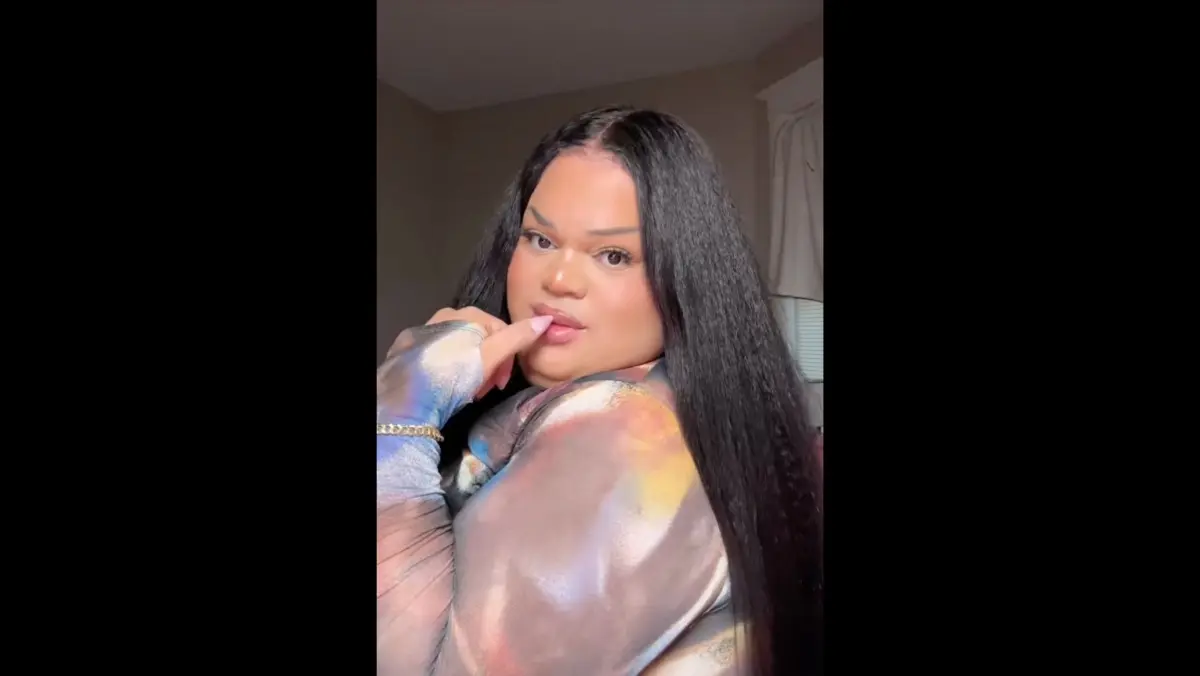
Jools Lebron, the 33-year-old transgender Latina content creator who captured global attention and ignited popular culture in 2024 with her viral "Very Demure, Very Mindful" trend, has announced she is stepping away from TikTok entirely. The decision follows a wave of intense online backlash directed at a GoFundMe campaign she recently launched to help cover the costs of urgent dental surgery.
The controversy began over the weekend when Lebron established a crowdfunding campaign seeking $45,000. According to the creator, the funds were desperately needed to address severe dental damage resulting from a past period of addiction—a struggle she has openly and transparently discussed with her audience. Within hours of publishing the fundraiser, however, the mounting criticism forced her to delete the campaign. Shortly afterward, Lebron shared a candid video revealing that she no longer believes the platform will ever work in her favor again, signaling the end of her prominent run as an active TikTok creator.
Reflecting on her journey in a video that was equal parts honest and heartbreaking, Lebron described her current emotional and professional state. She shared with her followers that she would be fooling herself if she continued to believe the platform’s algorithm would ever return her to the dizzying momentum generated by the "Very Demure" phenomenon. Chasing that fleeting level of recognition, she explained, is no longer healthy for her well-being. Acknowledging that she is clearly not in a good space mentally or emotionally, Lebron concluded that it is finally time to move on from the app that catapulted her to international fame.
What the GoFundMe Said and Why It Sparked a Backlash
When Lebron launched the crowdfunding campaign, she offered a vulnerable explanation to her community regarding her medical needs. She detailed that her teeth are severely destroyed and that routine visits to the dentist only reinforce how difficult her recovery battle is. Having already spent $6,000 of her own money out of pocket on treatments, Lebron felt she had exhausted her options and needed to ask her community for assistance. During her explanation, she also touched upon the possibility of seeking traditional employment, though she expressed doubt that a standard job would generate income quickly enough to address the pressing urgency of her medical situation.
The backlash from internet users and critics was swift and unforgiving. Detractors quickly pointed to Lebron’s previous public statements regarding the lucrative brand deals and appearance offers she received following her viral breakthrough—where she noted earning potential between $45,000 and $80,000 per video. Critics argued that an individual with that level of past earning power should not need to rely on public crowdfunding for a medical procedure.
Others took issue with her commentary surrounding traditional employment, interpreting her remarks as dismissive of the everyday labor and financial struggles experienced by most working-class people to cover their living expenses. As the criticism intensified across social media feeds, Lebron made the decision to delete the GoFundMe campaign.
At the same time, a vocal group of supporters rallied to Lebron’s defense, pushing back against the severity of the backlash. Supporters highlighted the notoriously volatile nature of internet virality, emphasizing that a single viral moment—no matter how culturally dominant—does not guarantee sustainable, long-term income. They pointed out that the financial gap between a creator’s peak period of visibility and their day-to-day economic reality can be surprisingly wide. Furthermore, Lebron has previously shared that she utilized a significant portion of her initial viral earnings to financially support her family, leaving her with far less of a safety net than outside observers might assume.
The Transphobia Running Through This Conversation
As the digital discourse surrounding Jools Lebron’s financial situation and subsequent departure from TikTok spread across multiple platforms, a darker undercurrent became increasingly difficult to ignore: the presence of overt and covert transphobia.
Jools Lebron is a transgender Latina woman who proudly uses she/her pronouns. While acknowledging and respecting a person’s identity should be a basic standard of digital discourse, a notable and aggressive portion of the commentary seized upon her situation to deliberately misgender her, utilize her deadname, or leverage the GoFundMe controversy as a veil for outright hostility toward her identity rather than engaging in genuine critique of her financial choices.
This distinction is crucial because the broader conversation regarding whether prominent content creators should crowdfund medical expenses is a legitimate and complex economic debate worth having. However, the debate over whether a trans Latina woman deserves basic dignity, respect, and correct pronouns while that discussion takes place is not a debate at all. Observers noted that much of the commentary crossed the line from valid public criticism into pure transphobia wrapped in a thin layer of plausible deniability. Rather than being absorbed into the standard noise of everyday online outrage, these hostile elements warranted being explicitly identified for what they were.
What the Creator Economy Actually Owes Its Most Viral Voices
The stark contrast between Jools Lebron’s massive cultural peak in 2024 and the vulnerable position she described upon leaving the platform highlights systemic questions that the digital creator economy has been fundamentally slow to answer. Viral fame on platforms like TikTok operates entirely outside the traditional structures of employment. It does not come with a fixed salary, health insurance, retirement benefits, or any institutional guarantee that a creator’s momentum will last long enough to establish long-term financial stability.
Instead, visibility is dictated by opaque algorithms that decide who gets seen and when. Creators who experience a single, defining cultural moment often find themselves trapped in a cycle, spending years attempting to recapture a lightning-in-a-bottle milestone that the platform and its audience have already moved past.
Lebron’s situation serves as an extreme, highly public version of a recurring pattern playing out across the broader digital landscape. Industry analysts suggest that the widespread debate sparked by her GoFundMe campaign would likely look fundamentally different if digital platforms and the creator economy at large possessed better frameworks and answers for what happens to independent creators after their initial wave of viral fame fades away.