










Argentina is firmly on track to enter a technical recession in the third quarter of the year, according to the latest economic activity data published by the national statistics agency, INDEC. While official figures for September are still pending release, data covering August points toward continued economic weakness, dashing widespread market expectations of a significant rebound.
The downturn highlights the profound cooling effects of President Javier Milei’s strict fiscal austerity program and aggressive monetary tightening. Analysts now suggest that reversing the current downward trajectory in the third quarter has become mathematically nearly impossible, cementing a contraction that follows a weak second quarter and an unprecedented monthly plunge in July.
A Steep and Unusual July Slump
The current economic trajectory began to deteriorate significantly in July, when the Monthly Economic Activity Estimator (EMAE)—an early monthly indicator used to gauge quarterly Gross Domestic Product (GDP)—plunged nearly 3% on a month-on-month basis. According to historical economic data, this marked the steepest monthly decline recorded since the COVID-19 pandemic. More concerningly to economists, it was the first drop of that magnitude in at least two decades that was not triggered by a sharp currency devaluation or an international macroeconomic crisis.
Following that steep contraction, economists broadly anticipated a partial recovery in August. While consensus forecasts did not expect the rebound to fully erase July’s losses, analysts predicted it would make up for a substantial portion of the downturn, stabilizing overall economic activity heading into the final stretch of the third quarter.
However, the EMAE figures released on Wednesday shattered those expectations. On a seasonally adjusted basis, economic activity edged up by a negligible 0.1% month-on-month. Measured against the same period last year, activity fell by 1.7%. Despite these negative monthly and annual readings, cumulative economic activity for the January-August period remained 1.2% higher than during the corresponding eight months of the previous year.
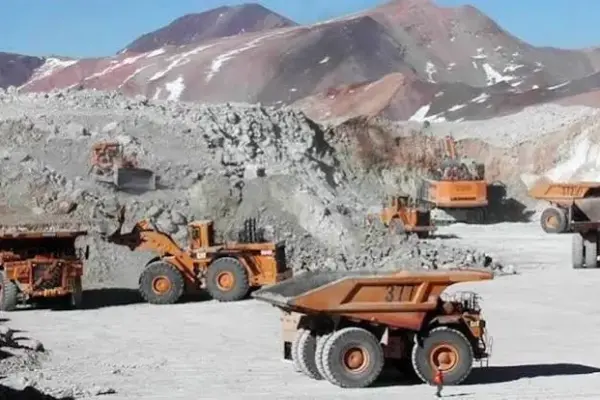
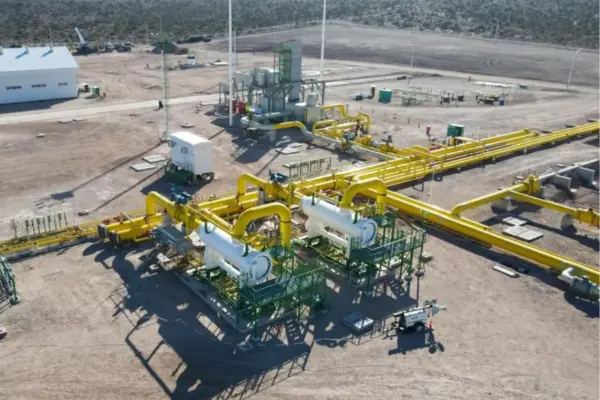
A closer look at the sectoral breakdown reveals a deeply polarized economy. Out of all the sectors tracked by the EMAE, only five registered growth in August compared to the same month in 2025. The mining and quarrying sector stood out as a primary bright spot, surging 11.1% year-on-year. It was followed by the electricity, gas, and water sector, which posted a 4.3% increase. Together, these two industries served as the primary drivers preventing an even deeper economic contraction.
Conversely, ten of the tracked sectors recorded year-on-year declines. The fishing industry suffered the steepest drop, falling 15.7%, though analysts noted that this figure was heavily influenced by seasonal factors. More impactful to the broader economy were the large negative contributions from manufacturing, which contracted 3.2% year-on-year, and the wholesale and retail trade and repairs sector, which fell by 3.5%.
Why Argentina Cannot Avoid a Technical Recession
In macroeconomic terms, a technical recession is conventionally defined as two consecutive quarters of declining GDP. Argentina’s economy already contracted by 0.6% in the second quarter of 2026. Coupled with July’s sharp downturn, the third quarter was handed a severe handicap that August’s stagnant data failed to overcome.
Economists at Banco Provincia’s Economic Research Department crunched the numbers following Wednesday’s INDEC release and calculated that economic activity would have needed to expand by an astronomical 8.5% month-on-month in September simply to steer the country away from a recession.
Such a sharp, instantaneous rebound would be entirely unprecedented in Argentina’s recent economic history outside of the post-lockdown recovery periods following the pandemic. Furthermore, it is deemed practically impossible to achieve under the current macroeconomic framework implemented by President Javier Milei’s administration, which relies heavily on strict fiscal discipline and tight monetary controls to combat chronic inflation.
Gonzalo Carrera, an economist at the consulting firm Equilibra, took to social media platform X to elaborate on the grim outlook. While acknowledging that the EMAE is an initial estimate that is frequently revised backward as more comprehensive data becomes available, Carrera stated that "it seems highly unlikely that the economy will recover enough in September to avoid a recession."
He added that avoiding a severe contraction altogether appears out of reach. According to Carrera’s models, even if the EMAE were to register an optimistic 1.5% month-on-month growth rate in September, the quarter would still conclude with a dismal 2.3% contraction.
Echoing these sentiments, Gabriel Caamaño, an economist at consulting firm Outlier, noted that independent market analysts will inevitably "once again revise their growth forecasts downward" for the full year of 2026 in the wake of these disappointing macroeconomic prints.
These adjustments build upon an already pessimistic sentiment captured in the September Market Expectations Survey (REM), a monthly poll conducted by the Central Bank of Argentina. Following the shocking July figures, the REM had already demonstrated a sharp downward revision in expectations. At that time, the survey projected full-year economic growth of just 1.5% for 2026, representing a significant downgrade from the 2.1% expansion forecast by market participants just one month prior.
As economists and financial institutions adjust their models to account for the persistent stagnation, all eyes turn to the upcoming statistical releases. INDEC is scheduled to publish the official September EMAE figures on November 24, while the definitive third-quarter GDP data will be released to the public on December 16.