









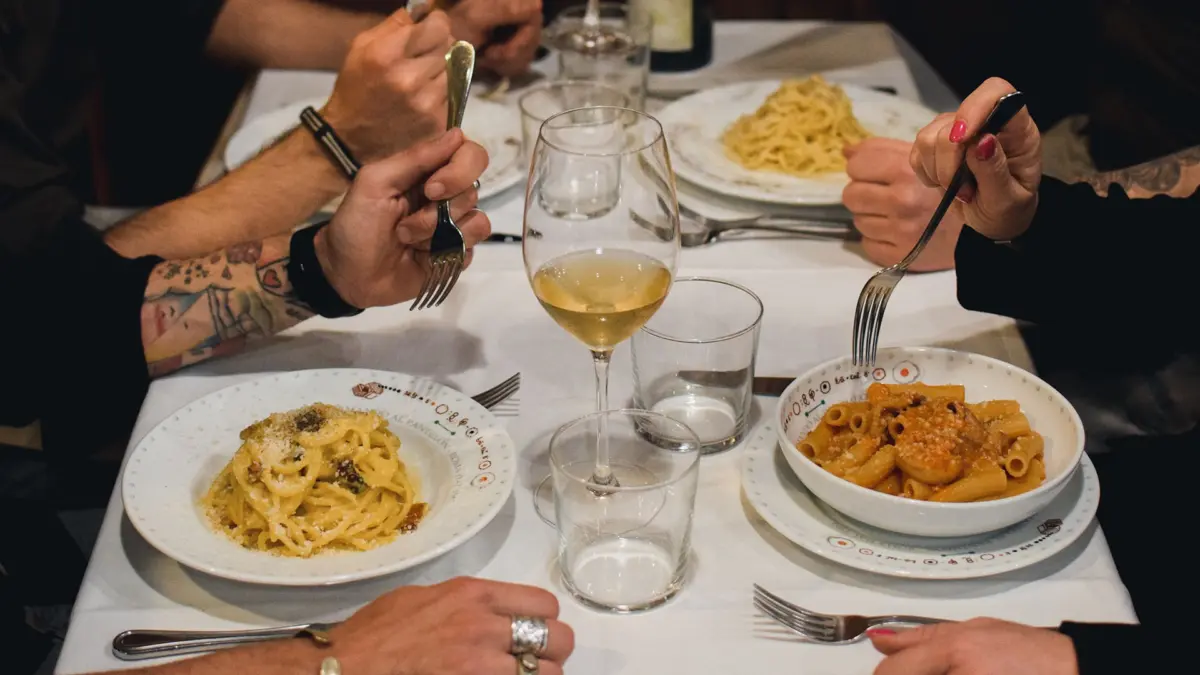
Roman cuisine is a reflection of the city itself—layered, deeply rooted in tradition, and full of captivating contrasts. After years of exploring and eating through Rome’s historic neighborhoods, culinary experts and locals alike have found that the best meals are shaped as much by centuries of history as they are by the hands that prepare them. Family-run trattorias have served the city’s defining dishes for generations, preserving recipes for cacio e pepe, carbonara, roasted lamb, and offal-based specialties, many of which trace their origins back to Rome’s historic slaughterhouse economy.

While these traditional establishments remain essential pillars of the local identity, a vibrant wave of neo-trattorias is constantly reinterpreting the classics. At the same time, the broader dining scene continues to shift dynamically, heavily influenced by Rome’s thriving immigrant communities and diverse culinary traditions, ranging from Ethiopian to Venezuelan flavors, which are more prominent than ever.

The seasonal rhythm of the city dictates much of its dining culture. Rome in February and March can often feel like a damp intermission that pivots quickly toward the arrival of spring. One day, diners are ducking into neighborhood bars to escape an afternoon downpour, while the next day brings clear skies and a scramble to find an open-air patio table in the warm sun. If recent years are any indication, the city’s high tourist and dining season now revs up well before Holy Week, with late March finding Rome already moving at full tilt. This narrow seasonal stretch is the ideal time to lean into local specialties like artichokes simmered with the first tender peas, favas, and crisp lettuce into vignarola, Rome’s definitive spring stew. Blink, and the season will pass you by.

Eating and drinking well in Rome is not just about knowing where to go; it is fundamentally about understanding how to navigate the city’s idiosyncratic dining culture. Travelers often attempt to book tables months in advance, making last-minute reservations notoriously difficult to secure. While online booking platforms are becoming increasingly common across the capital, many establishments still rely heavily on the telephone. For the best results, prospective diners are advised to call at the very start or the very end of service, when the restaurant staff actually has the time to answer the phone. Planning ahead is essential, but seasoned food writers recommend always leaving a little room for culinary spontaneity.

The dining landscape of Rome is constantly shifting, with new spots joining the city’s map to offer fresh perspectives on traditional hospitality. In the San Giovanni district, Beppe e I Suoi Formaggi has expanded far beyond its former Ghetto shop. The larger new space allows Beppe Giovale’s legendary selection of Italian and French cheeses to share the table with comforting dishes like tajarin pasta served with rich alpine butter. Near the imposing Pyramid of Gaius Cestius, the third-generation, family-run Taverna Cestia serves classic Roman plates, fresh seafood, and wood-fired pizzas alongside a remarkably thoughtful wine list. Meanwhile, in the Prati-adjacent neighborhood of Della Vittoria, Vetro pairs natural wines with creative small plates that borrow freely from both Roman and broader European culinary traditions, making it an equally appealing destination for a casual evening drink or a full dinner.

Among the standout neighborhood fixtures, Vetro offers a lively evening atmosphere where sidewalk crowds linger over glasses of natural wine and craft beer. Inside, high-tops and tables provide a cozy setting to explore a menu that speaks fluent Roman while embracing a wider European sensibility. From gildas and eggs with mayonnaise to tongue with sweet potatoes and piquillo peppers, the bar pairs its neighborhood hangout vibe with a natural wine selection spanning Italy, Spain, and southern France.

For those seeking high-end fine dining, Orma Roma—located a few blocks southeast of the Galleria Borghese—represents the vision of Colombian chef and Roman fine-dining veteran Roy Caceres. Following the closure of his landmark Michelin-starred restaurant Metamorfosi during the pandemic, Caceres has built a multi-concept destination at Orma. The venue features a shaded terrace for power lunches, a cocktail bar specializing in tropical fruit- and herb-forward drinks, and a main dining room offering tasting menus that brilliantly blend his Colombian heritage with Italian flavors.

History and tradition are equally alive at Colline Emiliane, a friendly trattoria operating a short walk from the Trevi Fountain since 1931. Under the care of the same family since 1967, the kitchen specializes in egg-based, house-made pastas from Emilia-Romagna, including tortelli di zucca and tagliatelle alla bolognese, alongside hearty mains like bollito misto. Similarly, Armando al Pantheon, located just steps from Rome’s most intact ancient monument, has been championed by the Gargioli family for more than five decades. Dinners here feature timeless Roman classics such as fettuccine with chicken innards and oxtail braised in tomato and celery, complemented by a lovingly curated wine list.

For a taste of sweet history, Moriondo e Gariglio operates as a fragrant time capsule near the Pantheon. Founded in Turin by former chocolatiers to the Savoy royal household, the historic chocolate shop relocated to Rome in the late 19th century. Its glass counters hold more than 80 handmade chocolates and bonbons, while autumn brings cult favorites like marrons glacés and spring welcomes elaborately engineered Easter eggs.

The historic center is also home to Cesare al Pellegrino, where Leonardo Vignoli and Maria Pia Cicconi resurrected a beloved local institution near Campo dei Fiori, retaining its signature tiled floors and midcentury furniture. Nearby, Hosteria Grappolo d’Oro defies the stereotype of brusque service with affable hosts serving toothsome tonnarelli cacio e pepe beneath exposed wooden beams, alongside one of the city’s best-value tasting menus. For a quick bite in the bustling Piazza Campo de’ Fiori, Forno Campo de’ Fiori remains legendary for its pizza alla pala and exceptional pizza con mortadella.

Venturing slightly away from the primary tourist hubs reveals neighborhood gems like Mazzo in San Lorenzo, where culinary power couple Francesca Barreca and Marco Baccannelli serve nostalgic comfort foods like fried tripe and wagon wheel pasta with braised beef. In the multicultural Esquilino district, Trattoria Monti offers robust dishes from the Marche region, most notably its legendary runny-yolk raviolo with butter and sage. Salumeria Roscioli in the Historic Center continues to excel as a premier deli, wine bar, and restaurant, celebrated for its exceptional cheeses, cured meats, and classic pasta dishes.

In the Jewish Ghetto, Boccione—Il Forno del Ghetto has spent generations baking iconic specialties like pizza ebraica and ricotta and sour-cherry tarts. Out in Pigneto, Mrgda serves aromatic Ethiopian and Eritrean dishes accompanied by naturally leavened injera and honey-fermented wine. In Trastevere, the renowned craft beer pub Ma Che Siete Venuti A Fà pours exceptional draughts from around the world, while L’Elementare stands out for its crisp, perfectly structured Roman tonda pizzas and molten supplì.

Additional neighborhood favorites like Trapizzino offer innovative street food pockets stuffed with classic braised meats, while the sophisticated Jerry Thomas Bar Room provides an exclusive, 19th-century-inspired cocktail haven. Latteria Trastevere pairs natural wines with Sardinian specialties, and Sora Lella continues its decades-long legacy on the Tiber Island as a standard-bearer for traditional Roman comfort food. At L’Antidoto, chef Mirko Pelosi brings a worldly, technique-driven approach to a cozy Trastevere side street, offering a refreshing contrast to more traditional menus.

Near the Colosseum, Tempio di Iside delivers an upscale seafood experience centered on pristine raw dishes and exceptional pastas. In Centocelle, Menabò Vino e Cucina highlights regional comfort foods alongside a stellar natural wine list. Forme Dispensa a Ripa in Trastevere focuses on artisanal cheeses and natural wines, while Otaleg in Monteverde Vecchio produces some of the finest natural gelato in Italy alongside specialty coffee.

Further enriching the culinary map, Ruver Teglia Frazionata near the Circus Maximus offers meticulously crafted pizza in teglia, and Santo Palato in Appio Latino remains a premier destination for bold, contemporary interpretations of Roman offal and pasta classics. Beppe e I Suoi Formaggi, recently relocated to San Giovanni, continues to celebrate raw-milk cheeses alongside a cozy dining room menu. Piatto Romano in Testaccio honors the neighborhood’s offal heritage with sublime rigatoni con la pajata and remarkable seasonal vegetable sides.

The historic Mercato Testaccio remains the ultimate central hub for fresh produce, meats, and legendary street food stalls like Mordi e Vai. Across the city, Taverna Cestia, Mostro, Cesare al Casaletto, A Rota Pizzeria Romanesca, C’è Pasta e Pasta, Tavernaccia Da Bruno, Trattoria Pennestri, Stecca, Sinosteria, Trecca, Ristorante da Michele, and Pizza Nader collectively showcase the endless depth, creativity, and enduring passion of Rome’s vibrant food and drink community.