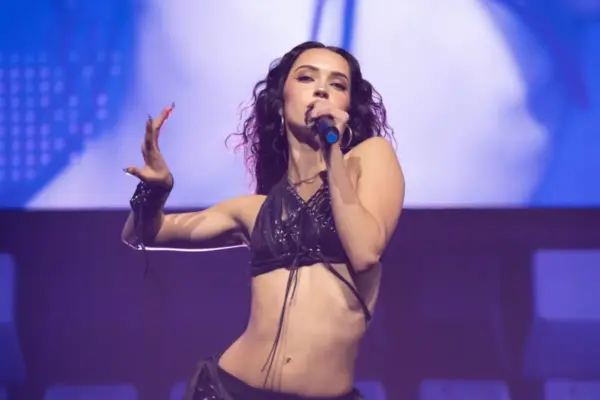





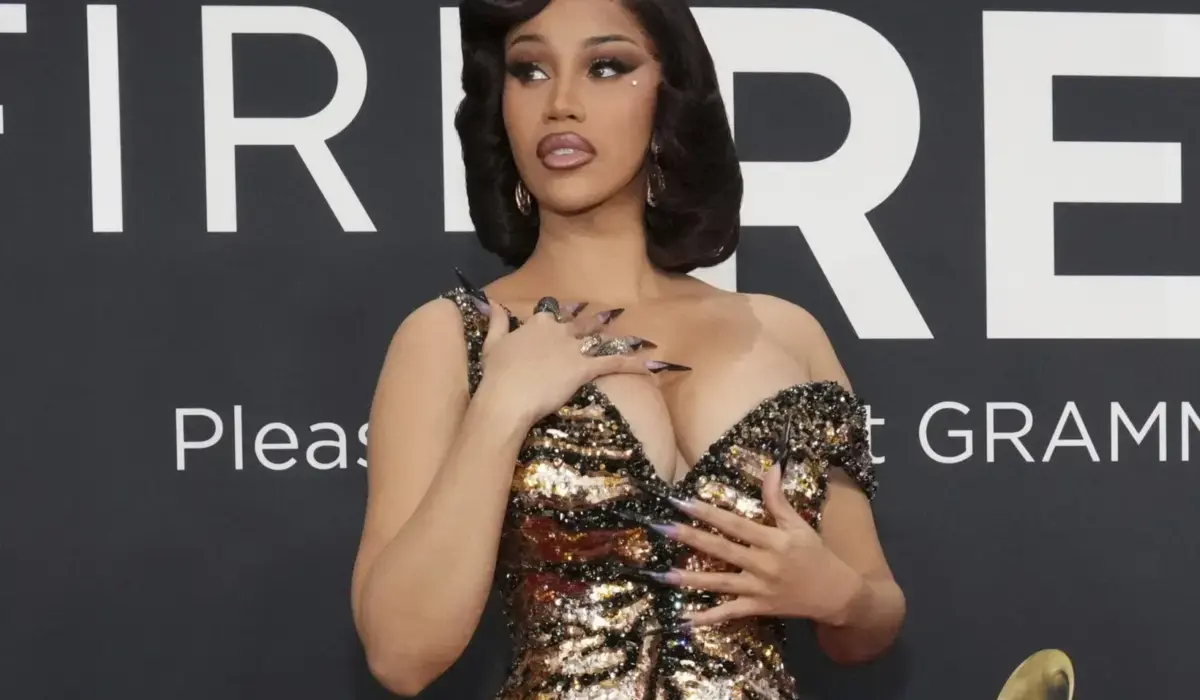
Earlier this year, rapper Cardi B announced her plans to travel to Colombia after her Little Miss Drama tour concluded to have her butt implants removed. The revelation followed a playful backstage interaction with singer Kehlani, who told her, “You have so much ass!” after their surprise performance of their collaboration “Safe” at the rapper’s sold-out Los Angeles show on Monday, February 16.
“After this tour, I’m taking some out,” she told Kehlani playfully amidst the backstage excitement. “After this tour, I don’t hear nobody for three months. I’m going to Colombia, nobody hit me up, nothing. I’m taking this ass out!”
However, Cardi has apparently experienced a change of heart regarding those surgical plans. During a recent appearance on the TODAY show alongside co-hosts Jenna Bush Hager and Sheinelle Jones—where she discussed the launch of her new hair care brand, Grow Good—the superstar opened up about why she has ultimately stepped back from her initial plans to reverse her previous cosmetic procedures.
Reflecting on her busy schedule and changing priorities, she admitted during the broadcast, “I was just gonna take a little bit of butt out, but I don’t have time for that.”
While celebrity cosmetic choices often spark fleeting pop culture conversations, Cardi B’s shifting plans illuminate a much larger, enduring cultural dialogue about beauty standards. These standards seem to shift dramatically every five to ten years, and historically, these rapid transformations occur at the direct detriment of women of color. While the societal pressure to maintain a thin frame has existed in Western culture for decades—particularly during the hyper-restrictive aesthetic waves of the 1990s—there was a solid period of roughly seven to eight years where body inclusivity and acceptance were seemingly being taken more seriously by the mainstream fashion and entertainment industries. During that window, even major fashion brands and prominent designers faced public accountability for promoting an exceptionally narrow view of the feminine body.
Yet, the cultural landscape has experienced a sharp and immediate reversal. With the trending rise of Ozempic and other GLP-1 prescription weight-loss drugs—which have rapidly transformed from a Hollywood craze into an accepted daily norm—being exceptionally thin is firmly back in style. This modern aesthetic pendulum swing is playing out extensively across television screens and streaming platforms as well. Viewers have watched public figures grapple with these pressures in real-time, such as on Love Thy Nader, where media personality Brooks Nader was publicly confronted by her sisters over her reported GLP-1 use, and on The Secret Lives of Mormon Wives, where reality star Layla Taylor spoke candidly about her own unhealthy relationship with the drug.
At the same time, social media platforms have fostered digital environments like “SkinnyTok,” where women casually document what they eat in a single day, demonstrate how they deliberately shrink meal portions, or share strategies for pushing through natural hunger cravings. These behaviors are frequently framed not as warning signs of disordered eating or restrictive habits, but rather as routine, healthy lifestyle choices—as if society has collectively forgotten that extreme thinness is not inherently synonymous with true health and well-being.
Crucially, this cultural phenomenon is not merely about thinness returning as a dominant aesthetic preference; it is fundamentally about power, privilege, and who is permitted to move in and out of these rigid body trends without facing lasting social consequence.
Across TikTok and the broader influencer ecosystem, the aesthetic shift is actively occurring in real-time. Brazilian Butt Lifts (BBLs) are increasingly being reversed, bodies are being surgically or dietarily reshaped once again, and the very same women who were previously encouraged to “enhance” their figures are now being subtly or overtly told to scale back. This ongoing cycle serves as further proof that even when curvier body types and surgical enhancements were widely embraced by mainstream culture, they were never truly deemed acceptable on Black and Latinx women. Instead, fuller figures were only fully embraced, sanitized, and celebrated once they were adopted by white women.
Whether society acknowledges it or not, the prevailing definition of “beauty” has historically been dictated by proximity to whiteness rather than cultural origin. Even during eras when Black and Latina celebrities embraced their naturally curvier shapes and fuller figures, those distinct physical traits were rarely recognized by mainstream institutions until white women popularized them.
This cyclical pattern is deeply entrenched in modern media history. For decades, natural curves, fuller figures, and physical features traditionally associated with women of color were frequently viewed as less desirable, routinely rejected, or hypersexualized. The popularization of the “slim-thick” or overtly curvy silhouette only began receiving widespread praise once celebrities like the Kardashian family rose to global prominence—a cultural shift that coincided precisely with the period when surgical procedures like BBLs became more mainstream and accessible.
However, with the recent pivot back toward extreme thinness—which is frequently marketed using virtuous language like “disciplined,” “clean,” “healthy,” and “timeless”—the cultural whiplash is immediate. What was considered the ultimate aspirational aesthetic just a few years ago is now routinely positioned as excessive or outdated. Consequently, the natural bodies of many women tend to align much more closely with the physical attributes that have suddenly gone out of style.
This constant fluctuation sends a clear and damaging message to women. When curves are trending, women with fuller figures may find themselves temporarily considered desirable, but that desirability often comes bundled with hypersexualization and fetishization. Conversely, when thinness returns as the dominant standard, it signals to curvier women that it is time to shrink themselves to fit a new mold.
When thinness dominates cultural discourse, the lifestyle choices required to maintain it are routinely framed as “taking care of yourself,” while carrying a naturally fuller figure is unfairly cast as “letting yourself go.” Furthermore, when thinness is in vogue, Black and Latina women are frequently subjected to critical narratives that frame them as lacking restraint or being overly indulgent.
On the other hand, when procedures like BBLs were trending, they admittedly afforded Black and Latina women a degree of mainstream praise for possessing naturally curvier figures. These trends also helped diminish some of the long-standing social stigma surrounding women of color undergoing plastic surgery procedures such as liposuction and body contouring treatments. Yet, at its core, that trend was largely driven by the commodification and monetization of marginalized features, turning them into a temporary, highly profitable aspirational aesthetic.
What makes this recurring cycle genuinely harmful is not simply the existence of trends themselves, but the underlying systemic pattern: these prevailing aesthetics are consistently built using the blueprints of marginalized women’s bodies without offering them genuine protection, long-term financial security, or social valuation. When a trend inevitably fades, Black and Latina women are left bearing the brunt of the social stigma once again, without ever having fully benefited from the fleeting moments of mainstream acceptance.
Ultimately, this ongoing shift away from curves and toward thinness is less about organic changes in personal body preferences and more reflective of a broader economic and cultural system that profits off Black and Latina bodies, shifts beauty standards without accountability, and leaves women of color to bear the psychological and social costs.
Therefore, when Cardi B casually jokes about “taking this ass out,” her remarks do not exist in a vacuum. Instead, they land directly within a culture that constantly dictates to women like her when their physical forms are acceptable—and when they are not.
The underlying problem has never been the trend itself. Rather, it is the persistent reality that marginalized women were never truly meant to fit safely or permanently into those narrow standards in the first place.