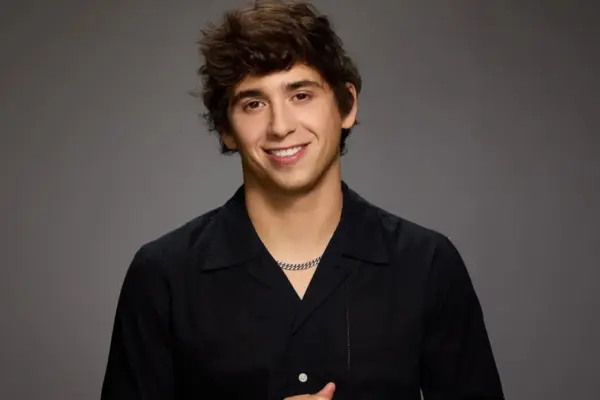


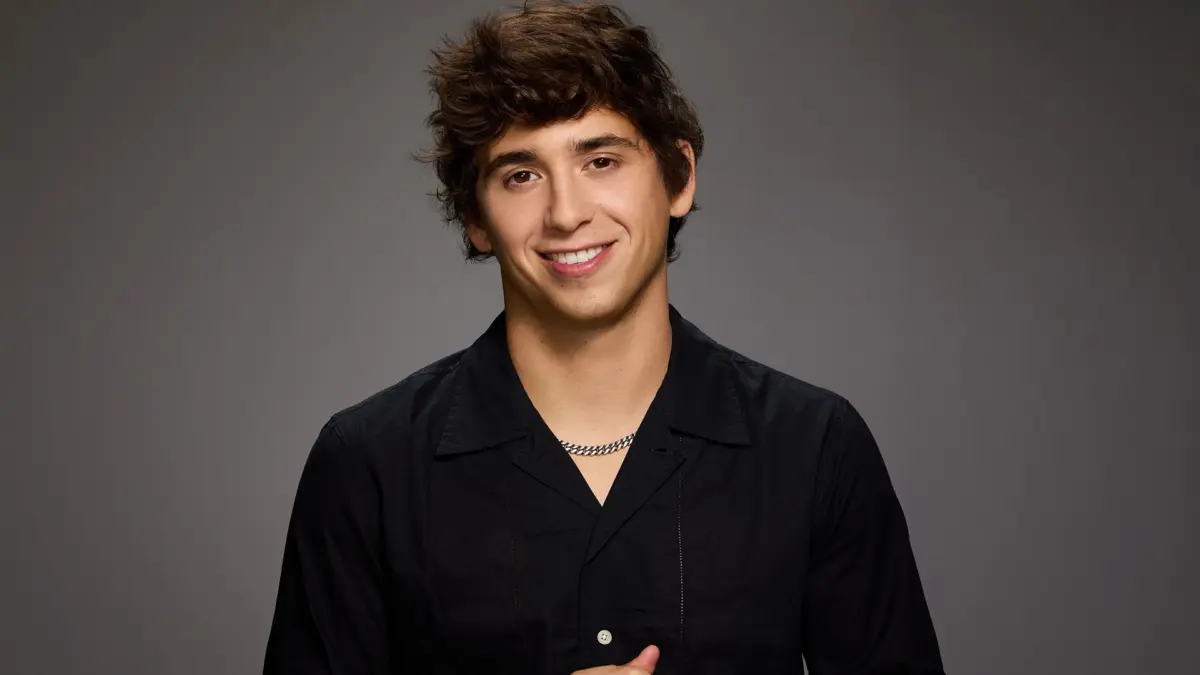
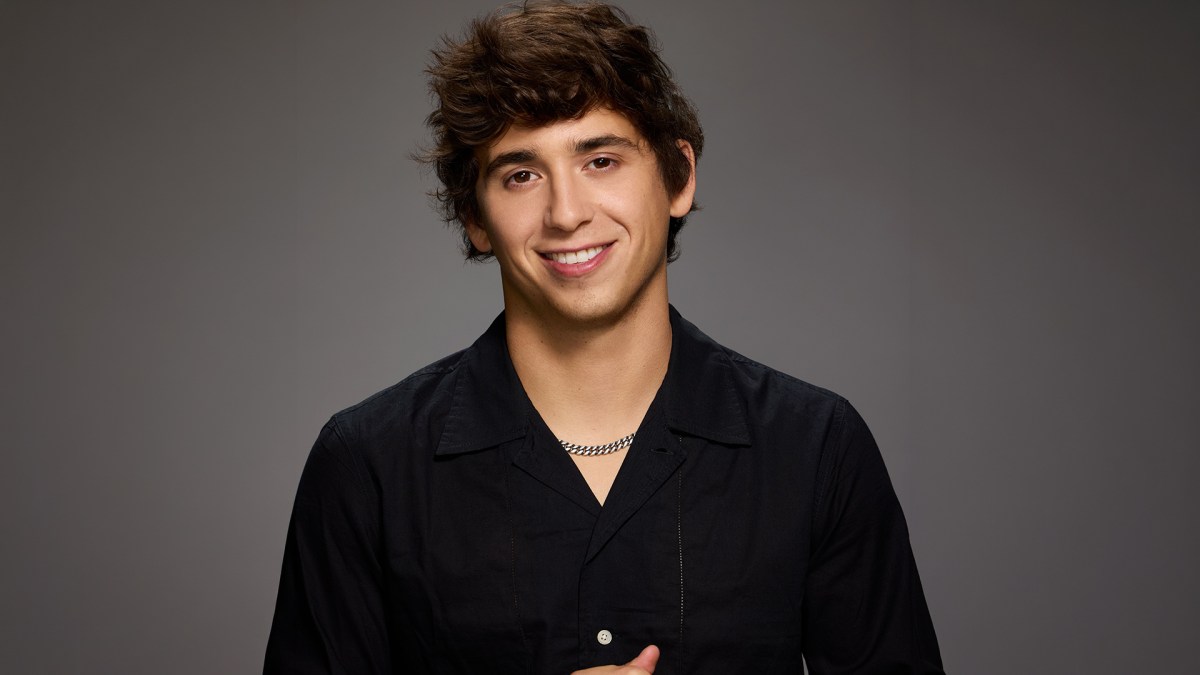
At just 29 years old, Marcello Hernández has amassed a professional resume that could easily take a traditional comedian decades to build. Since joining Saturday Night Live in 2022 as the iconic sketch comedy show’s first Gen Z cast member, the Miami-born, Cuban-Dominican comedian has rapidly evolved into one of the program’s definitive breakout stars. His momentum has since spilled across mediums, marked by the release of his debut Netflix stand-up special, Marcello Hernández: American Boy, as well as high-profile transitions into film work with appearances in Happy Gilmore 2 and 72 Hours.
His expanding portfolio also includes prominent voice acting in Shrek 5, major award-show hosting gigs, and headlining the historic first all-Spanish comedy show at the Hollywood Bowl. Furthermore, his cultural footprint has been formally recognized through distinctions such as being named one of TIME’s 2025 Latino Leaders and securing a spot on The Hollywood Reporter’s Latin Power List. While this meteoric rise might look like an overnight sensation to outside observers, Hernández views his success through a vastly different lens—one shaped by patience, sacrifice, and playing a much longer game.
That very philosophy heavily influences not only his creative endeavors but also how he approaches personal finance. Hernández recently partnered with Wells Fargo on a social media campaign timed around Hispanic Heritage Month, highlighting the ExpressSend Mobile feature, which allows customers to seamlessly send money to family and friends abroad through the Wells Fargo Mobile app. For the comedian, whose foundational understanding of money was shaped by his Cuban mother, the campaign’s emphasis on cross-border family support strikes a deeply personal chord.
“My mom is always on my ass about money. So I think it’s very important to be financially literate, and I’m happy that I can maybe try to make it a little fun to talk about money,” Hernández says. “The stuff about sending money abroad is obviously something that hits home. A lot of Cuban people and Dominican people send money home to their families. So yeah, I think it’s a combination of my mom always being on top of her money, and her spending and sending money home, which is something that any child of immigrants or family of immigrants knows about.”
Raised by a single mother, Hernández learned early on that earning money was only one fraction of a much larger equation. He watched her work tirelessly, practice strict saving habits even during periods of financial scarcity, and invent creative ways to make limited resources stretch as far as possible.
“I’d be up to go to school at 7:30 a.m., and my mom had already been up for three hours because she worked for an international company, so she was working on their hours,” he shares, reflecting on his childhood in Miami. “And so I think that level of work ethic is something that definitely inspired my level of work ethic. My mom is a smart woman. She made me understand the value of a dollar at a young age.”
One specific childhood memory perfectly encapsulates her pragmatic approach to resourcefulness and waste reduction.
“You know how when you buy Cuban bread it can sometimes get a bit of mold on it if you don’t eat it? So one time I tried to throw it away, and she said, ‘Don’t do that,’” he recalls. “Then she cut off some of the mold and told me, ‘Put it in a toaster and then you can eat it.’ I think for her it was about teaching me not to be wasteful. So now if I’m ever wasteful, I’ll definitely feel guilty about it. She definitely instilled that in me.”
That unyielding work ethic naturally translated into the various odd jobs Hernández held as he navigated his youth and early adulthood. Long before he was commanding television screens and concert venues, he was putting in long hours in unglamorous roles.
“I worked at the front desk at a gym. I worked as a delivery boy for food. In college, I interned at a comedy club. I used to run food. I used to clean the floors if somebody threw up or something,” he shares. “When you do jobs like that, you just become grateful.”
That humble background serves as the bedrock for the sharp, observant comedy that catapulted him to national prominence. Rather than treating his Cuban and Dominican heritage as a calculated persona or an assigned role, Hernández simply draws organically from his lived experiences.
“I think I just talk about what I know, and I know what it’s like to grow up in a Cuban and Dominican household—I’m proud of it,” he says. “I grew up in Miami. A lot of Cuban people influenced me. I look up to a lot of Cuban people. I remember, as a kid, Celia Cruz was a larger-than-life figure, and Gloria Estefan was, too. Even when we went to school, we used to read José Martí poems, and then, obviously, all the Cuban baseball players I’ve been able to meet and see play, and then in my industry, Andy Garcia and Emilio Estefan, who have been kind enough to speak to me. It means a lot to me to connect with the people that come from where my family comes from.”
While his cultural touchstones range widely from Celia Cruz, Gloria Estefan, and José Martí to iconic athletes and legendary artists like Andy Garcia and Emilio Estefan, Hernández finds that the more specific he gets about his upbringing, the more universally resonant his humor becomes.
“The more I have hung out with other types of people, the more I’m just observant in general,” he shares. “I think that just because Cubans speak Spanish or Dominicans speak Spanish doesn’t mean we’re different. I think we’re very similar to a lot of people in the U.S., and we have a lot in common. Because of that, my comedy can make anybody laugh sometimes because what I went through, they went through it too. They’re just not from where I’m from. I think that gives me a little bit of hope that everybody is going through similar things at home regardless of what language you speak.”
This delicate balance between cultural specificity and universal human experience forms the core of American Boy. Rooted firmly in his Miami roots, the Netflix special examines the unique dynamics of being raised by a Cuban single mother, navigating immigrant family traditions, practicing cultural rituals, and enduring the profound culture shock of leaving South Florida to attend college in Ohio. Beneath the punchlines lies a poignant coming-of-age narrative about carrying one’s family and heritage forward while figuring out personal identity.
The one-hour format of the special granted audiences something that the rapid-fire constraints of Saturday Night Live sketches rarely allow: ample time to connect genuinely with the person behind the comedy.
“You got to spend an hour with me, and I think the beauty of SNL too is that these things are so quick. The sketches are so quick that you can’t really get bored—it’s fast,” he says. “लेकिन when you’re doing something for an hour, it was important for the audience to get to know me. On SNL, you play a lot of different characters, and sometimes you play yourself on a Weekend Update piece or something. But it was important to me for people to know where I came from, my relationship with my family, and just the way I think.”
Hernández had been quietly refining and workshopping that material since he was 18 years old. When he initially shared the jokes with loved ones—including friends outside the Latino community—he quickly realized how widely the underlying themes resonated.
“I didn’t want it to feel like it’s a Latino guy talking to American people,” he explains. “It’s like we’re all American. We’re all here. We all sometimes live through the same stuff.”
As Hernández has blossomed into one of the most visible Latino comedians working today, his professional orbit has naturally intersected with other major cultural forces, including global superstar Bad Bunny. What began as a creative collaboration during the musician’s guest appearance on Saturday Night Live has since blossomed into a genuine friendship. Hernández describes the Puerto Rican artist in familial terms, likening him to an older brother away at college.
“He’s like my big brother that’s [away] at college. I don’t see him very often. We don’t talk very often. He’s like in college—he’s doing his thing. But when I see him, it’s all love, and I look up to him. I’m learning from him all the time,” Hernández says. “I think from him, the biggest thing I learned is number one: that any moment is a moment for inspiration. It can come to you at any time, which I’ve already experienced. But hanging out with him and seeing how he treats his craft is so cool.”
Beyond their creative chemistry, Hernández deeply admires the way Bad Bunny has managed massive international fame while remaining strictly anchored to his roots and his original support system.
“He’s the type of guy to keep his day ones around him, and I respect that very much,” he notes. “I’ve also tried to make sure that I can identify those day ones that are really important to me and that bring value to my life and that ground me. I think that’s something he’s been able to do really well.”
The multi-year journey required to bring American Boy to life mirrors the broader trajectory of Hernández’s career. He started performing stand-up as an 18-year-old, grinding away in gritty dive bars and cramped New York comedy rooms while juggling whatever survival jobs he could find. He spent time selling comedy tickets out on the street, operating a headset sales position out of his mother’s apartment during the pandemic, and performing menial service labor at a comedy club just to stay close to the stage.
That relentless perseverance eventually landed him in the right rooms. After securing a performance slot at prominent Manhattan comedy venue The Stand, Hernández was selected for a prestigious Just for Laughs showcase, which ultimately brought him onto the radar of SNL talent scouts. Additionally, a comedy club manager who had closely observed his tireless work ethic advocated for him to show executives, directly paving the way for the successful audition that secured his cast membership in 2022.
“The biggest advice I’d give to anyone is you have to go after your passion,” he states. “It doesn’t matter how it works out; do what you love and give yourself a long runway. You have to give yourself a long runway. If it happens before, you could be excited. But if you want it to happen now and it takes longer, you’re going to be disappointed.”
Early on in his comedic journey, Hernández mentally allocated a 15-year window to achieve his professional goals. He managed to secure his spot on Saturday Night Live in just seven years—though he acknowledges that even a seven-year timeline can feel impossibly daunting to an aspiring artist.
“Seven years feels like a lot. I think if you tell an 18-year-old right now that things are going to change in seven years, they’re going to be like, ‘What? Seven years? That’s forever,’” he says. “But I think that delayed gratification is a really big thing that I am grateful that I got, and I got it from listening to people that were big and learning about how many years it took them to get to where they got.”
This philosophy represents the exact intersection of his approach to comedy and his perspective on personal finance. Both disciplines require intense patience, short-term sacrifices, and unwavering faith in progress that remains largely invisible to the outside world.
“Financial literacy is also about making sacrifices in the short term to be able to enjoy your long-term life,” Hernández explains. “And so I think it all goes hand-in-hand. I think anytime you look at something like, ‘I don’t care how long it takes, I’m just going to do it because I know it’s best for me,’ that’s a mentality that I subscribe to. It doesn’t need to happen right now. I need to get 1% better as often as possible.”
The unglamorous jobs and uncertain years of his early career did far more than simply lead Hernández to professional success. They proved to him that he possessed the resilience to endure fear, insecurity, and repeated disappointment—giving him authentic authority when speaking to others currently navigating that same grueling phase.
“I did things that weren’t pretty, and at the time it wasn’t glamorous, and I didn’t feel super proud of myself sometimes because I wasn’t doing stuff that was cool or traditionally an attractive job,” he admits. “But now the fact that I did those jobs is what gives me the confidence to push through it. I went through every emotion for this. I’ve been through sadness and happiness, and fear, and insecurity, and every emotion pursuing this thing. So nobody can really take that away from me. You can’t say I didn’t work my ass off.”
“Some people maybe just need to hear, like, yo, I know this sucks right now, but those experiences that you’re having now are what you’ll talk about when you are comfortable and successful,” he adds. “You’re going to talk about these moments, the stuff that you did that was hard and was tough.”
For up-and-coming comedians currently waiting for their definitive break, Hernández often relies on a piece of wisdom shared by fellow comic Comedian CP, which reframes patience from passive waiting into an active, daily discipline.
“There’s this comedian, his name is Comedian CP, and he said something the other day that really hit me hard, and I think more people should hear it, and that is that every comedian is one joke away,” Hernández says. “I think once you know that, every day is an opportunity to find that joke. If you know you’re just one joke away, how can you not spend every day looking for it?”