






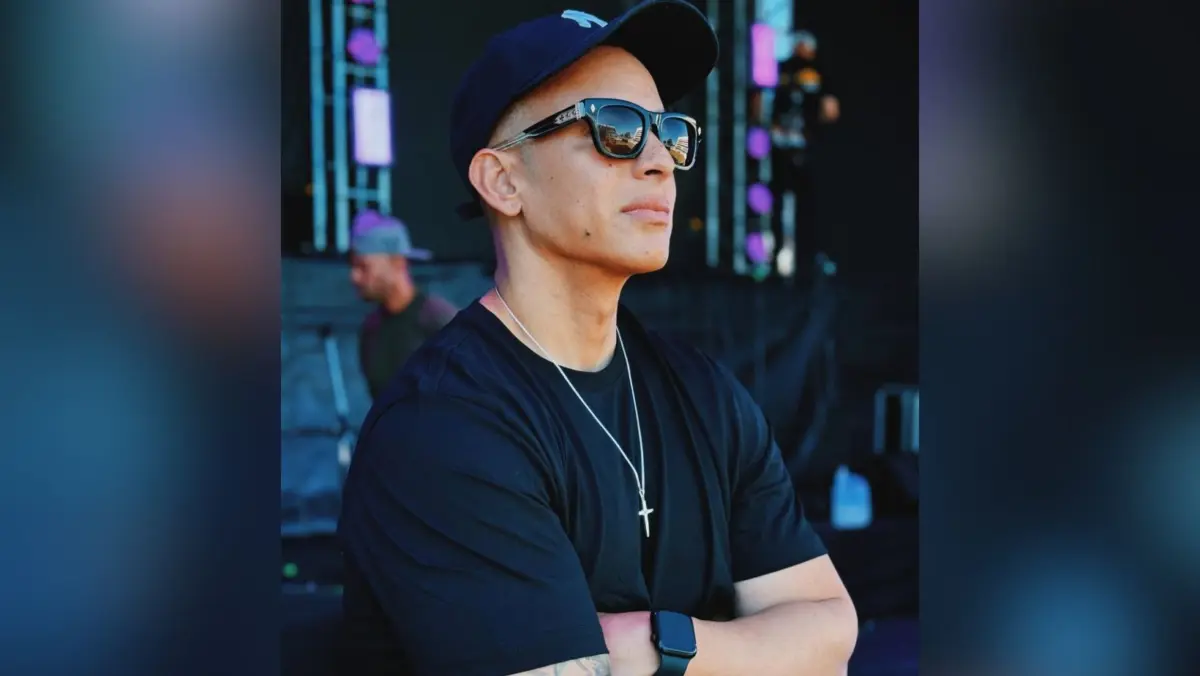
Ramón Ayala, the globally celebrated Puerto Rican urban music icon universally known as Daddy Yankee, has taken decisive legal action by filing a federal defamation lawsuit in the United States District Court for the Southern District of Florida. Seeking $10 million in damages, the complaint targets Spanish businessman León Fernando Fiksman. According to Ayala’s legal representatives, Fiksman disseminated entirely fabricated, malicious, and defamatory statements during a podcast interview published on January 14. The statements falsely associated the reggaeton pioneer with money laundering, political corruption, and the controversial financial networks of former Venezuelan president Hugo Chávez.
Ayala’s legal team contends that these explosive and damaging accusations were not made in a vacuum. Instead, they argue that the remarks were strategically timed and intentionally designed to poison the public perception of the artist, deliberately aiming to contaminate the prospective jury pool ahead of an upcoming, high-stakes civil jury trial in Florida.
The federal lawsuit represents the latest chapter in an escalating legal battle between the two men. Their disputes first entered the judicial system in Miami-Dade County in 2024, when Fiksman initiated a separate civil lawsuit naming Ayala, his then-wife Mireddys González, and other associated parties. That state-level complaint centered on allegations of financial fraud connected to a Florida-based padel sports enterprise. With the Miami-Dade jury trial officially scheduled to commence in August of this year, the federal filing asserts that Fiksman’s recent media appearances were calculated maneuvers to gain an unfair tactical advantage outside the courtroom.
What Fiksman Said and Why Ayala Says It Was a Lie
The controversy driving the federal lawsuit stems from statements Fiksman made during his January appearance on a widely circulated Spanish-language podcast. During the interview, Fiksman discussed the ongoing Miami-Dade County litigation, asserting that he had personally reviewed discovery materials produced in the case. He claimed that these documents substantiated his negative characterizations of Ayala’s business conduct. Specifically, Fiksman told the podcast audience that messages examined during the legal discovery process demonstrated Ayala agreeing with statements indicating that corporate assets had been improperly diverted. He then summarized his interpretation of the evidence by explicitly linking the terms money laundering, Hugo Chávez, and Daddy Yankee.
Ayala’s federal complaint aggressively refutes these claims, stating unequivocally that no such messages or documents exist. The legal filing establishes that nothing produced during the extensive discovery phase of the Miami-Dade lawsuit—nor any document from any alternative source—supports the narratives Fiksman presented to the public.
Furthermore, the complaint accuses Fiksman of deliberately fabricating, distorting, and misrepresenting the contents of the discovery files. By citing a completely nonexistent message, Fiksman allegedly sought to lend artificial credibility to baseless accusations before an audience comprising hundreds of thousands of listeners. Ayala’s legal team argues that Fiksman acted with "actual malice," a legal standard indicating that the businessman either knew his public statements were false or proceeded to broadcast them with reckless disregard for the truth.
The federal filing reiterates that Ayala has never participated in, nor maintained any association with, money laundering schemes, the financial networks of Hugo Chávez, or Venezuelan political corruption of any description. The lawsuit maintains that Fiksman was fully aware of the falsehood of these assertions when he chose to voice them publicly.
Why the Timing and the Audience Mattered
The choice of platform and the demographic composition of the audience form a central pillar of Ayala’s federal defamation complaint. The legal document argues that Fiksman’s selection of venue and timing was calculated rather than coincidental. The podcast where the statements aired boasts a massive Spanish-language following of more than 737,000 subscribers, with a significant segment of that audience residing in South Florida or maintaining deep personal and cultural ties to the region.
The lawsuit highlights that the jury pool for the upcoming Miami-Dade County trial will be drawn directly from one of the most heavily Latino communities in the United States. This population includes substantial communities of Venezuelan and Cuban descent. For these specific communities, allegations linking a prominent public figure to Hugo Chávez’s financial networks and Venezuelan political corruption carry a uniquely visceral, emotionally charged impact.
By targeting this specific demographic with inflammatory accusations right as the trial approached, Ayala’s legal team argues that Fiksman ensured his narrative would resonate deeply within the exact community from which the court would select its jurors. The filing characterizes this strategy as an intentional effort to inflict maximum reputational harm on the artist while concurrently polluting the local prospective jury pool.
The State of Both Legal Battles
The underlying state-level litigation in Miami-Dade County has recently experienced significant procedural developments that provide crucial context for the federal defamation suit. In the original state lawsuit, Fiksman claimed he was forced out of a padel sports company at a severely devalued price, which he argued caused him substantial financial injury. However, that case suffered a major setback in December when a presiding judge formally excluded Fiksman’s primary expert witness.
Ayala’s federal complaint points out that the removal of this expert witness essentially stripped Fiksman of the only legal mechanism available to quantify and prove the financial losses he claims to have suffered. Consequently, Ayala’s legal representatives characterize Fiksman’s state-level claims as resting on pure speculation and conjecture. They argue that the podcast interview was a direct, reactionary response to losing procedural ground inside the courtroom, shifting the conflict to the court of public opinion.
The newly filed federal defamation action comprises three distinct counts and demands financial compensation of no less than $10 million. This figure accounts for severe damage to Ayala’s global reputation, as well as the accompanying economic and emotional fallout. The federal case has been officially assigned to Judge José E. Martínez in the United States District Court for the Southern District of Florida. With the Miami-Dade jury trial slated to begin in August, both high-profile legal proceedings will run concurrently, ensuring intense judicial and public scrutiny for months to come.