









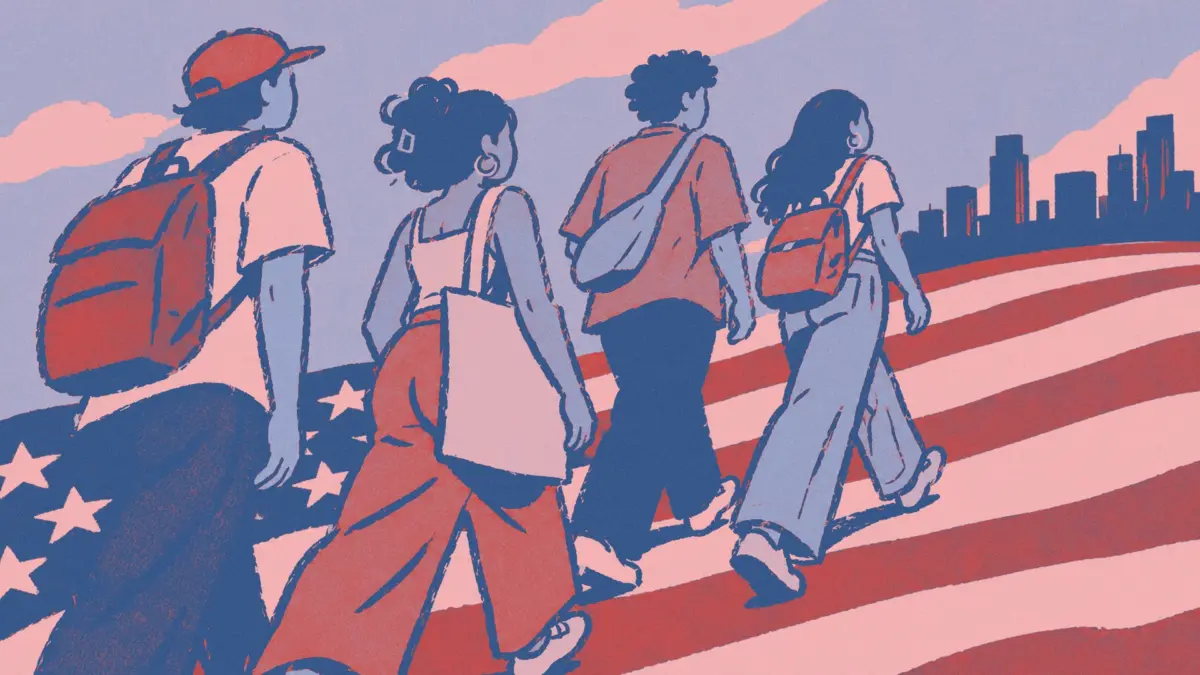
For generations, the American Dream operated on a reliable, well-worn formula. You worked hard in school, pursued higher education, secured a stable job, bought a house with a white picket fence, married, raised at least two children, accumulated wealth over time, and eventually retired with peace of mind. It was a systematic progression that promised generational advancement for those willing to put in the effort.
This was the exact blueprint that the author, an older millennial and journalist, watched her Dominican-American immigrant parents achieve. Arriving in the United States in the early 1970s—her father in 1970 and her mother in 1972—her grandparents believed life in America would offer vastly superior opportunities compared to what they left behind in the Dominican Republic. For them, it undoubtedly did.
The America of that era was defined by abundance. Employment opportunities were plentiful, allowing individuals to secure multiple jobs easily if needed. Neither of her grandfathers spoke English fluently, yet within a few years of arriving, both were able to purchase homes for less than six figures. Her father went on to graduate from NYU dental school, marrying his teenage sweetheart and purchasing a house in a quiet, suburban enclave of Queens. He raised three children, maintained two cars and a dog, and comfortably afforded private school tuition for his kids—a financial feat that many modern parents today struggle to imagine accomplishing.
However, as an older millennial who dedicated her entire adulthood to establishing a successful career in journalism, only to find herself weathering a period of unemployment and hanging by a thread, she realizes she is far from alone. Across the country, countless individuals—particularly millennials, Gen Zers, and Latines—are expressing a growing sentiment that the traditional American Dream has transformed into a false promise.
This generational disillusionment is backed by recent data. According to a Pew Research Center poll, 27% of U.S. Latinos believe the American Dream no longer exists. Furthermore, among those who still maintain that the dream is attainable, 43% acknowledge that it has become significantly harder to achieve than it was for their parents’ generation.
The core issue is not a generational shift in values or a waning desire for stability; rather, the economic cost of achieving these traditional milestones has changed dramatically. Young adults entered the workforce during an economic landscape where a college degree no longer guarantees a stable, middle-class career, even as the cost of obtaining that education skyrocketed. Housing prices and urban rental markets escalated far outstripping wage growth. Meanwhile, the costs of essential needs—including astronomical childcare expenses, rising healthcare premiums, and the everyday price of groceries—have made keeping up with the cost of living an exhausting daily battle.
For millennials, this economic vulnerability was shaped by formative historical events. Many came of age during or immediately after the trauma of 9/11 and graduated into the teeth of the Great Recession, watching their parents lose jobs, drain retirement accounts, see their businesses collapse, or face foreclosure. Gen Z inherited these exact systemic pressures, which were subsequently compounded by a global pandemic that deeply disrupted their college years and early career trajectories. These generations were instructed to work hard, pull themselves up by their bootstraps, and push ahead, only to discover that hard work alone is no longer an adequate counterweight to shifting economic realities.
Consequently, a profound sense of exhaustion has settled over those pursuing success. While previous generations were asked to sacrifice for a future they could reasonably expect to attain, millennials and Gen Z have been asked to sacrifice for a target that continually moves further out of reach. Countless individuals pursued higher education, accepted unpaid internships, and climbed corporate ladders, only to realize they still cannot attain half of what their parents managed with fewer credentials. Instead, they have watched the rules of the economy change in real time—marked by precarious job security, normalized mass layoffs, soaring tuition, and housing markets where even six-figure salaries fall short in major metropolitan areas.
This burnout does not stem from a lack of ambition. Rather, it reflects a deep weariness from working harder for milestones that offer diminishing returns, alongside a growing skepticism that reaching these markers will ever deliver the promised security.
While the American Dream for past generations was centered on arrival—securing homeownership, establishing firm financial stability, and providing descendants with unachievable advantages—for younger generations, the objective has shifted. The focus is less on arriving at a definitive destination and more on attempting to maintain what previous generations secured, often with significantly fewer resources.
This economic reality forces a difficult reckoning with whether the old formula remains viable, and if not, what goals should replace it. The solution does not lie in abandoning ambition entirely, nor does it necessarily mean embracing the volatile path of entrepreneurship or content creation, both of which come with their own distinct sets of formidable obstacles. Instead, the path forward requires formulating a new definition of progress—one that does not rely on hitting every traditional milestone that previous generations were told proved they had "made it."
Adapting to this new reality begins with shedding generational comparisons and acknowledging that major milestones such as career stability, wealth accumulation, homeownership, and starting a family are occurring much later in life. It involves redesigning personal definitions of success to potentially exclude homeownership or children altogether, and refusing to view the absence of these traditional markers as personal failure. For many, modern success looks like clearing existing debt, establishing a modest emergency fund, or landing employment that preserves physical and mental health rather than destroying it. It can mean building a life that does not completely revolve around work, choosing to rent rather than buy to invest capital elsewhere, or postponing partnership and parenthood.
For earlier generations, the American Dream was inextricably linked to security. Yet contemporary realities demonstrate that university degrees and six-figure salaries no longer guarantee safety from instability. A single unexpected layoff, a sudden rent hike, or an unforeseen medical bill can instantly unravel years of financial planning.
The pressing question is no longer simply how to increase earnings or return to a previous salary level, but rather how to build a resilient life within an economic system where career, income, and housing security are no longer guaranteed. Acknowledging these structural forces brings much-needed realism to a conversation long dominated by the myth of pure individual grit. The American Dream, separated from political rhetoric, was never solely a product of personal discipline and determination; it relied heavily upon a favorable economic environment—a variable that has fundamentally shifted.
Redefining success and navigating this ongoing economic transition requires patience and self-grace. Even amidst career uncertainty and financial instability, the underlying hope remains that life can still pivot toward stability, proving that resilience in a changing America requires a new kind of dream.