






It took a long time to find a true tribe, even for someone who, technically, comes from deeply rooted, tribal family networks on both sides. Growing up, the author’s grandparents were perpetual hosts, constantly opening their doors to family, friends, and vecinos. Until she developed Alzheimer’s in her 90s, Abuela Celeste was perpetually cooking up large pots of food to pack and send off to a friend or church member who was going through a difficult time. The grandparents lived by a strict ethos of community, but that organic way of life was largely lost with the subsequent generation of their children.
Both parents migrated to the United States as children in the early 1970s, arriving with very little and without knowing a single word of English. Their parents’ robust community mindset was the vital mechanism that helped them survive the daunting transition. However, as everyone grew into adulthood, complicated and unhealthy family patterns inevitably surfaced. What might have initially started as innocent sibling rivalry curdled into deep-seated resentment—directed not just toward one another, but toward the grandparents and the ways they had allegedly failed their children. Stories of past abuse were finally spoken out loud. Equipped with fluent English, higher education, and financial stability, individual family members suddenly gained the luxury of deciding whether they wanted to stick around or distance themselves entirely.
The maternal grandfather passed away when the author was 11 years old, and the large, bustling gatherings with extended family and friends became significantly less frequent. Everyone had drifted into their own households, immediate families, and demanding careers, and the invisible glue that had previously held the extended family together simply evaporated. It became clear that "survival" is frequently what keeps families and communities bonded in the first place, and a vast amount of traditional family loyalty was actually rooted in mutual necessity.
By the teenage years, most holidays were spent strictly within the nuclear family unit. Reunions were rare occurrences, and lingering tensions between aunts and uncles frequently spilled over onto the younger generation of cousins. Entering the early twenties, there was zero faith remaining that a united, healthy extended-family dynamic would ever materialize—a dynamic the author frequently observed and deeply envied among Latino friends who counted their cousins as best friends, trusted relatives with deep secrets, and found any excuse to gather over a massive meal that ended with dancing late into the night.
A glimpse of that world was experienced during a nearly ten-year relationship with a Dominican partner. There was a constant longing for what he possessed: an expansive network of extended family, friends, and neighbors who reliably showed up for holidays and birthdays, and who casually invited people over for sancocho on a random weeknight simply because there was extra food to go around.
Yet, the final two years of that long-term relationship also illuminated precisely why the author’s parents and many extended relatives had chosen to set firm boundaries and love their families from a safe distance. When families and communities are forced to live in permanent survival mode, they frequently foster codependency, a complete lack of personal boundaries, and unfair, crushing expectations placed upon children as they mature into adults. The parents had intentionally wanted to shield their children from those exact dynamics.
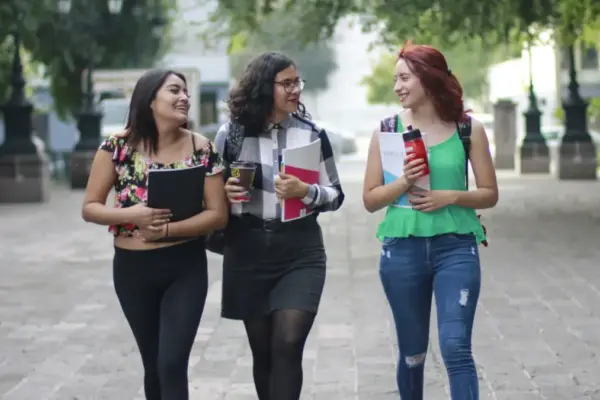
Entering the thirties, numerous attempts were made to introduce different friend groups to one another, harboring a quiet hope that they could be fused into one large, surrogate family—the primos and primas that were never provided by blood. It was not until the late thirties that the realization fully set in: that objective had finally been achieved.
Sometimes a village is not something an individual is born into or conveniently handed by fate. Sometimes it is something that must be painstakingly built from scratch. Along the way, amazing individuals appeared, showing up during crises in ways biological family never had, carrying the author through intensely challenging chapters and cheering loudly when things were going well. In return, the same energy was reciprocated.
These relationships were never transactional; they were rooted in genuine reciprocity. Some connections failed to click, requiring polite distance or a clean break, but friendships and even casual acquaintanceships undeniably enriched daily life. Navigating one of the most challenging years since the onset of the COVID-19 pandemic reinforced just how central a reliable tribe is when personal life and the broader world appear to be crumbling.
In contemporary cultural discourse, there is no shortage of conversation surrounding a modern loneliness epidemic. Countless people of color on social media endlessly debate the importance of community, a concept that initially resonated deeply. Yet, as a close friend recently observed, "community" has increasingly devolved into an empty buzzword. Many individuals proclaim a deep desire for connection, yet demonstrate an unwillingness to invest the necessary labor to sustain it.
Simply showing up to barbecues, parties, and large social gatherings represents only a fraction of the work. True community requires carving out intentional one-on-one time, asking people what specific forms of support they require, checking in outside of superficial group chats, and finding concrete ways to be of service during periods of genuine hardship.
A village is not merely defined by the people who show up when needed; it is defined by the person one chooses to become for others. If society genuinely desires community, people must be willing to actively participate in it rather than merely harvest its benefits. Community gatherings should never be treated as mere networking opportunities, which immediately reduces human connection to a transactional exchange.
Understanding the hesitation is not difficult. The author’s own family had ample, valid reasons for stepping away from traditional communal structures: they frequently came packaged with heavy obligations, guilt, boundary violations, excessive overinvolvement, unfair expectations, and disproportionate caregiving labor that invariably fell heaviest on women. Aging, however, forces a necessary internal reckoning: what specific elements of the traditional village are actually worth reclaiming?
Chief among them is the generosity and hospitality modeled by grandparents—qualities that feel innate. Prior to the difficulties of recent months, hosting intimate dinner parties at home brought immense joy. That commitment translates to showing up for friends’ major milestones, checking in regularly, holding space for people during personal crises, and engaging in difficult yet respectful, loving conversations.
Building community in the modern era is undeniably difficult. Society is structured around capitalist demands that prioritize long working hours over leisure and connection with loved ones. Modern adulthood compounds these hurdles, especially when layered with the realities of raising children, caring for aging parents, and managing chronic caregiving responsibilities.
Even as an unmarried and childfree individual, there are inevitable seasons when bandwidth runs critically low, making it impossible to check in on every cherished relationship. The key has been letting go of the romanticized ideal of the old village while stopping the cycle of self-blame for not growing up within one. Instead, the focus has shifted toward constructing a modernized version tailored to contemporary realities.
Even amid busy schedules and widespread burnout driven by relentless work and economic pressures, people can forge a new kind of village—one that preserves mutual care and radical generosity without demanding that individuals, particularly women, erase themselves inside a web of suffocating obligations.
For many Latinos, family and community have historically functioned not just as emotional safety nets, but as the foundational framework for organizing daily life. In early childhood, grandparents anchored the household. Relatives dropped by unannounced without calling ahead. Certain cousins were raised shoulder-to-shoulder like siblings. Neighbors were embraced as literal family, and parents taught children to address close friends as Tía and Tío. Food functioned as the universal language of care.
That fundamental expectation that life is inherently relational is steadily eroding across generations, particularly in the United States, where existence revolves around labor. Individuals build careers, relocate across geographic lines, and learn to prioritize hyper-independence. When combined with the isolating impacts of the pandemic, remote work culture, social media, and digital screens, society has grown profoundly disconnected. Meanwhile, watching other people’s curated displays of belonging through a digital windowpane only amplifies personal isolation.
For Latinas in particular, the yearning for community is not just a passing desire; it is an effort to recover something deeply recognized in the lives of mothers and grandmothers. It is an echo of what was experienced in childhood. What is truly being sought is a space to be emotionally held by others once more.
The widespread hunger for community stems largely from being the first generation of Latinos explicitly conditioned to build adult lives around radical independence, despite having been raised within collective structures built primarily for survival.
Creating and sustaining a modern community cannot function as a ledger of debts and credits. Participating in a village does not require everyone to contribute identical amounts of labor or resources at all times; the balance fluctuates naturally.
One person might experience a birth in the family or the loss of a parent, requiring temporary, heavy support. Another might face financial hardship—as the author did for much of the past year—making it impossible to socialize or show up in expected ways, while someone else steps forward with more to give.
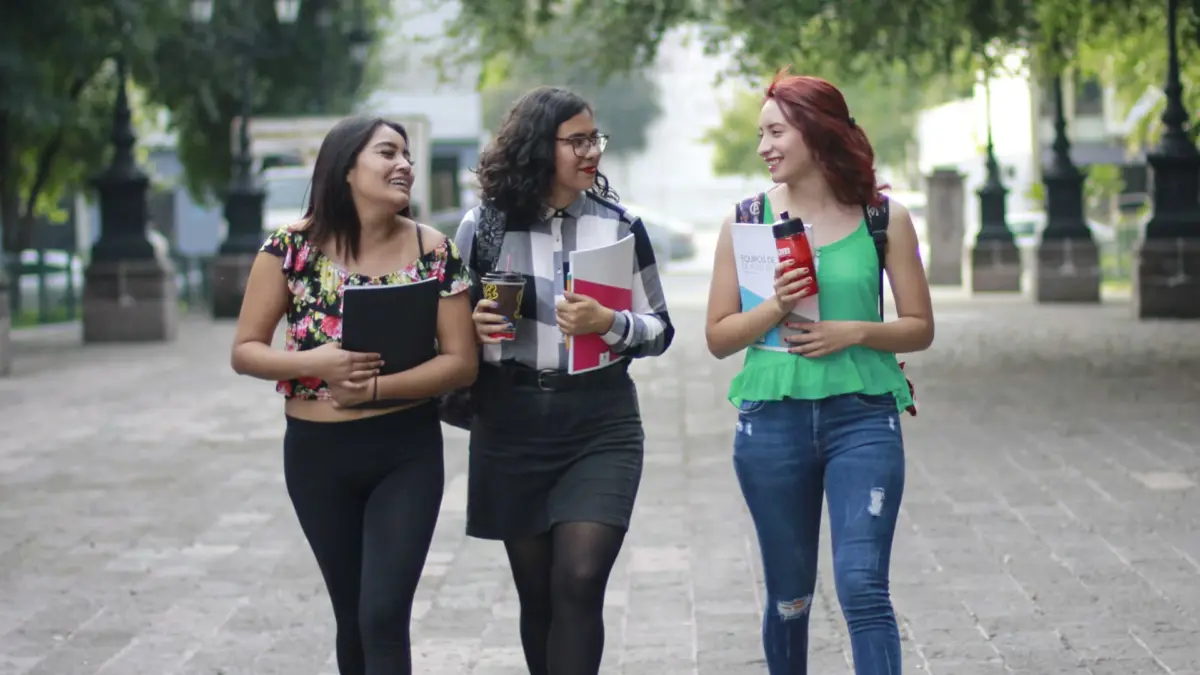
Today, a friend might treat you to dinner, and tomorrow, you might assist them with heavy lifting during an apartment move. Last year, substantial time was dedicated to supporting a girlfriend through a devastating breakup. This year, that exact same friend has anchored the author through bouts of unemployment and health scares—even providing post-procedure transportation after a medical exam. Years prior, a profile was written for a friend’s hair salon after she provided a transformative curly haircut that healed heat-damaged locks. Today, that same stylist offers free cuts and color out of awareness for current financial constraints. Another friendship blossomed after writing about a peer’s indie film feature; today, that individual is a close confidant who regularly purchases festival tickets. That is la comunidad.
Reciprocity is not about keeping score. It is about trusting that care continually circulates through the network. This vital nuance is frequently overlooked by those who claim to desire community without grasping its foundational requirements.
When people state a desire for community, they must honestly evaluate whether they are willing to embody the exact type of friend they are demanding from others. Are they initiating phone calls, following up, extending invitations, and making concrete plans? Too often, adult friendships devolve into passive waiting games, with everyone silently hoping someone else will take the first step.
Chosen family and biological networks alike carry inherent responsibilities. Are people genuinely building sustainable chosen families, or are they simply hunting for temporary antidotes to acute loneliness? Those two objectives are vastly different. Intentionality is required to manufacture the organic connections of the past.
While the mothers and grandmothers of the past maintained vibrant communities, it frequently demanded the total sacrifice of their personal autonomy and individuality. A modern iteration of la comunidad can thrive while firmly rejecting the notion that peace and self-determination must be surrendered to belong—particularly for Latinas. It is entirely possible to carve out dedicated time for loved ones, exchange mutual support, and fiercely respect individual boundaries.
The ultimate objective should not be an impossible recreation of the exact communities inhabited by parents and grandparents. Instead, the goal must be constructing a modernized village where deep, meaningful connection coexists peacefully with personal autonomy.