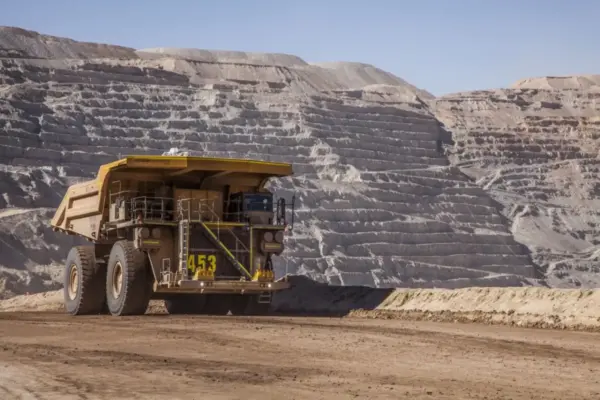









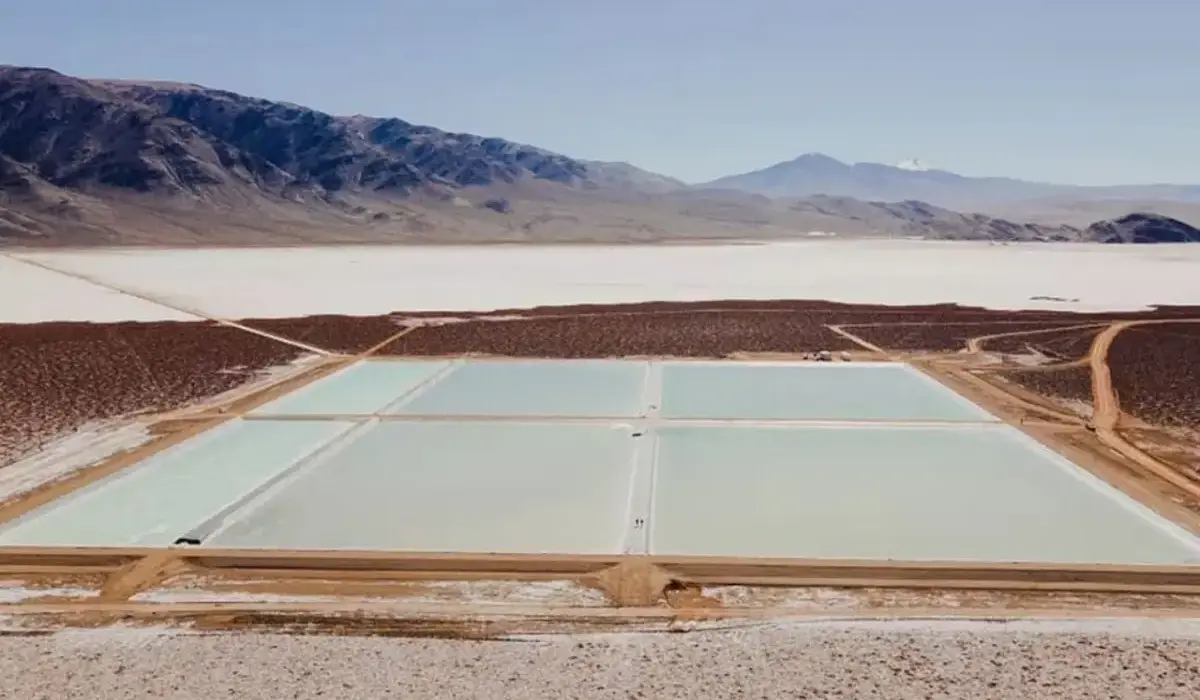
Argentina’s mining industry is experiencing a powerful resurgence, propelled by a surge in exports and the rising appeal of untapped mineral reserves. Driven primarily by the global demand for lithium, copper, and precious metals like gold, the sector has emerged as a bright spot in the nation’s economy, attracting renewed international attention and reshaping regional trade dynamics.
National statistics institute INDEC reported that Argentina achieved its highest-ever mining exports in 2025, pulling in US$8.1 billion—a robust 19.2% increase compared to the US$6.8 billion recorded the previous year. Current indicators point to an even stronger performance ahead. Metal mining and lithium sectors alone generated US$6 billion in exports during the first half of 2026, marking a staggering 69.7% surge over the exact same period in 2025.
Capital deployment is expanding in tandem with trade volumes. Under the government’s Large Investment Incentive Regime (RIGI), 24 projects have received approval, with half of them dedicated to the mining sector. An additional six mining initiatives are currently under review, signaling sustained confidence from industrial developers.
This economic momentum unfolds against a shifting geopolitical backdrop. In late August, Argentina, Bolivia, Chile, and Peru signed a joint declaration designed to attract mining investment and fortify regional cooperation concerning critical minerals.
Francisco Balduzzi, co-chair of Womble Bond Dickinson’s Mining Practice Group—a specialized team providing legal and strategic counsel to extraction companies—sat down with the Herald to discuss the implications of the regional agreement. He analyzed how regulatory frameworks and cross-border synergies will likely dictate which projects succeed, while highlighting a novel geopolitical moment marked by heightened United States engagement aimed at consolidating regional supply chains for essential raw materials.
While acknowledging that Argentina’s historical economic and political volatility still deters certain investors, Balduzzi noted that growing sector interest has already translated into substantial capital commitments.

What was the most significant aspect of the agreement signed in August by Argentina, Bolivia, Chile and Peru?
More than an agreement, Balduzzi explained, the August pact functions primarily as a declaration of intent. It outlines shared objectives aimed at making the mining sector both more predictable and operationally efficient. It is not an enforceable binding treaty wherein the four governments dictate a unified regional mining policy, but rather a public alignment from major players in the global extraction economy.
The declaration carries considerable weight because it brings together nations that dominate copper production—namely Chile and Peru—alongside the three countries believed to hold the world’s largest lithium reserves: Bolivia, Argentina, and Chile.
Balduzzi noted that the declaration establishes four primary intentions shared by the participating governments: promoting responsible mining across all four territories, and strengthening existing supply chains. These commercial links are already partially established, particularly between Argentina and Chile through older bilateral agreements. The signatories also pledged to cooperate on geological research and, crucially, to establish technical working groups to tackle shared operational hurdles.
By issuing a unified public statement, the four governments are signaling to global capital markets that these opportunities exist and that the countries are moving in a synchronized direction. This collective front provides foreign investors with a degree of international political reassurance, signaling that the participating nations are operating on the same page.
Both Argentina and Bolivia are seeking investment, but Chile and Peru already have major mining industries. What do you think Chile and Peru hope to achieve with this declaration?
Chile and Peru are not just regional peers; they are also active investors in neighboring jurisdictions. Within the Lithium Triangle—especially along the border shared by Chile and Argentina—numerous mineral deposits sit directly on international boundary lines. In practice, extraction might occur on the Argentine side, while processing, transportation, or refining takes place on Chilean soil.
These geographical and natural synergies naturally point toward cross-border collaboration. When a single mineral deposit straddles an international border, developers naturally want to avoid navigating two separate, unsynchronized permitting processes and timelines in Argentina and Chile. They want to execute the projects concurrently.

Although the declaration does not explicitly mandate streamlined cross-border regulations, Balduzzi anticipates that future working groups will focus on standardizing certain procedures to make binational projects practical for investors. At present, each country maintains distinct legal structures: Argentina relies on the RIGI, Peru features a streamlined permitting framework, Chile operates with mixed mining companies, and Bolivia is gradually opening its doors to foreign capital.
Bringing these diverse regulatory frameworks to a more comparable level of efficiency would make regional investment vastly more attractive. Furthermore, because Peru and Chile possess more mature mining industries, they naturally boast a deeper pool of specialized service providers. This ecosystem could easily expand to support operations in Argentina and Bolivia, yielding mutual economic benefits.
At the same time, Balduzzi cautioned that a joint declaration alone will not automatically unlock investment. Long-term capital requires institutional stability. While companies routinely deploy funds into volatile regions when geological potential is high, established stability significantly enhances a jurisdiction’s appeal. Success also depends on local industrial development, ensuring that domestic enterprises looking to expand across borders—such as an Argentine company moving into Chile—fully understand the prevailing rules of the game.
Beyond the RIGI and this joint declaration, what would it take to trigger investment in Argentina?
Describing this as the "million-dollar question," Balduzzi observed that foreign capital has shown a stronger preference for mining in Argentina than for other extractive industries like oil and gas.
However, rebuilding international trust remains an uphill battle. While Argentina introduced attractive foreign investment frameworks in the 1990s, the subsequent two decades—with the notable exception of Mauricio Macri’s administration—saw a turbulent cycle marked by state expropriations and strict controls on transferring dividends abroad.
Consequently, the international investor pool is effectively divided into two distinct groups. The first consists of companies and financiers who suffered losses during previous administrations. Having been burned by policy reversals, they remain entirely alienated and refuse to consider entering the Argentine market until prolonged policy consistency is proven, which they generally define as the current administration securing reelection.

The second group comprises investors who are more aligned with the current U.S. administration and view Washington’s renewed engagement in Latin America as a novel and positive development. This group is actively deploying capital, bolstered by favorable diplomatic signals such as recent currency swap announcements with the United States, which generated an immediate surge in inquiries at Balduzzi’s legal practice.
Balduzzi emphasized that restoring international credibility requires more than legislative reforms; it demands consistent enforcement over extended periods. Furthermore, Argentina competes on a global stage. Even if domestic policies are perfected, mining companies ultimately follow superior geological deposits wherever they may be found.
Do you think investors’ perception of Argentina as a country without legal certainty could change in the coming years?
Shifting the broader global perception of Argentina’s macroeconomic stability will undoubtedly take considerable time. Within the mining sector, however, that rehabilitation process is already underway. As more successful projects break ground and capital flows steadily, additional investors are expected to follow suit.
The realization of binational projects, underpinned by formal agreements with neighbors like Chile, offers a significant strategic advantage. If these collaborative regulatory frameworks materialize, they will drastically reduce administrative friction, permitting delays, and red tape for international operators.
Could Argentina become a mining country like Chile and Peru in the coming years?
While Argentina possesses immense mineral wealth and staggering potential, Chile and Peru benefit from a much longer, uninterrupted history of industrialized mining.
Moreover, Argentina’s economic identity differs fundamentally from its Andean neighbors. Mining is not the sole cornerstone of the Argentine economy. For better or worse, the nation’s economic landscape remains richly diversified across multiple resource sectors, giving it a distinct structural profile within the region.