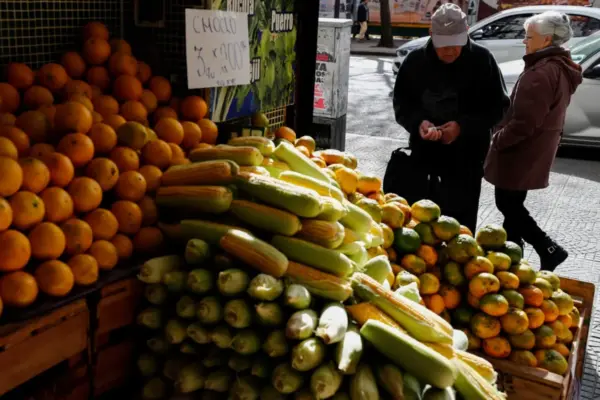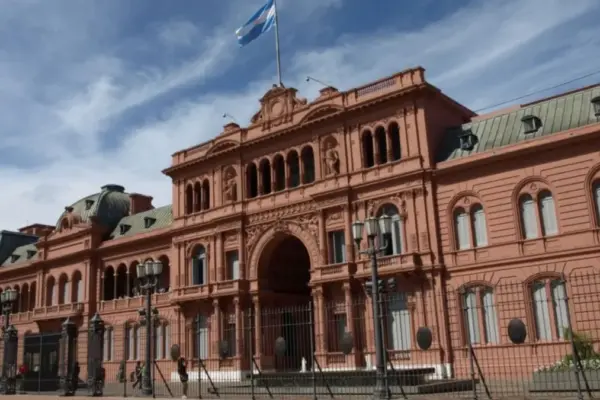











Argentina’s broader economic landscape is currently defined by a sharp and persistent dichotomy. While export-oriented sectors tied to oil, agriculture, and mining are celebrating record-breaking numbers, the domestic real economy—comprising local industry, construction, and everyday commerce—remains largely stagnant or locked in a downward trend. For the federal government, the prevailing strategy to resolve this structural friction has been to double down on the primary export sectors, betting heavily that surging foreign currency inflows will eventually trigger a robust "trickle-down" effect capable of reviving less-favored domestic industries and consumer markets.
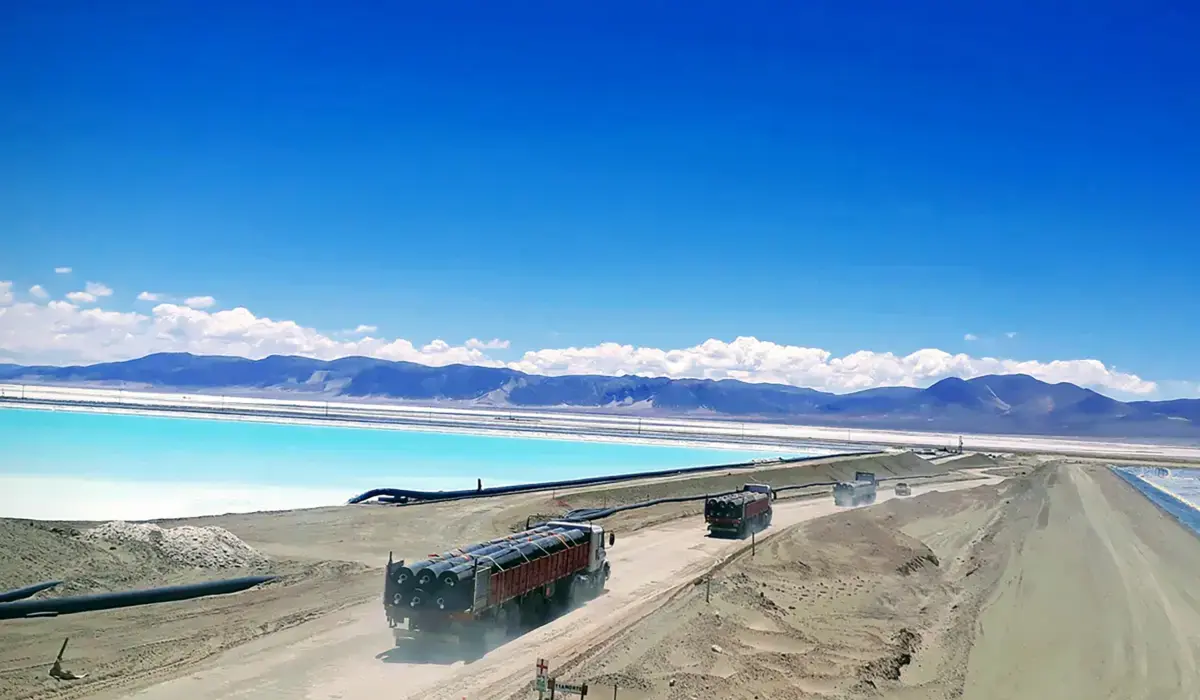
As the libertarian administration approaches the three-year mark of its tenure, economists, policymakers, and citizens alike are taking a closer look to evaluate how effective that ambitious growth strategy has proven so far. A comprehensive new report released by the orthodox think tank Fundación Mediterránea places this core economic theory under the microscope, offering a granular, province-by-province analysis. The study examines key regions such as Neuquén, celebrated globally for the prolific Vaca Muerta oil and gas shale formation; San Juan, Salta, Jujuy, Catamarca, and Santa Cruz, where heavy metal and lithium mining dominate the landscape; and Córdoba alongside Buenos Aires province, which together house the absolute bulk of Argentina’s powerhouse agricultural production.
The findings laid out by Fundación Mediterránea reveal a deeply heterogeneous and fragmented landscape across the South American nation. While there are undeniable pockets of marked economic improvement and dynamic growth concentrated in specific resource-rich provinces, the nation’s most populous regions and those boasting greater economic diversification—such as Córdoba and Buenos Aires province—are largely failing to feel any tangible economic trickle-down from the broader export boom. Furthermore, the report highlights instances where targeted government strategies designed to foster growth in one specific geography can inadvertently cause collateral damage, actively draining vitality from other territories.
"The issue takes on special importance in a context in which the Argentine economy, in the aggregate, has shown signs of stagnation for a year and a half," the report explicitly underscores, framing the urgency of the debate as national economic indicators hover in a delicate balance between export wealth and domestic hardship.
Neuquén Leads the Way in Regional Spillover
Among all the regions analyzed in the study, the province of Neuquén stands out as the most successful and pronounced example of an export boom successfully generating a broad economic spillover across its local productive matrix. Situated in the heart of Patagonia, Neuquén has reaped massive benefits from the continuous development of Vaca Muerta, transforming the regional capital and surrounding towns into bustling hubs of economic activity.
According to the data compiled in the report, the positive momentum in Neuquén is not merely confined to extraction and payroll expansion within the energy majors. The phenomenon goes much deeper into the provincial economy. "It is not just that the total wage bill is improving," the document notes. "Strikingly, the rest of tradable goods—meaning everything that is not oil and gas—is growing even more than the oil sector itself, and the rest of the sectors in the Neuquén economy are also following suit with a significant improvement."
The statistical evidence underscores this localized boom. When comparing metrics projected for 2025 against baseline figures from 2023, the wage bill generated by the rest of the tradable goods sector in Neuquén surged by an impressive 29 percent. By way of direct comparison, growth specifically tied to the core oil sector registered at 13 percent during that exact same timeframe, while the total private sector wage bill—which incorporates retail commerce, professional services, and local construction—saw an overall increase of 17 percent.
For economic analysts, these numbers offer a textbook case study of how a powerful primary export engine can ripple outward. "It is a good example of how a strong export impulse can drive the entire provincial productive structure, beyond the sector that originates it," the report concludes regarding the Patagonian province’s unique trajectory.
Alternating Realities for San Juan and Catamarca
Moving from hydrocarbons to hard-rock mining and the extraction of critical minerals, the provinces of San Juan and Catamarca present a different yet equally revealing set of dynamics. Both northern provinces have positioned themselves as key players in Argentina’s mining renaissance, and the findings from Fundación Mediterránea confirm that the basic trickle-down logic is indeed at work there, though it operates with distinct nuances and limitations.
In San Juan, the data reveals a surprising trend that defies conventional assumptions about resource-dependent economies. "The surprising revelation in San Juan is that other tradable goods are growing more than mining itself, which is explained by the weight of the industry supplying inputs for that activity," the report details. While the wage bill specifically attributable to the mining sector grew by 7 percent between the comparative periods, the rest of the province’s tradable goods sectors saw a stronger 11 percent increase, driven heavily by local manufacturing and supply chains feeding the mines.
Catamarca tells a slightly different story, one where primary extraction retains a more direct and dominant role in wage expansion. In Catamarca, the upward trajectory was led squarely by mining salaries. Between 2023 and 2025, mining-related wages rose by 19 percent, while the rest of the tradable goods sector experienced a much more modest increase of 6 percent.
Despite these sector-specific gains in mining regions, the broader domestic economic fabric in both provinces shows signs of lagging behind the headline export figures. The overall increase in the private sector wage bill across the board was remarkably minimal, registering at just 3 percent in San Juan and 5 percent in Catamarca. This disparity, according to the think tank’s analysis, "suggests a trickle-down effect that is still limited to the economy not directly linked to mining," leaving small businesses and non-tradable service sectors waiting for the wealth to filter down to the everyday consumer.
In Agricultural Provinces, Trickle-Down Proves Insufficient
While energy and mining regions display varying degrees of successful spillovers or localized booms, the narrative shifts dramatically when examining the nation’s agricultural heartland. In Buenos Aires province and Córdoba—two historic powerhouses deeply tied to agricultural cultivation, grain export terminals, and agro-industrial manufacturing—the overarching reality is that exports are performing well, yet doing remarkably little for the rest of the regional economies.
The Fundación Mediterránea report is blunt in its assessment of these densely populated zones, noting that "the agricultural sector exports more and pays better, but its strong performance is not enough to drive the provincial economy as a whole." Because agriculture is a highly capital-intensive industry that relies heavily on advanced technology, specialized machinery, and global commodities pricing rather than massive, localized labor forces, the wealth generated at the ports and silo complexes fails to cascade organically into neighboring towns and urban centers.
The statistical reality in these agricultural strongholds reflects this disconnect. Measured in real terms, total wages within the agricultural sector itself rose by 7 percent in Buenos Aires province and by 5 percent in Córdoba. However, the rest of the tradable goods sector—which includes local manufacturing, textiles, and domestic commerce operating outside the export pipeline—actually recorded notable declines of 4 percent and 5 percent, respectively, over the same timeline. Rather than lifting all boats, the agricultural export surge appears to coexist with a contracting domestic marketplace in these provinces.
This uneven and sometimes contradictory regional landscape is further underscored by complex scenarios playing out in other parts of the country, such as the southern province of Santa Cruz. The report points out that while Santa Cruz is experiencing a relatively positive moment for its metal mining operations, its traditional oil sector is "retreating sharply." This contraction is largely the result of deliberate corporate and state strategies, including the closure of mature, depleting wells by the state-run energy company YPF to redirect capital toward more productive, high-yield ventures like the Vaca Muerta shale plays further north.
For Santa Cruz, that strategic national pivot has immediate local consequences. The managed decline of mature oil fields "ends up dragging down the rest of the tradable goods, other sectors, and the total wage bill." While the province’s mining wage bill managed to rise by 21 percent between 2023 and 2025, the broader private sector wage bill across the province plummeted by a steep 15 percent, illustrating the delicate and often painful trade-offs inherent in Argentina’s current macroeconomic transition.