








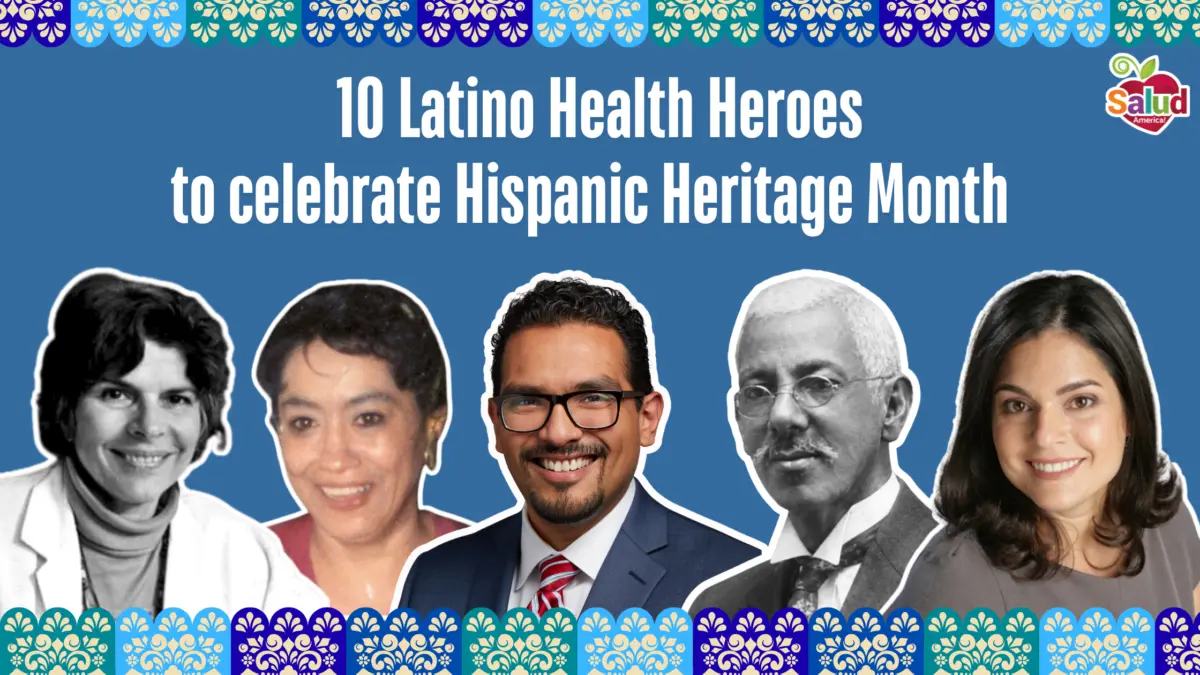
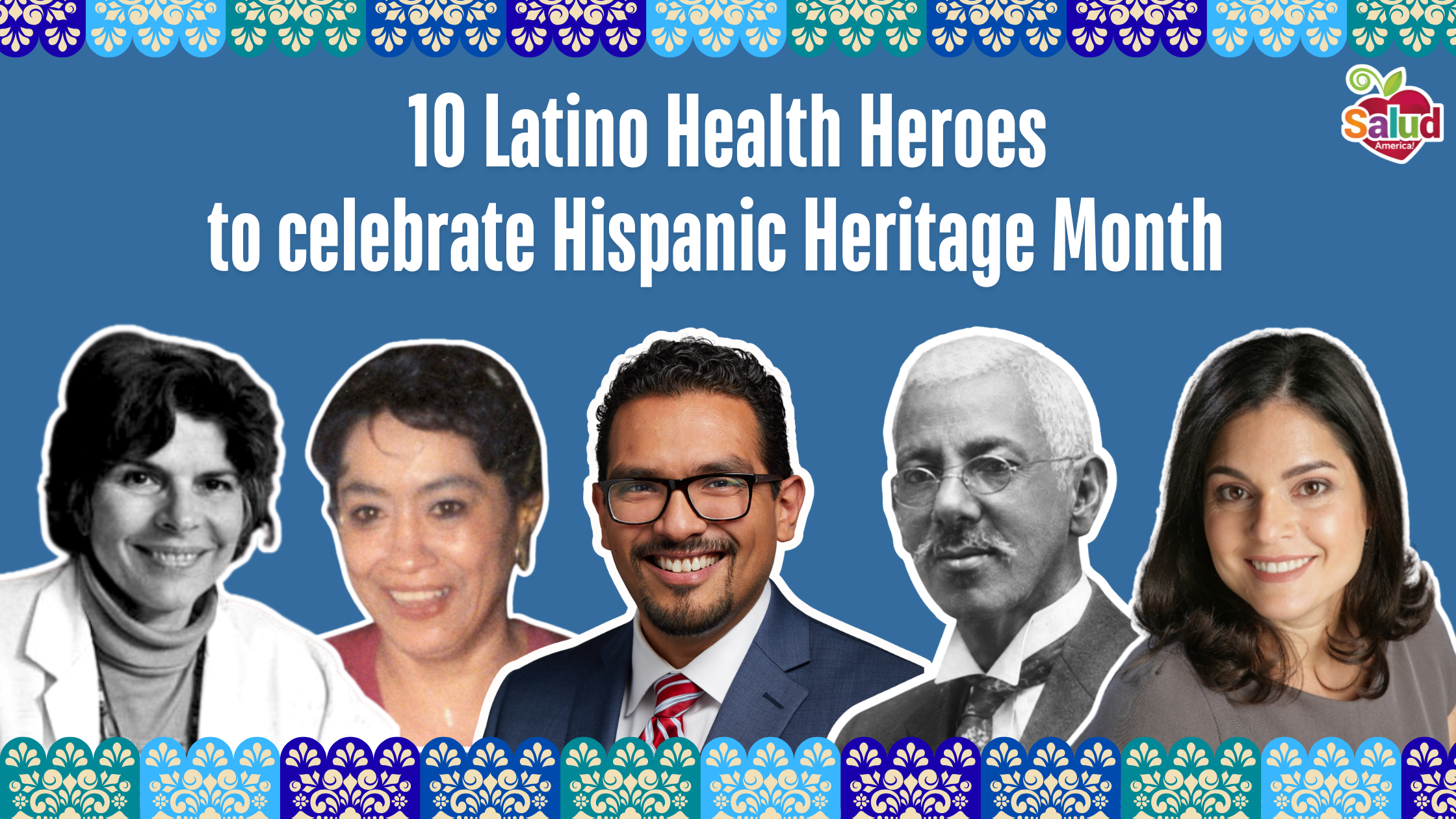
From bustling metropolitan hospitals and community-based clinics to the frontiers of digital health and academia, countless healthcare professionals, researchers, and pioneers have worked tirelessly to improve health equity and outcomes for all communities. During Hispanic Heritage Month, Salud America! shines a spotlight on these remarkable figures, recognizing both historical icons and contemporary leaders who have served as steadfast health role models and champions of Latino health.
Healthcare disparities, language barriers, and systemic hurdles have long affected marginalized populations in the United States. Yet, across generations, visionary individuals have risen to meet these challenges, paving the way for better representation, culturally competent care, and groundbreaking medical advancements. Examining the legacies and ongoing work of these ten Salud Heroes offers a profound look at how dedication, resilience, and a commitment to service can transform public health and inspire future generations of medical professionals.
Dr. Jose Celso Barbosa
Dr. José Celso Barbosa Alcalá stands as a monumental figure in both American medical history and the rich cultural tapestry of Puerto Rico. Born in Bayamón, Puerto Rico, Barbosa placed an immense value on education as a vehicle for personal advancement and societal change. His academic journey culminated in 1880 when he graduated as the valedictorian of his class from the University of Michigan Medical School. By earning his medical degree in the continental United States, he achieved a historic milestone as the first Afro-Latino and the first Puerto Rican to do so.
Historical records indicate that while Barbosa faced considerable obstacles due to his background, he managed to thrive academically and returned to his community determined to effect meaningful change. Although he is celebrated for his medical pioneering, his legacy extends far beyond clinical practice. As The University of Michigan notes, he is deeply remembered in Puerto Rico for his significant political role in seeking independence from Spain and later advocating for statehood, demonstrating a lifelong dedication to the self-determination and well-being of his people.
Dr. Martha Bernal
Dr. Martha Bernal carved out a formidable legacy as a true trailblazer, breaking barriers as the first Latina to earn a PhD in psychology in the United States. A native of Texas, Bernal dedicated her professional life to making profound contributions across two major areas of psychology: learning theory and multicultural studies. Through her rigorous research and clinical advocacy, she fought tirelessly for more ethical, culturally responsive, and empirically valid interventions for the psychological treatment of children.
Later in her distinguished career, Bernal shifted a significant portion of her focus toward the training, recruitment, and mentorship of emerging psychologists. According to the Society for the Psychology of Women, she provided invaluable guidance, mentorship, and inspiration to a wide range and large number of psychologists of color, supporting both men and women as they navigated academic and professional spaces. Her foundational work continues to influence multicultural psychology and guide clinicians toward more equitable practices.
Dr. Francisco G. Cigarroa
Dr. Francisco G. Cigarroa has dedicated his life to advancing medical education, pediatric surgery, and institutional leadership. Currently serving as the Senior Executive Vice President for Health Affairs and Health System at The University of Texas at San Antonio, Cigarroa has held numerous high-profile leadership roles throughout his career, including making history as the first Latino chancellor of The University of Texas System.
Cigarroa was introduced to the medical field early in life, inspired by the examples set by his father and grandfather before embarking on a specialized career as a pediatric surgeon. He also served as the president of UT Health San Antonio from 2000 to 2009. Across all facets of his career, Cigarroa has remained deeply committed to championing healthcare access and addressing persistent Latino health gaps. Reflecting on his journey, Cigarroa has emphasized that the core motivation for entering medicine must remain patient care, noting that administrators ultimately serve to make life better for those they treat.
Dr. Eneida Nemecek
For Dr. Eneida Nemecek, a passion for health and science took root at an early age. Born and raised in Puerto Rico, Nemecek witnessed firsthand the profound dedication and hard work her parents invested in their education, an example that inspired her to pursue academic and professional excellence. Today, she is actively working to improve health outcomes and clinical trial participation for Latino populations in her roles as associate director for clinical research at the Oregon Health & Science University (OHSU) Knight Cancer Institute and as a professor of pediatrics and medical oncology at OHSU.
Recognizing the systemic barriers that often keep minority populations out of medical research, Nemecek has been a vocal advocate for increasing diversity in clinical trials. She emphasizes that the responsibility extends beyond patient outreach, noting that the medical community also bears a heavy obligation to educate the physicians and researchers currently training in medical schools to ensure culturally competent and inclusive care.
Dr. Helen Rodriguez Trias
Dr. Helen Rodriguez Trias forged an extraordinary path in public health, achieving historic recognition as the first Latina president of the American Public Health Association. After earning her medical degree, Rodríguez-Trías established the very first center dedicated to the specialized care of newborn babies in Puerto Rico, setting a high standard for neonatal health in the territory. Upon relocating to New York, she turned her focus toward community-based medicine, serving with distinction as the director of pediatrics at Lincoln Hospital.
Throughout her decades-long career, Rodríguez-Trías became a prominent and fierce supporter within the broader women’s health movement, focusing her advocacy on reproductive rights and comprehensive maternal health care. In 1993, her leadership was recognized nationally when she was elected president of the American Public Health Association. She famously stated that achieving a healthier society requires a fair and equitable healthcare system, a sentiment that continues to guide public health advocates today.
Dr. Jorge Moreno
Originally from Mexico, Dr. Jorge Moreno moved to New York with his family when he was just six years old. Because his parents did not speak English, a young Jorge frequently stepped in to serve as a translator during family medical appointments. Navigating the complexities of the healthcare system on behalf of his parents inspired him to pursue a career in medicine with a specific goal: to provide empathetic, culturally competent care to Spanish-speaking patients who might otherwise struggle to make their voices heard.
During the height of the COVID-19 pandemic, Dr. Moreno stepped up as a vital liaison and educator for the Latino community, working tirelessly to bridge information gaps and deliver critical health guidance. Reflecting on his efforts, he expressed deep fulfillment in being able to provide much-needed outreach. Today, Dr. Moreno serves as an Assistant Professor of Medicine in the Section of General Internal Medicine at the Yale School of Medicine and holds the position of Assistant Medical Director of Yale Internal Medicine Associates.
Lupe Hernandez
Maintaining proper hand hygiene is one of the most effective ways to reduce the spread of infectious diseases, a reality made drastically clear during modern public health crises. In 1966, nursing student Lupe Hernandez made an observation that would eventually change global hygiene habits: she realized that alcohol in a gel form could serve as an effective, portable method for cleaning hands when soap and running water were not readily available.
More than fifty years after her initial realization, Hernandez’s conceptualization of hand sanitizer continues to save lives by helping curb the transmission of harmful pathogens and protecting medical professionals on the front lines of care. While public health authorities emphasize that hand sanitizers are a supplemental health habit rather than a replacement for thorough handwashing, the lasting impact of her contribution to everyday hygiene remains an enduring testament to practical nursing innovation.
Erik Cardenas
Growing up, Erik Cardenas witnessed firsthand the persistent health gaps and financial barriers that many Latino families encounter when attempting to access medical care. Driven by a passion for technology and a desire to bridge these divides, Cardenas set out to make healthcare delivery more efficient and accessible, eventually bringing telehealth services—including critical COVID-19 care—to patients within seconds. His innovative approach made a substantial impact on keeping corporate workforces, including Amazon employees, safe and healthy during the pandemic.
Building on this success, Cardenas ultimately launched his own telehealth company with a targeted mission: to provide affordable primary healthcare tailored to the needs of Latino families. By leveraging digital platforms, his initiative aimed to reduce the overall cost of care while improving health outcomes, ensuring that families would not have to face the difficult choice between purchasing vital medications and covering other essential household expenses.
Dr. Gus Alva
Dr. Gus Alva set out early in his career with a clear goal: to help Latino patients heal from complex neurological conditions, including Parkinson’s disease. Recognizing the unique challenges faced by Spanish-speaking patients and the cultural nuances surrounding neurological disorders, Dr. Alva teamed up with Acadia Pharmaceuticals and the nonprofit StoryCorps to launch the "Yours, Truly" campaign. This bilingual initiative utilized multicultural storytelling to raise public awareness about the often-misunderstood non-motor symptoms of Parkinson’s disease.
Dr. Alva serves as the medical director of ATP Clinical Research, a neuropsychiatric clinical research company based in Costa Mesa, California—a city with a 35.6% Latino population. In addition to his clinical research work, he shares his expertise as an associate professor in the Department of Psychiatry and Human Behavior at the University of California, Irvine. He has consistently expressed a deep commitment to projects that promote public advocacy and enhance health education in underserved areas.
Ildaura Murillo-Rohde
Dr. Ildaura Murillo-Rohde was a pioneering nurse, educator, and institutional leader who dedicated her life to serving overlooked populations and expanding professional opportunities for Latinos within the healthcare sector. Early in her career, she noticed a glaring lack of representation, observing that very few Latino nurses were working to serve the predominantly Latino community of San Antonio. This underrepresentation ignited a lifelong mission to help Latinos secure educational credentials so they could better their own circumstances while uplifting their communities.
In 1975, Dr. Murillo-Rohde founded the National Association of Hispanic Nurses (NAHN), which was originally established under the name of the Spanish Speaking/Spanish Surnamed Nurses’ Caucus. Reflecting on her solitary position in national advocacy spaces during the early days of her career, she noted looking around Washington, D.C., during federal grant reviews and asking herself where her peers were. Her visionary leadership successfully created institutional pathways for countless nurses who followed in her footsteps.