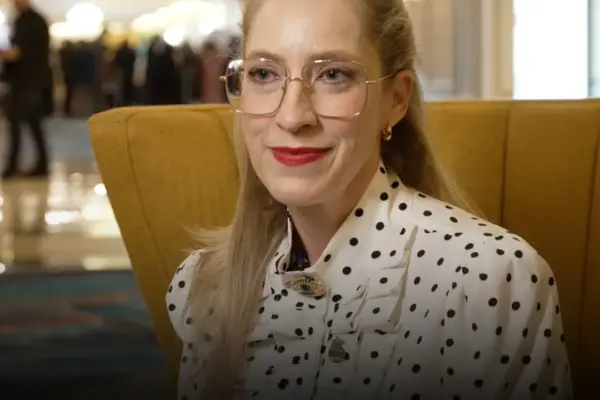










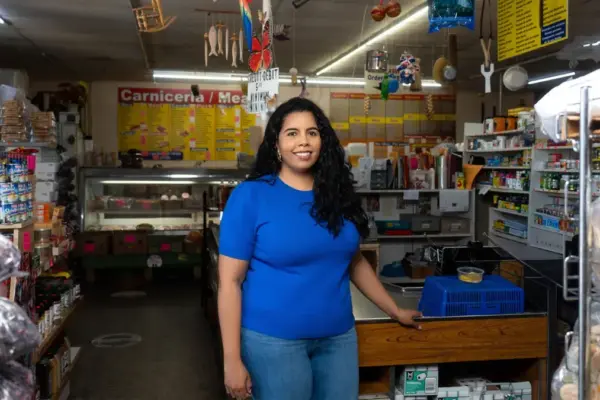

Before Gina Hinojosa secured victory in the race for governor of Texas, her political trajectory was ignited by a deeply personal question concerning her son’s elementary school: Who ultimately holds the authority to decide the fate of a community’s most foundational institutions?
The catalyst for this awakening was Pease Elementary, a historically significant school located in downtown Austin. When the campus suddenly appeared on a list of proposed closures, the abstract concept of school governance transformed into an urgent, personal crisis for Hinojosa. Years later, reflecting on the precise moment she decided to transition from a concerned parent to an active candidate for public office, she recalled a simple, driving sentiment: she grew angry, and she decided to run.
That pivotal leap from opposing a contentious administrative decision to bearing the direct responsibility of public office offers a compelling lens through which to view modern leadership. Hinojosa’s journey underscores the profound distance between protesting from the sidelines and holding the gavel when difficult, high-stakes decisions must be made.
A Parent With Professional Experience
When Hinojosa launched her inaugural campaign, she brought far more to the table than typical parental anxiety. A proud graduate of the University of Texas and the George Washington University Law School, she had already established a robust professional background as a civil rights and labor lawyer. In a 2022 interview with ACCENT, a publication of Austin Community College, she detailed her career advocating for employees navigating complex discrimination cases, showcasing a deep-seated commitment to equity and labor rights.
Furthermore, she possessed a clear understanding of the political landscape, bolstered by familial ties. Her father, Gilberto Hinojosa, served as the chair of the Texas Democratic Party during her 2012 campaign. Contemporary reporting from local media outlet KUT highlighted key endorsements she secured from established Austin political figures, demonstrating that her early bid was not a solitary grassroots effort, but a sophisticated campaign that married a deeply personal community cause with substantive legal expertise and an existing political network.
Her initial campaign quickly expanded beyond the singular defense of Pease Elementary. During the race, Hinojosa vocally questioned sweeping structural changes championed by the superintendent at the time, Meria Carstarphen. Among these controversial initiatives was a plan to bring an outside charter operator into Allan Elementary. Hinojosa argued passionately that the voices and explicit wishes of the affected community deserved to be respected and prioritized in any decision fundamentally altering the character of their neighborhood school.
Learning to Govern
Voters ultimately elected Hinojosa to the Austin Independent School District board of trustees in November 2012, placing her in the at-large Position 8 seat. Demonstrating immediate leadership potential among her peers, fellow trustees selected her as vice president that very month, and by January 2015, they elevated her to the role of board president.
Assuming these leadership roles thrust Hinojosa directly inside the massive, complex institution she had previously sought to influence from the outside. Protecting neighborhood schools suddenly required confronting the unvarnished financial realities of public education, including intense debates over employee compensation, strict revenue constraints, and the constant balancing act of competing community needs.
In 2014, the school board approved the equivalent of a two percent salary increase for teachers and vital staff members, while simultaneously maintaining a previous budgetary adjustment. However, district leadership issued clear warnings that sustaining these financial increases over the long term would depend entirely on identifying a permanent, reliable revenue source. This delicate balancing act reflected a challenge universally familiar to organizational leaders across all sectors: how to fiercely support and adequately compensate employees while simultaneously ensuring the financial sustainability of the institution itself.
While these budget measures represented collective board decisions rather than unilateral actions, they provided critical context for the executive experience Hinojosa would carry forward into higher office. As her political ambitions expanded toward the state legislature, she began restructuring her civic commitments. In December 2015, Hinojosa officially stepped down from her role as board president while actively campaigning for a seat in the Texas House of Representatives, though she chose to remain on the board as a trustee to finish her term.
Taking the Fight to the Statehouse
Entering her very first legislative session at the Texas State Capitol in January 2017, Hinojosa wasted no time identifying comprehensive school financing reform and the preservation of local control as her absolute top legislative priorities. At the same time, she displayed a pragmatic understanding of the political realities in Austin, readily acknowledging that because Democrats held a minority of seats and lacked the raw numbers to prevail through sheer force, effective community advocacy and grassroots organizing would remain absolutely essential.
A subsequent high-stakes education battle demonstrated precisely how this strategic approach functioned in practice. During the intense legislative fight over private school vouchers, Democratic caucus leaders strategically tapped Hinojosa and James Talarico, now Texas’s US senator-elect, to help spearhead their legislative opposition.
As The Texas Tribune later reconstructed the complex negotiations, Democratic lawmakers deliberately stepped back to give rural Republicans ample room to lead the public charge against the voucher proposal. Maintaining this fragile, cross-partisan coalition required meticulous attention to the distinct political vulnerabilities and thresholds that potential allies could withstand within their home districts. While this tactical strategy successfully helped block the sweeping voucher legislation that specific session, the ongoing political pressure eventually led to vouchers becoming law years later in 2025.
The School Beyond the Origin Story
The ultimate fate of Pease Elementary complicates any overly simplistic narrative of a school seamlessly saved by early activism. The initial closure proposal that originally motivated Hinojosa to enter public life actually predated her election to the school board. While Pease managed to remain open throughout her tenure as a trustee, Austin Independent School District officials ultimately voted to close the campus as an elementary school following the conclusion of the 2019-2020 academic year—long after Hinojosa had transitioned to the state legislature.
The historical trajectory of the site took another turn in January 2025, when district trustees officially authorized negotiations with United Way for Greater Austin to repurpose the historic downtown property into a modernized early childhood education center.
This unfolding history leaves a profoundly consequential question for Texas’s governor-elect: How can leaders effectively preserve the vital community institutions that residents deeply value when the underlying financial, demographic, and political landscapes around them inevitably shift?
Hinojosa’s ascension to the governor’s office grants her vastly greater influence over the sweeping state-level policies that she once challenged on a local school board. Yet, with that elevated platform comes an equally magnified responsibility for the complex choices, difficult compromises, and lasting results that will shape the future of the Lone Star State.