







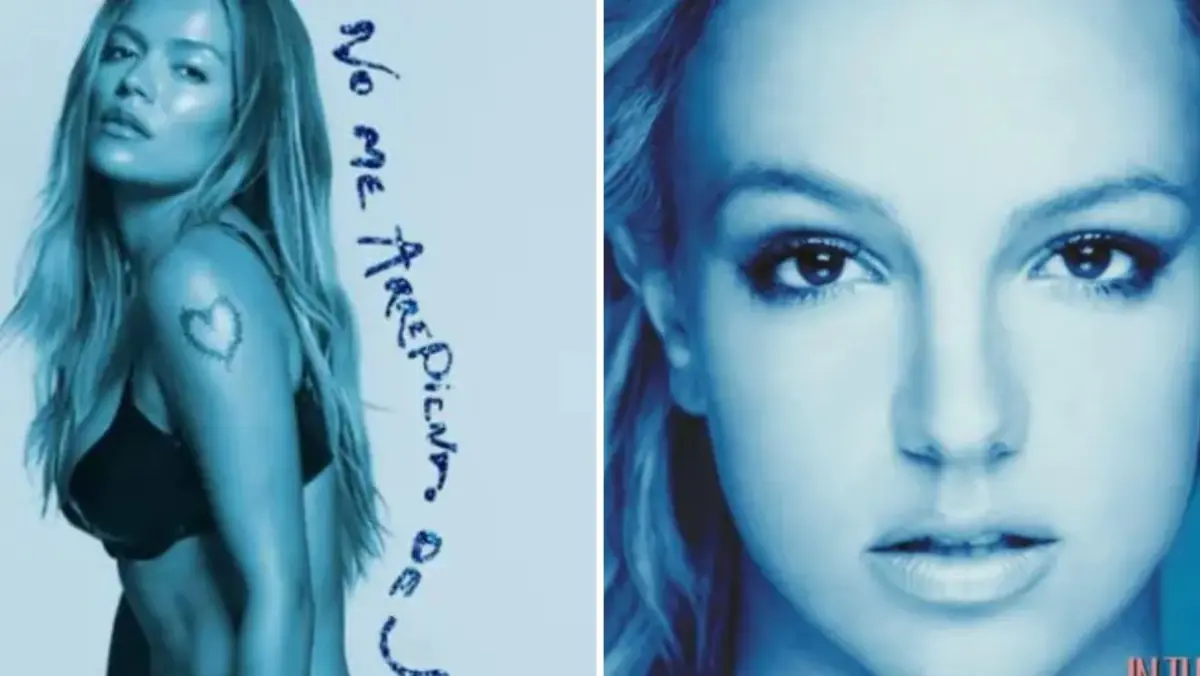
When global Latin music superstar Karol G announced her upcoming studio album, “No Me Arrepiento de Sentir Tanto,” set for release on August 7th, 2026, the global fan base immediately flooded digital platforms to dissect every detail. Yet, much of the initial conversation bypassed the music entirely, locking instead onto the promotional cover art. Characterized by striking blue tones, soft ambient lighting, and a distinct, vulnerable pose, the artwork immediately drew comparisons to Britney Spears’ iconic 2003 “In the Zone” era.
Across social media, the visual overlap ignited a spirited debate. Online commentators split into factions, questioning whether the Colombian artist was guilty of borrowing a bit too heavily from pop history or if the imagery was instead a deliberate, respectful nod to one of pop music’s most celebrated visual eras. However, for anyone familiar with Karol G’s trajectory and her long-standing public reverence for the pop icons who paved the way, the discussion is neither complicated nor genuinely controversial.
Throughout her career, Karol G has frequently cited Britney Spears as one of her formative childhood inspirations. Because of this well-documented admiration, the aesthetic parallels on the new album cover feel less like an accidental coincidence and more like a conscious, reverent artistic choice. Even in the absence of an explicit confirmation pointing directly to the “In the Zone” era, evaluating the cover through the lens of plagiarism feels notably ungenerous. It fundamentally misinterprets the mechanics of creative evolution.
Inspiration, visual referencing, and direct homage have never constituted theft. Instead, they represent the vital mechanism by which culture continuously moves forward. They allow contemporary artists to anchor themselves within a lineage of creators who shaped their artistic identities, serving as a visual and auditory expression of gratitude to those who came before. The internet storms demanding immediate outrage over a blue-tinted promotional image channeling early 2000s pop aesthetics overlook the fundamental nature of how global pop culture has always operated.
What the Album Cover Actually Represents
Human culture and artistic expression have always relied on building upon what came before. Painters regularly draw inspiration from master painters, filmmakers consistently pay homage to classic cinema through visual quotes, and musicians routinely absorb the sounds, textures, and imagery of the artists who shaped their youth, eventually transmuting those influences into something entirely new. Karol G grew up watching Britney Spears redefine the boundaries of what a mainstream pop star could look like, sound like, and embody, and the Colombian singer-songwriter has never attempted to hide that foundation.
An album cover that deliberately channels that specific brand of pop energy functions as an artist honoring her roots. The segments of the fanbase celebrating the visual reference online grasp a fundamental truth that critics often miss: true artistic influence is distinct from mere imitation. Karol G has meticulously constructed one of the most commercially and critically successful careers in the entire history of Latin music by absorbing diverse global influences and molding them into a sound and persona that are unmistakably her own.
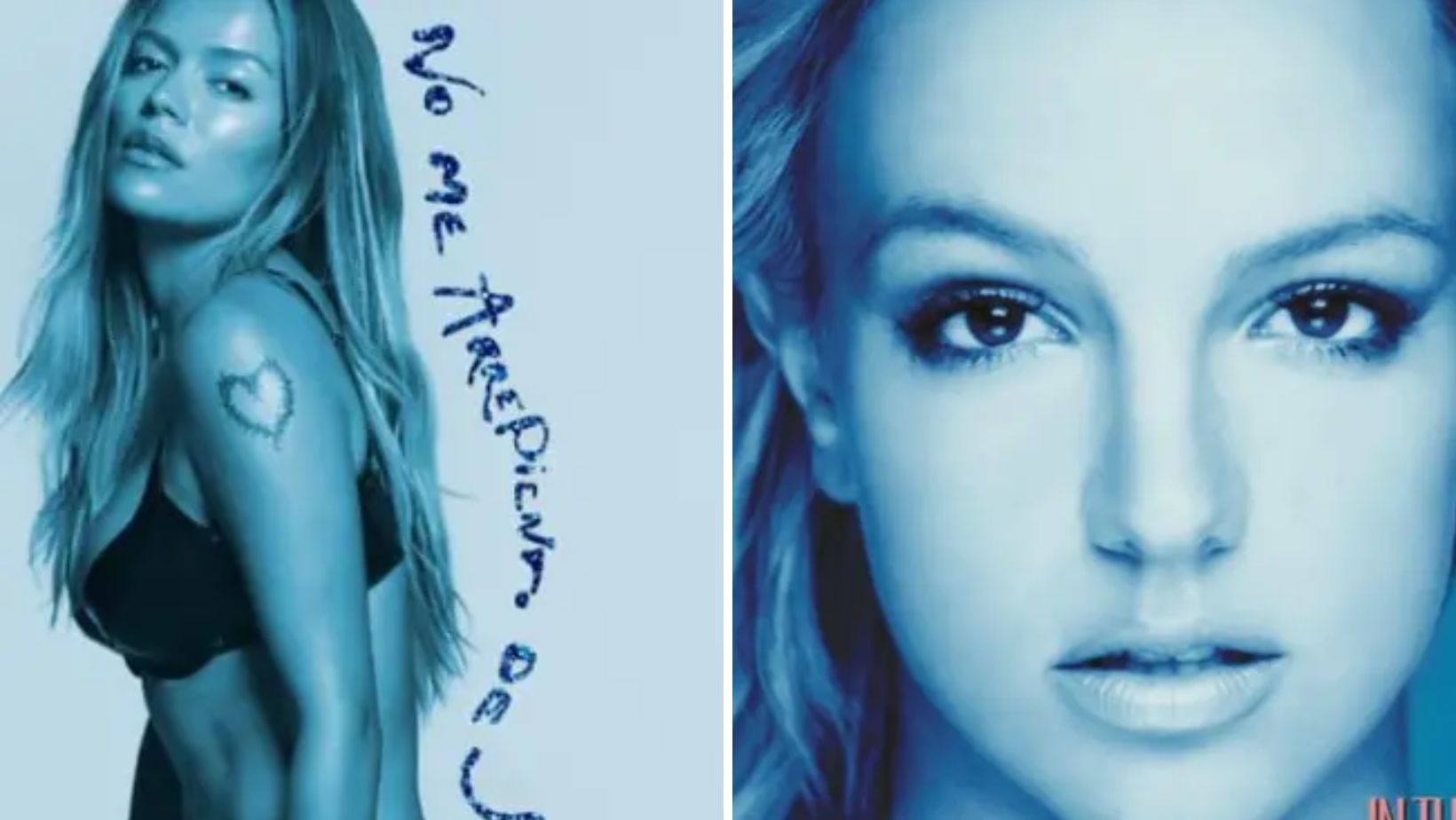
This upcoming album appears to be a conscious, reflective nod to the exact era that molded her sensibilities long before she went on to fundamentally reshape an entire musical genre. The commentary circulating online spans a wide spectrum, ranging from enthusiastic recognition to manufactured outrage. Fans have posted remarks noting that the imagery is “giving Britney Spears In the Zone,” while others celebrate the broader cultural return of an aesthetic deeply rooted in early-aughts pop culture. Ultimately, those celebrating the visual throwback are far closer to understanding the true nature of the project.
The Tour Moment That Showed Exactly Who She Is
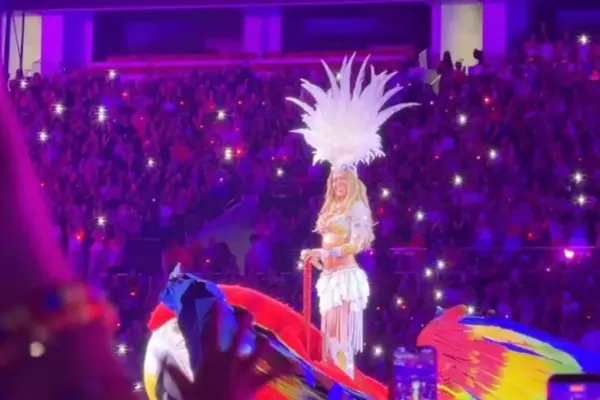
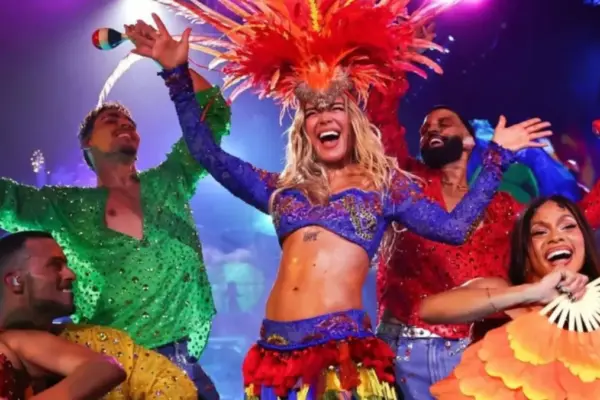
While the online debate surrounding the album cover consumed social media timelines, Karol G’s ongoing Viajando Por El Mundo TropiTour was simultaneously generating headlines for reasons that were considerably more heartwarming and compelling. During one of the high-profile tour stops, the singer took a moment to connect directly with the crowd, inviting a five-year-old girl named Khloé up onto the massive stage.
Khloé was attending her very first live concert experience. When Karol G handed her the microphone and asked what her absolute favorite song was, the young fan answered with complete, endearing innocence: “Dai Dai,” the hit track by Shakira from the 2026 World Cup. Rather than appearing fazed, surprised, or slightly sidelined by a young fan choosing a peer’s song over her own massive catalog during a headlining arena tour, Karol G simply smiled. She paused the show, launched into a live fragment of the track alongside the little girl, and enthusiastically encouraged the entire stadium audience to sing along with them.
The reaction across digital platforms to this unscripted interaction was overwhelmingly positive. Fans flooded social media networks to praise the natural grace and humility with which Karol G navigated the moment, transforming a potentially awkward or unexpected situation into one of the most memorable and beloved highlights of the entire tour. The incident spoke volumes about her security as a performer and a person—someone confident enough in her own massive identity to joyfully celebrate another legendary artist’s music in the middle of her own concert simply because a five-year-old fan asked her to do so.
Why the Criticism Misses What Karol G Is Actually Doing
The vocal critics attempting to manufacture a controversy out of the visual similarities between the new album art and Britney Spears’ classic era are fundamentally arguing against the basic premise of how creative influence functions across every artistic discipline in human history. An album cover that gracefully evokes an era Karol G has openly and consistently admired deserves genuine curiosity, critical appreciation, and contextual understanding rather than unfounded accusations of creative theft.
Art has never existed in an isolated vacuum. The visionary artists who shaped the cultural landscape for today’s superstars deserve to be honored, referenced, and remembered within the evolving work of those who inherited their cultural footprint. As the summer progresses and anticipation builds for the official release, the excitement surrounding the upcoming project continues to overshadow the minor digital noise. For millions of devoted listeners worldwide, August 7th cannot come soon enough.