



As a Black Dominican American woman—someone who is frequently perceived as "racially mixed" or "racially ambiguous"—I have spent much of my adult life defending my Blackness. Alongside that personal navigation, I have also faced persistent criticism for consistently speaking out against anti-Haitian rhetoric within cultural and political spaces.
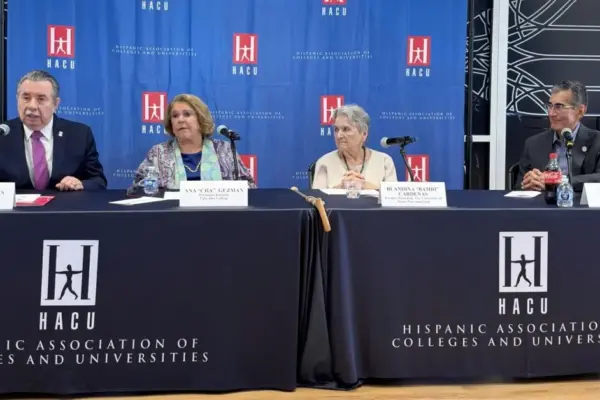
This year alone, those tensions surfaced acutely after I penned an article about now-Congresswoman Darializa Avilés Chevalier, drawing sharp commentary from critics who accused her of not being "Dominican enough." The backlash against Avilés Chevalier largely stemmed from her public support for solidarity between the Dominican Republic and Haiti. Some detractors even pointed to her French last name, incorrectly using it as "evidence" that she must secretly be of Haitian descent. That episode sparked countless conversations within the broader diaspora about the persistent confusion surrounding race, ethnicity, and Latinidad, illuminating the powerful role that traditional Dominican nationalism continues to play in fueling these profound misunderstandings.
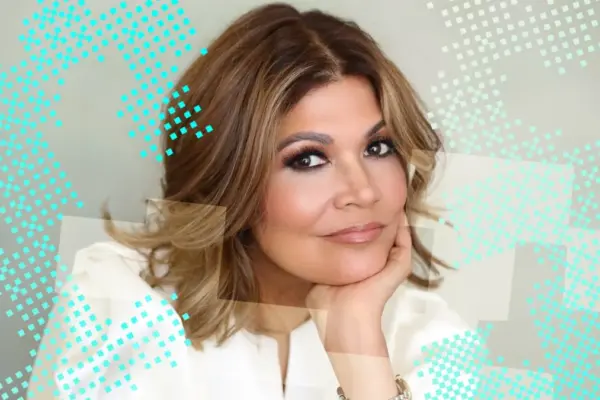
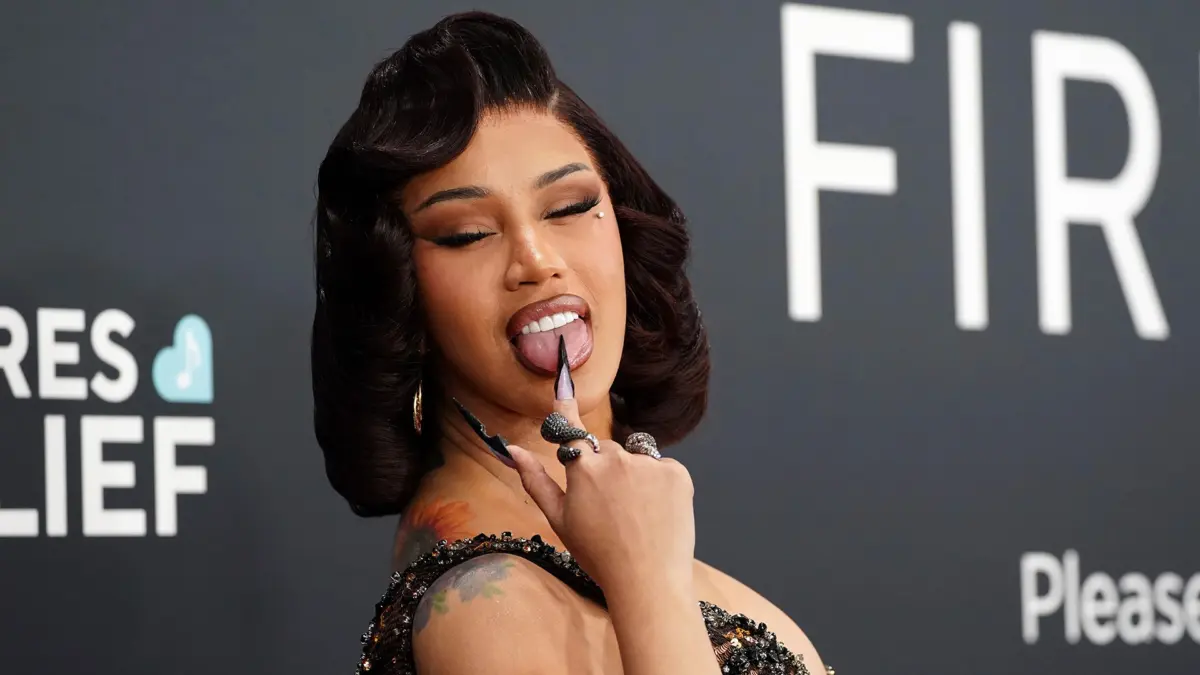
As I reflected on those intense discussions, I realized that one of the most high-profile Dominican celebrities who has consistently engaged with these very issues in the public eye is Belcalis Almánzar, better known as Cardi B. For years, the Grammy-winning superstar has repeatedly used her massive platform to clarify the fundamental differences between race, ethnicity, and Latinidad—distinctions that traditional educational systems, mainstream media, and even our own insular communities often fail to articulate. She has repeatedly explained that Blackness and Latinidad are not mutually exclusive constructs, while simultaneously challenging entrenched anti-Haitian rhetoric. As someone who has spent years navigating these exact same conversational minefields, seeing a Dominican woman with Cardi’s extraordinary global visibility articulate what I have long felt in my bones has been deeply validating.
The roots of these public lessons date back to 2019, when, following widespread public questioning over whether she could authentically claim to be Black, Cardi took to Instagram Live to break down the complexities of identity.
"A lot of people don’t know the difference between nationality, race, ethnicity, and that’s not nobody’s fault," she said during the broadcast. "That’s actually the school’s fault because schools don’t be teaching this s— to people."
During that candid session, she elaborated on her background, explaining that her father is Dominican and her mother is Trinidadian, while emphasizing that being Dominican denotes a nationality and an ethnicity—not a race. She firmly identifies as Black because of her deep African ancestry and distinct physical features, pushing back against the widespread, lingering misconception that being Latine somehow excludes a person from being Black. Furthermore, she challenged the dangerous and reductionist assumption that possessing a light complexion automatically disqualifies someone from claiming Blackness.
This is a conversation I have been forced to have countless times in my own life. Like the ancestry of many Dominicans, my lineage reflects centuries of complex colonization, indigenous erasure, and racial mixing. My caramel complexion, hazel eyes, looser curl pattern, and mixed-race features have frequently led strangers and acquaintances alike to question my identity and demand proof of my heritage. Yet, being multiracial does not negate my Blackness. Blackness is an integral part of my racial identity—not something separate, conditional, or negotiable.
As Cardi succinctly put it during her broadcast: "People just don’t be understanding s—. It’s like, ‘Cardi’s Latin, she’s not Black.’ And it’s like, bro, my features don’t come from white people… I have Afro features."
During that same unfiltered Instagram Live session, she also pushed back against social media users who insisted she should represent Mexican culture simply because she is Latina. "I’m not Mexican at all. I’m West Indian, and I’m Dominican. I speak Spanish because I’m Dominican."
Her point was both simple and profoundly important: Latines are not a monolith. A year later, following the global protests sparked by the murder of George Floyd, Cardi once again found herself in the position of educating the public—this time taking aim at deep-seated anti-Haitian prejudice. After posting a photograph of demonstrators holding Dominican and Haitian flags side by side with the caption, "Unity is what I stand for, and it’s what I’m about," hardline Dominican nationalists swiftly accused her of advocating for the political unification of the two sovereign nations sharing the island of Hispaniola.
In response to the backlash, she delivered a lengthy Instagram Live address conducted primarily in Spanish.
"Yo puse esa foto porque es un símbolo de paz (I posted that photo because it’s a symbol of peace)," she explained. She followed that statement by asserting, "Yo me sé mi historia (I know my history)," making it explicitly clear that acknowledging the complicated, often painful history between Haiti and the Dominican Republic should never be weaponized to justify dehumanizing Haitians in the present day.
Cardi went on to address the humanitarian reality directly: "Hay que tratar a los haitianos bien, como gente también (Haitians need to be treated well, like people too)." She also highlighted the socio-economic reality in the United States, noting that Dominicans and Haitians are frequently racialized in remarkably similar ways by American society. Whether due to accented English, immigrant status, or foundational Blackness, both communities routinely encounter systemic discrimination. Her core argument was never that the two countries share identical sociopolitical systems—rather, she argued that shared experiences of racism and marginalization should foster empathy rather than division.
The scrutiny surrounding her identity did not stop there. In 2021, she was once again forced to defend her background after online critics questioned whether she could authentically claim to be Afro-Latina. She responded decisively by publishing archival photographs of her Dominican father, Trinidadian mother, grandparents, and extended family members, pointing out that she has always been transparent about her rich, multicultural roots.
More recently, in a 2025 interview with CBS News, Cardi once again described herself proudly as Afro-Latina while discussing the heavy Dominican musical influences woven throughout her latest artistic projects. Even years after those initial high-profile debates, she has remained remarkably consistent in how she defines herself and articulates her heritage.
That unwavering consistency is precisely what resonates with so many within the diaspora. For years, Cardi has essentially performed the cultural education that our formal institutions have failed to provide—reminding the public that race, ethnicity, and nationality are entirely separate categories, that Blackness and Dominican identity are not mutually exclusive, and that standing against anti-Haitian discrimination is not an act of treason against Dominican culture. If anything, it is an affirmation of our shared humanity. I share her firm belief that our shared African ancestry and immigrant journeys should serve as an opportunity to build solidarity—not only with our Haitian neighbors, but across the entire African diaspora.
Ultimately, this is why high-profile cultural conversations like the one sparked by Darializa Avilés Chevalier matter so deeply. They force our communities to confront the inherited myths surrounding race, Blackness, and Latinidad that have lingered for generations. For too long, our societies have treated these necessary discussions as dangerous or divisive, when they are, in reality, essential catalysts for collective growth and social maturity.
Public figures like Cardi B have spent years reminding us that being proudly Latine and proudly Black are never competing identities. They have shown that as Dominicans, standing firmly against anti-Haitian rhetoric is not a rejection of our rich heritage—it is an affirmation of our shared humanity and historical ties. It is my sincere hope that the next generation of Dominicans and other Afro-Latines will not have to spend decades defending their fundamental right to claim their Blackness, nor will they need to constantly explain that race, ethnicity, and nationality are distinct concepts. Instead, they will be equipped with the language, the accurate history, and the visible representation needed to know without a doubt that they have belonged all along.