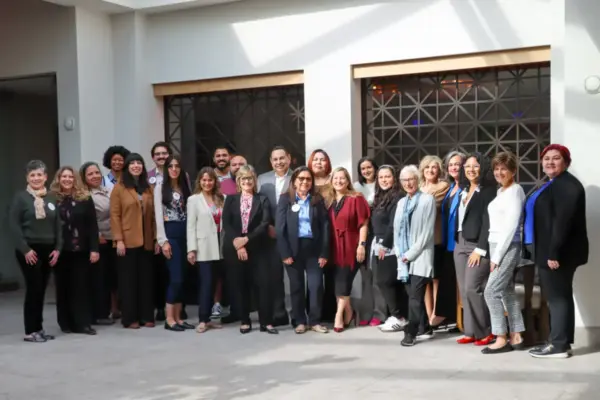









Ahead of the 27th Annual Latin Grammy Awards, Billboard Brasil and Billboard Espanyol teamed up with Meta to host an exclusive two-day activation at the Museum of Illusions in Las Vegas on November 10–11. The immersive experience brought together some of the biggest names in Latin music and current nominees, placing them in a world of mind-bending exhibits. During the event, artists tried on Meta’s smart glasses, explored optical illusions, and
stepped in front of the camera for candid, unscripted conversations about their music, careers, creative breakthroughs, and personal lives.
From personal revelations and unexpected anecdotes to profound reflections on artistry and the music industry, the participants had plenty to share during the Las Vegas gathering. Here is a look at 15 of the most memorable quotes and insights from the exclusive experience.
Luísa Sonza on Her Breakthrough Beyond Brazil
For Brazilian pop star Luísa Sonza, earning her first Latin Grammy nomination outside of the traditional Brazilian-specific categories was an entirely unexpected milestone. Nominated for best reggaetón performance alongside Sofía Reyes for their track “Uñas afiladas,” Sonza admitted she never saw the international recognition coming.
“The nomination was a surprise to me. I didn’t think it would happen,” she said, describing the nod as “something very beautiful, an achievement.”
What made the moment even more meaningful was that the collaboration came together organically with a fellow artist she considers a close friend, entirely free of commercial pressure or award aspirations. “We didn’t make the songs thinking about anything else, just because we liked each other,” Sonza recalled. Their creative chemistry in the studio was so immediate that a single session yielded three completed tracks, all of which they ultimately decided to release.
Bruses on Rosalía, Vulnerability, and Redefining Success
Mexican singer-songwriter Bruses arrived at the Latin Grammy celebrations with three nominations to her name, but she still found a moment to playfully tip her hat to the steep competition she faces. “Rosalía, it’s an honor to lose to you. I love you so much,” she joked during her appearance.
Beyond the lighthearted remark, the Tijuana native reflected on the deeply emotional journey behind her album Desde el Coma, a project that took three years to complete. Bruses explained that mental health has consistently been at the core of her songwriting, which initially began as a private form of journaling long before her music ever reached a wider public audience.
“I’ve always made songs about mental health, you know? And I started making music by writing as if it were my personal diary,” she shared. As her career has continued to expand, so has her perspective on what true achievement means. “Success looks different to me now. It’s really beautiful, and I think I’m a very successful woman, and that has nothing to do with musical success.”
J Noa on Taking Aim at the Music Industry
Dominican rapper J Noa found herself in a uniquely ironic position this awards season, earning a Latin Grammy nomination in the best rap/hip hop song category for “Antisistema”—a track that openly challenges and critiques the very industry that is now honoring her work.
Rather than targeting any specific artist, J Noa explained that the song addresses the immense, often suffocating pressures imposed on musicians from all angles. “It’s like a diss track aimed at the system, but not specifically at music. It’s about the industry in general, the public, the listeners who make demands — everyone,” she noted.
What surprised her most was that a song featuring such a confrontational and critical message could garner such prestigious mainstream recognition. “I was really surprised that the nomination came from a song taking shots at the industry,” she said, adding that the track was fueled by a desire to voice “the things that we artists are always keeping quiet about.”
Francisca Valenzuela on the Beautiful and Brutal Realities of Motherhood
For Chilean singer-songwriter Francisca Valenzuela, the profound experience of motherhood served as the direct inspiration for “Bugambilia,” her Latin Grammy-nominated alternative song. Written during her initial postpartum period, the track captures the complex emotional extremes of welcoming a child, deliberately confronting aspects of early parenthood that are frequently left out of polite conversation.
“It’s a song about the revolution that happens in that state of new motherhood, of postpartum,” she explained. “It talks about how dark it can be, because it’s not all rosy.”
While the composition celebrates the overwhelming love and wonder inherent in becoming a mother, it simultaneously examines the quiet pressures to keep performing when everything feels entirely unmanageable. Valenzuela described the work as an attempt to portray a phase of life that is simultaneously “beautiful and brutal,” touching specifically on “feeling inadequate, feeling like you’re collapsing under the pressure of having to perform.”
Gerardo Coronel on the $1,500 Cure for Heartbreak
Mexican singer-songwriter Gerardo Coronel offered a distinctly unconventional prescription for recovering from a painful romantic breakup. His song “Una de 1500” draws directly on familiar street slang in Mexico, using the phrase to suggest that a modest monetary investment can sometimes go a long way in easing the trauma of a failed relationship.
“When someone does something to you, when a relationship ends in a way you didn’t expect, sometimes you need something worth 1,500 pesos (roughly $80 USD) to help you forget or get over that trauma,” he explained with a smile.
According to Coronel, the practical applications of that budget are nearly limitless, ranging from professional mental health support to a heavy night of drinking. It could be “a psychologist who charges 1,500 pesos, a night of drinking that costs you 1,500 pesos, a little outing for 1,500 pesos, or whatever you can imagine for 1,500 pesos.” His ultimate conclusion? “One of 1,500 is very necessary to heal your sorrows.”
Milo J on His Least Commercial Album Becoming His Most Commercially Successful
Argentine artist Milo J took a massive creative gamble with La Vida Era Más Corta, an album he initially anticipated would be one of his least commercially viable projects. Rather than tailoring his sound to appeal to radio formats or specific target audiences, he chose to focus entirely on making music that felt authentic to his personal artistic vision, even if it meant charting an unpredictable course.
“In a way, I thought of it as a less personal album, because it’s somehow my least personal album, but perhaps the one that feels most like mine,” he explained, emphasizing the creative liberation of releasing art primarily for oneself and letting the audience find it organically.
The eventual outcome took him completely by surprise, as the project resonated deeply with listeners across generations and turned into one of his most commercially successful releases to date. “So it’s my least commercial album, but also my most commercial at the same time,” he reflected, calling the rollout the biggest risk of his career. The gamble paid off handsomely, earning Milo J six Latin Grammy nominations, including a coveted nod for album of the year.
Ovy on the Drums on Why Business Can Ruin a Collaboration
Colombian hitmaker Ovy on the Drums is convinced that some of the greatest musical partnerships are forged when genuine personal chemistry takes precedence over corporate business considerations. Discussing “Yo y Tú,” his Latin Grammy-nominated collaboration with Spanish artist Quevedo, the producer recounted how the track originated from an initial idea developed alongside Béle before being shared during a summer trip to Europe.
Quevedo immediately connected with the underlying rhythm, allowing the collaboration to unfold smoothly without bureaucratic hurdles. “It was a very natural collaboration, very easy, very fluid,” Ovy stated. For him, that organic spontaneity dictates the final quality of the art. “When things happen that way, the music comes with a beautiful energy. Because there are songs where business gets in the way and ruins the energy.” In this particular instance, he noted, the pieces fell seamlessly into place, culminating in major Latin Grammy recognition.
Fonseca on Fulfilling a Dream with Rubén Blades
Colombian singer-songwriter Fonseca realized a lifelong personal and professional ambition when he united with legendary salsa icon Rubén Blades for a poignant track centered on the lived experiences of global migrants. “Recording with maestro Rubén Blades is a dream come true. I grew up with his music, and I admire him deeply,” Fonseca expressed.
As the composition developed, Fonseca realized that its underlying message of empathy for individuals chasing their dreams far from their homelands made Blades the definitive collaborator. After reaching out to the Panamanian icon, Fonseca was thrilled by the positive reception. “Fortunately, from the very beginning, he connected with it,” he recalled. Blades eventually took an active role not only as a featured vocalist but also in the production and songwriting process, making the milestone even more profound for Fonseca.
Bad Gyal on Making Más Cara Without Following the Rules
Spanish star Bad Gyal approached her Latin Grammy-nominated album Más Cara with a fluid mindset, choosing to let her broad musical tastes steer the direction of the project rather than forcing the tracks into a rigid conceptual box. “I never thought of it as a very strict concept,” she explained. Instead, she utilized the studio sessions to investigate the various musical genres and sonic textures that have shaped her upbringing and career, embracing the freedom to follow her instincts. “More than anything, I gave myself the opportunity to explore the genres I like most and enjoy creating the music I love.”
The resulting collection functioned much like a personal playlist, uniting diverse styles that honor her wide-ranging inspirations. The album successfully secured a nomination for best urban music album, while her collaborative track with Chencho Corleone, “Choque,” earned a nod for best reggaetón performance.
WIU on the Beauty of Being Brazilian
Brazilian rapper WIU views his home country’s immense cultural footprint as something deeply rooted in the unique ability to extract profound beauty from everyday life. Reflecting on his personal evolution from the freestyle rap circles of Fortaleza to an international platform, he argued that distinct regional accents and local identities are becoming increasingly vital assets within the modern global music ecosystem.
“Everyone saw in their own language, their accent, their culture, a way to show how beautiful their area is, how beautiful their neighborhood is,” he remarked, emphasizing that global audiences are hungry for those localized stories. For WIU, this perspective serves as the bedrock of Brazilian artistry. “The coolest thing about being Brazilian is our ability to see beauty in very simple things and turn that into a reason to capture attention in the most beautiful way possible.” Pointing toward cultural mainstays like Carnival and funk, he noted that Brazilians possess a natural flair for commanding global attention with confidence while remaining fiercely loyal to their roots.
Joss Favela on the Unreleased Album That Changed His Life
Long before establishing himself as a celebrated singer-songwriter, Mexican artist Joss Favela recorded an entire studio album at the tender age of 14 that ultimately never saw a commercial release. Even though the project remained hidden from the public, Favela regards it as one of the most critical turning points of his life due to the immense sacrifices his family made to make the recording possible. “It was very important to me because it was made possible through all my parents’ efforts, and because so many things had to happen for me to record it,” he recalled.
The visceral experience of hearing his own recorded voice inside a professional acoustic environment left an indelible mark on his ambitions. “I remember walking into the studio and feeling an incredible excitement when I heard my voice.” Looking back on his progression as a writer, Favela likened artistic maturation to changes in personal fashion, noting that creators continually unearth new facets of their identities as life experiences accumulate.
Yami Safdie on Julieta Venegas’ Influence and Her Musical Diary
Argentine singer-songwriter Yami Safdie traces the roots of her artistic journey back to Julieta Venegas’ acclaimed album Limón y Sal, a record that served as a staple of her daily childhood routine. “It was the first album someone gave me when I was little. I played it every morning to wake up and go to school,” she reminisced.
Years later, Safdie has adopted a similarly intimate, diaristic framework for her own songwriting, particularly with her project Querida Yo. She described the work as an unvarnished, direct reflection of her internal life. “It’s as if it were my private diary. It’s super real, super transparent, completely unfiltered,” she noted, explaining how the tracks document the anxieties and existential questions that preoccupied her during their creation.
Chino Pacas on Making Christmas Music, Grandmother-Approved
For música mexicana star Chino Pacas, the holiday season brings a powerful wave of nostalgia. He fondly recalled growing up surrounded by traditional Christmas carols alongside his mother and grandmother—formative memories that directly inspired his latest holiday-themed project. “Christmas is the best, the best celebration of the year,” he said, noting his lifelong affinity for seasonal music.
While his wider catalog has found massive international audiences, he suspects this particular release will hold a special place in the heart of his most important listener at home. “I feel like this is the album my grandmother is going to like the most out of all my music,” he shared. “I made this album with all my heart, thanking all my fans for the support they’ve given me this year.” He also highlighted “Allá en Sonora,” a track he held onto since 2023 that he finally prepared for release alongside a longtime collaborator.
Eddy Lover on Why He Can’t Recreate the Magic of “Perdóname”
Nearly two decades after “Perdóname” established itself as a defining anthem of romantic reggaetón, Panamanian singer Eddy Lover continues to unearth subtle nuances in his historic collaboration with La Factoría. The track remains permanently linked to his legacy, and he is convinced that the original studio sessions captured an ephemeral lightning-in-a-bottle quality that defies replication. “Today, I notice so many things in that song that I didn’t realize at the time I recorded it, like the melody,” he explained. “There are so many things in the intonation that I try to imitate today, and I can’t. I can’t imitate them.”
Rather than viewing those historical imperfections as flaws, Lover regards them as integral components of the recording’s lasting charm, emphasizing that certain performances possess a distinct magic that even the original creator cannot artificially summon twice.
Urias on Why Freedom Begins with Overcoming Fear
For Brazilian multidisciplinary artist Urias, the true definition of freedom extends far beyond the basic capacity to make autonomous personal choices. Her ongoing exploration of the concept began with an inquiry into how freedom has been conceptualized historically versus what it demands in contemporary society. That philosophical search ultimately crystallized into a clear artistic framework. “It may sound cliché, but freedom to me is the absence of fear,” she stated. “Fear of being, fear of existing, fear of doing — the absence of that fear.”
Urias maintains that stripping away fear simultaneously eradicates the self-doubt that inhibits people from fully inhabiting their identities. However, she acknowledged that attaining that psychological liberation demands a singular, indispensable virtue. “Without courage, there is no freedom.”