









By Johanna Ferreira
September 24, 2026 – 09:29
The recent wave of public speculation and commentary regarding Jenna Ortega’s physical appearance has been profoundly difficult to watch. The discomfort stems not from any suggestion that Ortega’s body requires a public explanation or defense, but rather from the glaring realization of how widely accepted it remains to discuss women’s bodies as though they are public property—openly accessible for observation, unsolicited assessment, and harsh criticism.
Having spent the majority of my life relatively thin, I am well aware that the remarks and observations I receive about my own body do not equate to the systemic judgment, barriers, and discrimination experienced by individuals navigating the world in larger bodies. Still, this past year served as a stark reminder of just how deeply our broader culture has normalized treating a person’s weight as public information. After I unintentionally lost a noticeable amount of weight while battling Small Intestinal Bacterial Overgrowth (SIBO)—a debilitating health condition that at times left me unable to comfortably digest more than a single meal a day—neighbors, acquaintances, and even casual contacts began stepping forward to offer congratulations.
Their well-intentioned compliments reflected a society so deeply and implicitly committed to thinness that any visible weight loss is reflexively coded as positive news, entirely divorced from the reality of whether the person in question is actually well.
It comes as little surprise that generations of women continue to struggle profoundly with body image and eating disorders in an environment with such distorted metrics of health. In a July interview with Jay Shetty, actress Camila Mendes opened up candidly about her historical struggles with bulimia, body image, and perfectionism during her time on the television series Riverdale. Mendes described the immense confusion she felt when people showered her with praise and compliments during periods when she had lost significant weight due to her eating disorder. That praise acted as a dangerous reinforcement, validating the toxic notion that she looked her absolute best at her thinnest, even when her physical and mental health were severely compromised.
This dynamic speaks to a broader, exhausting reality for women across the board: no version of our physical selves ever seems to escape unsolicited commentary. We find ourselves perpetually categorized as either too thin, too fat, or lacking the socially mandated curves. Society always manages to find something to observe, question, praise, criticize, or express simulated worry over. Living under that constant microscopic scrutiny day in and day out is profoundly fatiguing.
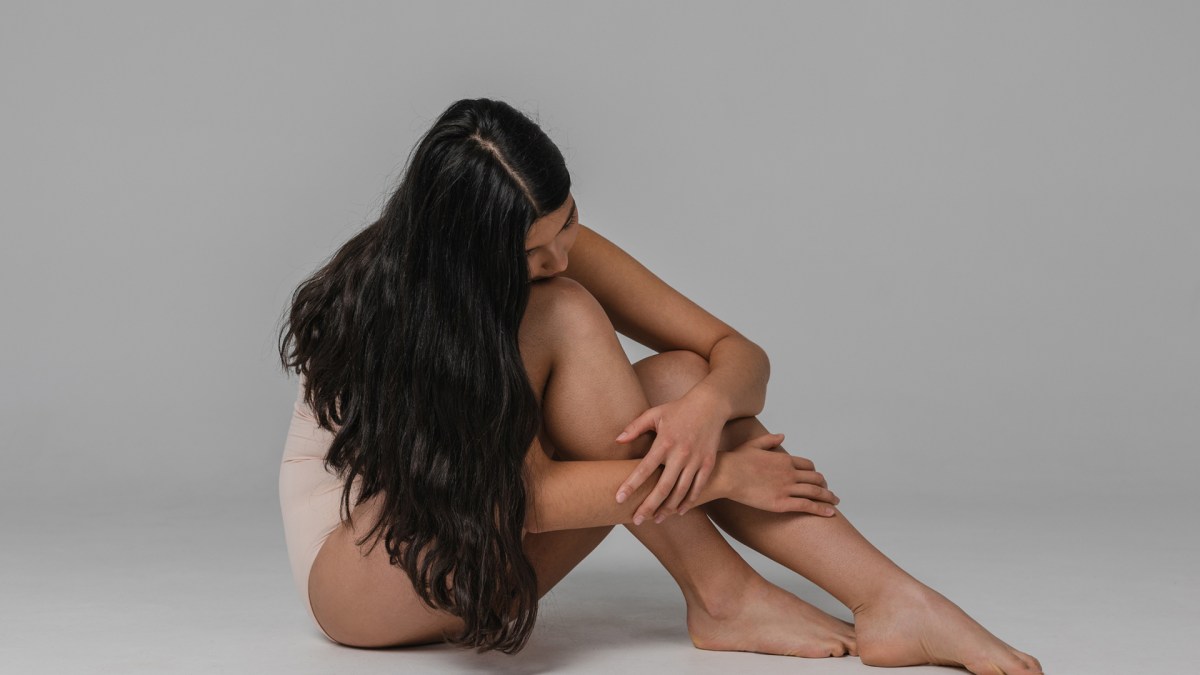
For Latinas, that scrutiny frequently begins at a remarkably young age. Many of us grow up embedded within family structures and cultural frameworks where commentary surrounding women’s bodies is so thoroughly normalized that we rarely recognize it for what it truly is: a persistent violation of personal boundaries. It is a familiar script where one relative pulls you aside to warn that you have gotten far too skinny, while another is instantly ready to point out that you have managed to gain weight. A tía casually remarks on the size of your thighs or the width of your waistline during family gatherings.
Growing up, my own girl cousins frequently told me that I was far too skinny and desperately needed to gain weight. Within the context of my family, one of my enduring nicknames has always been flaca. While it was almost universally intended and delivered as a term of endearment, the underlying reality remained complicated. Losing even a few pounds could suddenly transform that affectionate moniker into a source of visible concern and anxiety for those around me.
While the lighthearted jokes about my thinness rarely bothered me on a personal level, and I understood completely that they stemmed from a place of genuine familial love, loving intentions do not erase the underlying cultural message being transmitted. That message remains steadfast: my body, and by extension the bodies of women everywhere, is perpetually available for others to evaluate, grade, and discuss.
What makes this pervasive scrutiny particularly complex and burdensome for Latinas is the web of contradictory expectations we are expected to navigate. We are conditioned to be thin—yet cautioned never to be too thin. We are expected to possess curves, but never to be categorized as “fat.” We are told to be feminine and voluptuous, provided our stomachs remain entirely flat and our waists impossibly tiny. We are encouraged to eat and enjoy our food, only to be criticized the moment that food results in weight gain. We are praised for dropping pounds, immediately followed by anxious inquiries regarding whether we are eating enough—a persistent line of questioning I have heard echoed throughout my entire life. Across every metric, no single version of our bodies is ever simply allowed to exist on its own terms.
This historical and cultural backdrop is precisely why the recent public reaction to Jenna Ortega’s body felt so painfully familiar. The cycle played out once again as commentators dissected her appearance under the guise of concern. In response to the chatter, Ortega’s younger sister, Aliyah, recently stepped forward to publicly support a fan’s message reminding the digital peanut gallery that Jenna “doesn’t owe anyone an explanation” for her physical appearance—a statement that is as undeniably true as it is necessary.
The underlying principle remains wonderfully simple and long overdue: women should never be placed in a position where they must explain why their bodies look the way they do, whether shaped by genetics, personal lifestyle choices, or underlying health circumstances. And yet, here we are, still finding it necessary to state the obvious out loud. A woman’s body is not a public question that she is ever required to answer.