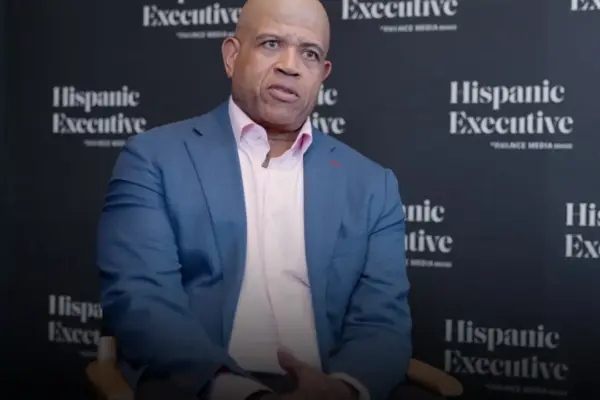












When Sergio Barajas sat down to read a recent report in The Daily Reporter covering the intersection of artificial intelligence and apprenticeship programs, he initially expected yet another piece focused on the massive data center construction boom sweeping the country. Instead, the National Hispanic Construction Alliance executive director discovered a conversation that struck at the heart of one of the most persistent and critical challenges facing Hispanic workers across the American construction industry: how to accelerate professional mobility and move up the ranks faster.
The underlying news stems from a presentation delivered in Milwaukee by Dr. Thomas Kriger, the director of research and education for North America’s Building Trades Unions. During his talk, Dr. Kriger detailed how he came to view artificial intelligence not as a distant, futuristic technology or a threat to traditional labor, but as a remarkably powerful and accessible training tool. His perspective shifted after observing educators utilize AI applications to generate comprehensive lesson plans, study materials, and customized quizzes in a fraction of the time traditionally required. Reflecting on that efficiency, Dr. Kriger distilled his realization into a striking observation: he looked at the technology and immediately saw the modern apprenticeship system.
That specific insight resonated deeply with Barajas, who sees an identical, transformative opportunity for the Hispanic workforce. Across the United States, Hispanic workers make up a substantial and vital share of the crews on job sites in nearly every major metropolitan market. Yet, despite their overwhelming presence in the field, a disproportionately low number of these skilled workers successfully transition into elevated leadership roles such as foremen, estimators, project managers, and business owners.
Drawing from decades of professional experience across housing development, construction, and financial sectors, Barajas notes that the primary barrier preventing Hispanic tradespeople from climbing the career ladder is rarely a lack of skill, talent, or dedication. Rather, the obstacles are rooted in time constraints, systemic access, and language barriers. A significant portion of the Hispanic construction workforce acquired their extensive expertise through hands-on experience on active job sites rather than through formal classroom environments. Consequently, the traditional pathway from working in the field to operating in the office has historically required years of grueling night classes, expensive extra schooling, or simply waiting indefinitely for an opportunity to prove oneself to management.
Bridging the Gap Between the Field and the Office
This entrenched timeline is precisely where Barajas believes emerging artificial intelligence tools can serve as a catalyst for industry-wide change. By lowering the barriers of time and language, technology can help bridge the gap between physical labor and administrative leadership.
Consider a practical scenario within a typical contracting firm: a skilled framer who aspires to transition into an estimator role can leverage AI applications to independently practice material takeoffs, study complex architectural plans, and have difficult technical concepts explained clearly in Spanish. Because these digital tools operate at the user’s individual pace, workers can engage in targeted professional development after completing a long, physically demanding shift on the job site.
Similarly, an ambitious crew lead who is preparing to take a rigorous contractor’s licensing examination can utilize AI platforms to convert dense study guides into interactive practice questions tailored to their learning needs. Meanwhile, a newly established Hispanic business owner navigating the administrative hurdles of entrepreneurship can receive crucial assistance in interpreting complex bid packages, drafting comprehensive safety plans, or writing clear, professional scopes of work. Barajas emphasizes that none of these technological applications are intended to replace the irreplaceable value of hands-on, real-world construction experience. Instead, their true power lies in shortening the learning curve, allowing accumulated experience to translate into career advancement much sooner than has traditionally been possible.
Navigating Risks and Safeguarding Company Data
As the construction industry cautiously embraces these new digital capabilities, industry leaders stress that professionals must exercise a high degree of caution regarding data privacy and information security. Publicly available, free artificial intelligence tools often retain and store user inputs to train their underlying models, presenting a genuine and substantial risk to any commercial enterprise.
For Hispanic contractors and business owners, adopting AI requires establishing a few simple, non-negotiable ground rules to protect sensitive business interests. Contractors must strictly keep client details, proprietary bid numbers, internal pricing, and employee records completely out of free public AI platforms. Instead, workers and management should approach these technologies strictly as a digital study partner or a collaborative assistant, rather than treating them as a secure corporate filing cabinet or a repository for confidential company data.
Beyond individual professional development, the broader integration of artificial intelligence presents a strategic opportunity for construction firms as a whole. According to Barajas, the construction companies and contracting businesses that actively incorporate AI into their internal training protocols will ultimately build much stronger, more resilient crews. By utilizing the technology to facilitate bilingual toolbox talks, streamline onboarding processes, and accelerate workforce upskilling, forward-thinking firms can foster environments that successfully promote from within.
Fostering the Next Generation of Industry Leaders
This strategic approach represents a viable roadmap for growing the upcoming generation of Hispanic supervisors, project managers, and independent business owners. It provides a practical mechanism to ensure that the individuals who physically build the nation’s infrastructure are also positioned to lead the industry into the future.
While the tools themselves are modern, the fundamental objective remains rooted in construction tradition. The industry has always depended on experienced craftspeople passing their knowledge forward to the next wave of workers, and artificial intelligence simply offers an additional avenue to accomplish that mission faster and reach a wider segment of the Hispanic community. Organizations like the National Hispanic Construction Alliance remain positioned to help Hispanic workers and contractors navigate these technological shifts so they can capitalize on new opportunities rather than being left behind. Construction professionals seeking to engage with these initiatives can connect with local chapters and learn more through the organization’s official platform at nhca.pro.