









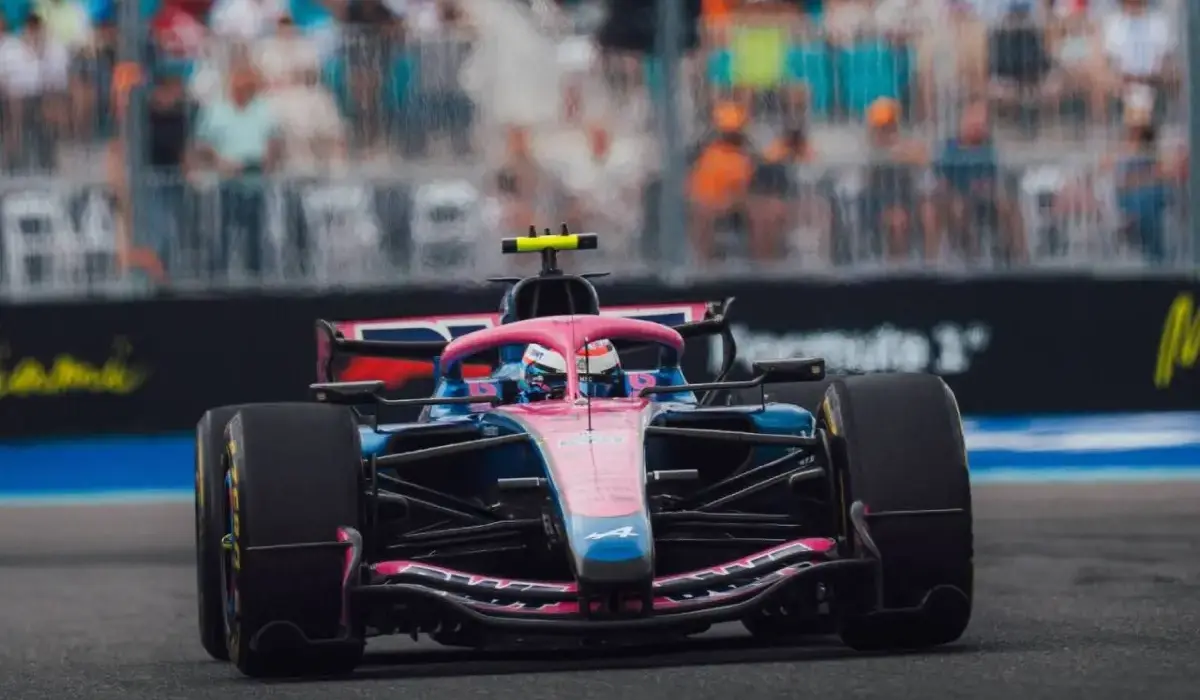
Argentine Formula 1 driver Franco Colapinto described the Singapore Grand Prix as “the worst trifecta” of his burgeoning career, capping off a deeply frustrating weekend that ended in a premature retirement on race day. The misfortune at the Marina Bay Street Circuit marked his second retirement in the space of just three races, compounding a difficult stretch that also included a crash at the Azerbaijan Grand Prix and a point-less, 13th-place finish in Malaysia.
The latest blow for the 23-year-old driver arrived on lap 30 of Sunday’s Grand Prix. At the time of the incident, Colapinto was running in 12th position, quietly biding his time and waiting for an opportunity to break into the points-paying positions. However, those ambitions were abruptly cut short when a persistent transmission problem struck his machine. The mechanical failure rendered the car virtually undriveable, forcing him into the garage and out of contention.
This Sunday retirement was only the final chapter of a miserable weekend in Southeast Asia. Colapinto had already suffered a major setback during Saturday’s sprint race, where another technical failure prevented him from crossing the finish line. For a driver who relies heavily on track time and consistent execution to build confidence and extract performance from his car, the double blow was particularly difficult to swallow.
“They were very harsh weekends; I’m not going through the best of times,” Colapinto admitted candidly after stepping out of the cockpit. He explained that his car had “barely moved forward” during the Grand Prix due to the crippling transmission issue that ultimately ended his race. “We need to understand what happened; it’s a shame to have two issues in two races.”
Looking ahead at the remainder of the 2025 Formula 1 calendar, the Argentine driver emphasized the urgent need for a collective breathing space before the championship resumes. With a crucial triple-header looming in the Americas starting in just two weeks—encompassing stops in the United States, Mexico, and Brazil—Colapinto stressed that both he and his team must regroup mentally and mechanically.
“We need a personal and technical reset,” he insisted, acknowledging the psychological toll of the recent run of bad luck while maintaining a forward-looking perspective. “It will be tough, but there are plenty of opportunities; we have to turn this bad moment around.”
Alpine Team Boss Points Towards Regaining Reliability
Colapinto’s frank assessment of the weekend’s difficulties was swiftly echoed by senior team management. Alpine Managing Director Steve Nielsen addressed the media after the race, highlighting the immediate need to restore the team’s trademark dependability as a foundational step for the final stretch of the season, even as engineers continue to work on raw car performance.
“We also need to understand what caused us to stop twice on track this weekend,” Nielsen stated, reflecting on the weekend’s compounding technical failures. “Reliability has been a strong point of ours this season, and it is important we get back on top of it to ensure we have two cars in the fight and competing for points.”
Before his dramatic retirement at the Azerbaijan Grand Prix, Colapinto had achieved a remarkable streak of finishing 29 consecutive races without a single retirement. At the time, that run stood as the longest active streak of race finishes among all drivers on the Formula 1 grid. That impressive statistic served as a powerful testament not only to the young Argentine’s exceptional racecraft and risk management, but also to the outstanding dependability of the Alpine equipment. The sudden shift toward mechanical fragility in recent weeks has therefore come as an unwelcome shock to the entire outfit.
Despite the recent setbacks, Nielsen expressed confidence in the underlying potential of the car, pointing out that the package has consistently demonstrated competitive speed across a wide variety of contrasting circuits.
“What makes us optimistic is that the car has good pace and is generally working well at most tracks,” Nielsen noted. “I think we can approach each of the coming races in a positive mindset knowing we can fight for points and hopefully start chipping away and reduce the gap to our rivals, which remains our objective for the remainder of the season.”
What Comes Next for Colapinto and Alpine?
The Formula 1 circus will now pack up and head across the globe for a demanding, high-stakes triple-header in the Americas. For Colapinto, this stretch of the championship brings the calendar geographically and culturally closer to home, offering a much-needed emotional and professional boost after a grueling Asian leg.
The action kicks off with the United States Grand Prix at the Circuit of the Americas in Austin, Texas, scheduled for October 25. That venue holds fond memories for the young driver, who secured his second-ever career Formula 1 points finish there while driving for Williams Racing back in 2024. Following the race in Texas, the grid will travel south for the Mexico Grand Prix at the Autódromo Hermanos Rodríguez in Mexico City on November 1, before concluding the Americas swing at the Autódromo José Carlos Pace in São Paulo for the Brazilian Grand Prix.
Given the passionate support from Latin American fans in both Mexico and Brazil, those events effectively function as home races for Colapinto, providing an electric atmosphere that is bound to uplift his spirits.
“The next triple header is a part of the year I look forward to the most, where we race in the Americas, closer to home, and I can really feel the energy of the fans,” Colapinto concluded. “We will keep pushing and won’t give up on our objective as a team.”