






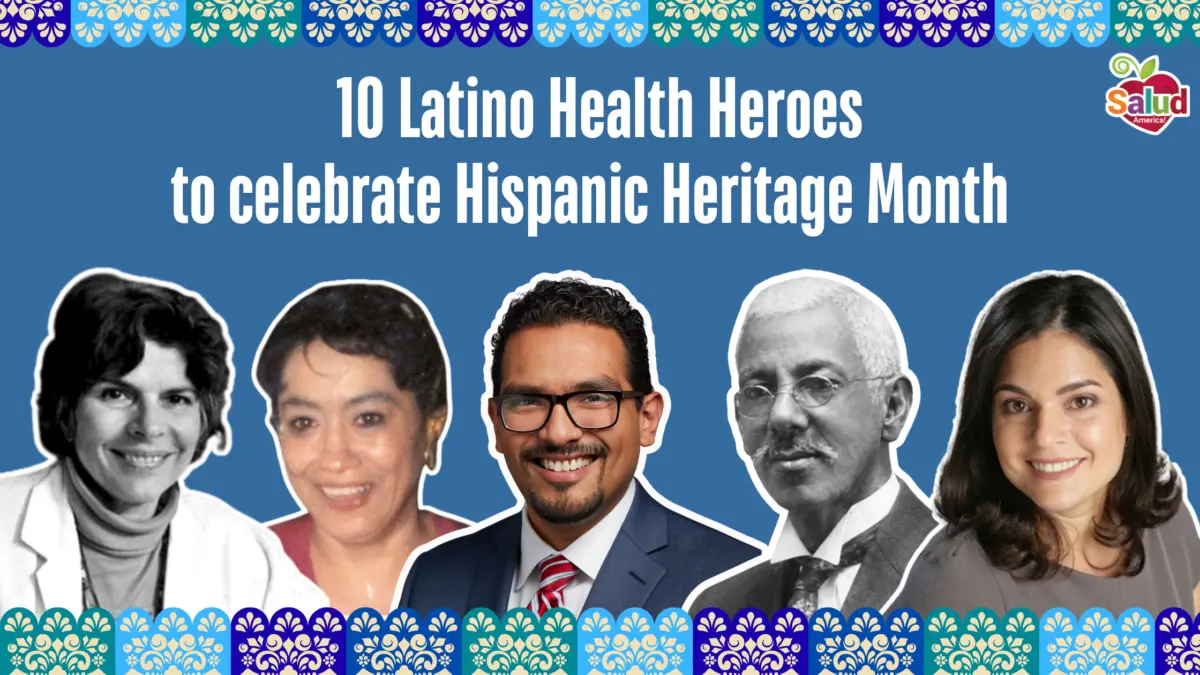
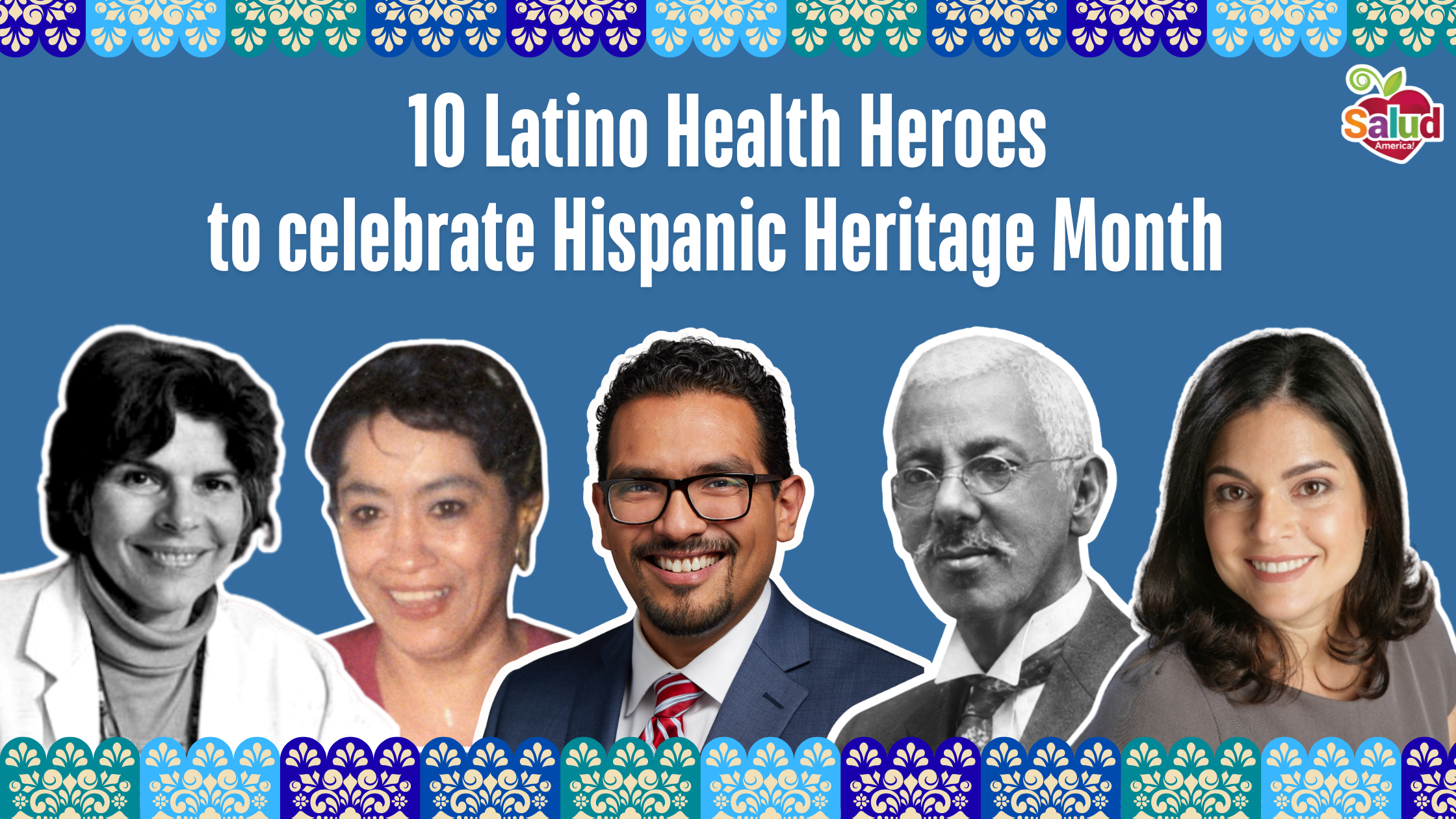
From bustling hospital wards and community clinics to virtual healthcare platforms and historical milestones, countless visionaries have worked tirelessly to improve health equity and well-being for Latino communities across the United States. During Hispanic Heritage Month, health advocacy networks like Salud America! take time to honor the pioneers, leaders, and modern innovators who serve as powerful role models in medicine, public health, and research.
Throughout history and into the present day, systemic barriers, cultural hurdles, and socioeconomic disparities have often limited access to quality healthcare for Hispanic populations. Yet, remarkable individuals have stepped forward to break down these walls, paving the way for future generations of physicians, nurses, and researchers while directly improving the health outcomes of their patients. Examining the lives and ongoing contributions of these ten health champions offers a profound look at how dedication, representation, and cultural competence can fundamentally transform American healthcare.
1. Dr. Jose Celso Barbosa
The legacy of Dr. José Celso Barbosa Alcalá stands as a monumental pillar in both medical history and civil rights. Born in Bayamón, Puerto Rico, Barbosa placed an immense value on education as a vehicle for personal and societal advancement. His academic journey culminated in 1880 when he graduated as the valedictorian of his class at the University of Michigan Medical School. By earning his medical degree in the continental United States, he achieved the historic distinction of becoming the first Puerto Rican physician to do so.
Historical records indicate that Barbosa faced significant adversity due to his background, yet he persevered to thrive academically and return to uplift his community. Beyond his medical practice, Barbosa left an indelible mark on the political and social landscape of Puerto Rico. As noted by the University of Michigan, he is widely remembered not only for his healthcare contributions but also for his pivotal role in advocating for political autonomy and pushing for territorial statehood. His pioneering spirit opened doors for future generations of Afro-Latino and Puerto Rican physicians seeking to enter the medical profession.
2. Dr. Martha Bernal
In the field of psychology, Dr. Martha Bernal broke monumental barriers as the first Latina to earn a Doctor of Philosophy degree in psychology in the United States. A native of Texas, Bernal dedicated her professional life to advancing two critical areas of the discipline: learning theory and multicultural studies. Through rigorous research and advocacy, she pushed for more ethical, culturally responsive, and empirically valid interventions for the psychological treatment of children.
Later in her illustrious career, Bernal shifted her focus heavily toward the recruitment, training, and professional development of psychologists from diverse backgrounds. According to the Society for the Psychology of Women, she provided invaluable guidance and inspiration to a wide range and large number of psychologists of color, mentoring both men and women who would go on to shape modern mental health practices. Her legacy remains a guiding light for diversity and inclusion within behavioral health.
3. Dr. Francisco G. Cigarroa
Dr. Francisco G. Cigarroa has dedicated his life to healing patients, educating future physicians, and leading major academic medical institutions. Serving as the Senior Executive Vice President for Health Affairs and Health System at The University of Texas at San Antonio, Cigarroa has built a career defined by groundbreaking leadership. Notably, he made history as the first Latino chancellor of The University of Texas System.
Cigarroa’s introduction to medicine happened organically early in life, influenced deeply by his father and grandfather before he pursued his own path as a pediatric surgeon. He also served as the president of UT Health San Antonio from 2000 to 2009. Throughout his decades-long career, Cigarroa has consistently worked to champion the reduction of Latino health disparities and expand educational access. Reflecting on his journey, Cigarroa once noted that individuals do not enter medicine to become administrators, but rather to care for patients and make life better. He emphasized that opportunities arise at various points, and as long as they are pursued for the right reasons, individuals should embrace them to drive meaningful change.
4. Dr. Eneida Nemecek
Developing a passion for health and healing at an early age, Dr. Eneida Nemecek was deeply inspired by the hard work and educational dedication of her parents while growing up in Puerto Rico. Today, she channels that same dedication into improving Latino health outcomes by expanding participation in vital clinical trials.
As the associate director for clinical research at the Oregon Health & Science University (OHSU) Knight Cancer Institute, alongside her role as a professor of pediatrics and medical oncology at OHSU, Nemecek focuses on bridging the gap between cutting-edge cancer research and underserved populations. She has been a vocal advocate for increasing clinical trial diversity, noting that healthcare professionals bear a dual responsibility. In her view, providers must not only educate patients on the importance of participating in research but also train the medical students of today to understand and address the unique health needs of diverse communities.
5. Dr. Helen Rodriguez Trias
A towering figure in public health, Dr. Helen Rodríguez Trias forged a remarkable path characterized by community-centered care and fierce advocacy. After earning her medical degree, Rodríguez-Trias established the very first center dedicated to the care of newborn babies in Puerto Rico, immediately addressing critical gaps in infant survival and maternal health.
Upon relocating to New York, she continued her mission of localized, accessible medicine by serving as the director of pediatrics at Lincoln Hospital. Throughout her career, Rodríguez-Trias emerged as a prominent leader within the women’s health movement, focusing extensively on reproductive rights and maternal welfare. In 1993, her lifelong dedication culminated when she was elected as the first Latina president of the American Public Health Association. Highlighting the interconnectedness of healthcare and social justice, Rodríguez-Trias famously stated that achieving a healthier society requires building a fairer healthcare system and, ultimately, a more equitable society.
6. Dr. Jorge Moreno
Originally from Mexico, Dr. Jorge Moreno moved to New York at the age of six. Because his parents did not speak English, a young Jorge frequently stepped in to translate medical appointments for his family. Navigating the complexities of the healthcare system as a child translator planted a deep-seated desire in him to become a physician who could provide genuinely culturally competent care to Spanish-speaking patients.
During the height of the COVID-19 pandemic, Dr. Moreno stepped up as a vital liaison and educator for the Latino community, working tirelessly to ensure accurate health information reached vulnerable populations. Reflecting on that turbulent period, he expressed gratitude for the opportunity to conduct much-needed outreach. Today, Dr. Moreno serves as an Assistant Professor of Medicine in the Section of General Internal Medicine at the Yale School of Medicine, while also holding the position of Assistant Medical Director of Yale Internal Medicine Associates, where he continues to champion health equity and infection control for all patients.
7. Lupe Hernandez
The simple act of maintaining clean hands plays a critical role in reducing the spread of infectious diseases in both community and clinical settings. In 1966, nursing student Lupe Hernandez recognized a vital gap in hygiene accessibility: when soap and water were unavailable, alcohol in gel form could serve as an effective, portable alternative for cleaning hands.
More than five0 years after her ingenious realization, Hernandez’s foundational concept of hand sanitizer continues to save lives by protecting the public against threatening pathogens and supporting the daily safety of brave medical professionals on the front lines of healthcare. While public health officials consistently emphasize that hand sanitizers serve as a supplemental health habit rather than a complete replacement for traditional handwashing, the lasting impact of Hernandez’s contribution remains an enduring testament to the ingenuity of nursing students and healthcare innovators.
8. Erik Cardenas
Growing up, Erik Cardenas witnessed firsthand the persistent health gaps and financial barriers that disproportionately impact Latino families. Driven by a lifelong passion for technology, Cardenas sought to leverage digital innovation to solve systemic healthcare access issues, eventually helping deliver telehealth services—including critical COVID-19 care—to patients in a matter of seconds.
His technological initiatives made a measurable impact on keeping frontline workers, including Amazon employees, healthy during the pandemic. Seeking to expand his mission, Cardenas eventually founded his own telehealth company with a core focus on delivering affordable primary healthcare to Latino households. Explaining the motivation behind his entrepreneurial work, Cardenas noted that the primary goal was to reduce the cost of medical care while simultaneously improving health outcomes. He emphasized the urgent need to prevent situations where Latino families are forced to choose between purchasing necessary prescription medications and paying for other essential household expenses.
9. Dr. Gus Alva
Addressing neurodegenerative conditions and breaking down cultural stigmas surrounding mental and neurological health drove Dr. Gus Alva to pioneer bilingual outreach campaigns. Recognizing the unique challenges faced by Latino patients dealing with conditions like Parkinson’s disease, Dr. Alva teamed up with Acadia Pharmaceuticals and the nonprofit storytelling organization StoryCorps to launch the "Yours, Truly" campaign. This bilingual initiative harnesses the power of multicultural storytelling to raise public awareness about the often-misunderstood non-motor symptoms of Parkinson’s disease, including psychosis.
Dr. Alva serves as the medical director of ATP Clinical Research, a neuropsychiatric clinical research organization located in Costa Mesa, California, a region with a substantial Latino population. In addition to his clinical work, he shares his expertise as an associate professor in the Department of Psychiatry and Human Behavior at the University of California, Irvine. Dr. Alva has consistently expressed his commitment to public advocacy, noting that he welcomes any opportunity to enhance education on critical health topics that affect vulnerable patient populations.
10. Ildaura Murillo-Rohde
Dr. Ildaura Murillo-Rhode was an exceptional nurse, educator, and institutional reformer dedicated to serving overlooked communities and expanding professional opportunities for Latinos in the medical field. Early in her career, she observed a glaring lack of representation among Hispanic nurses attempting to serve the heavily Latino population of San Antonio.
This stark underrepresentation inspired Dr. Murillo-Rhode to dedicate her life to helping Latinos pursue higher education in nursing, empowering them to uplift both their own lives and the well-being of their communities. Her visionary leadership led her to found the National Association of Hispanic Nurses (NAHN)—originally established in 1975 as the Spanish Speaking/Spanish Surnamed Nurses’ Caucus. Reflecting on her solitary journey through federal health policy spaces, Dr. Murillo-Rohde recalled looking around Washington while reviewing research and education grants and realizing she was the only Hispanic nurse in the room. Prompted by the question of where her peers were, she built an organization that continues to champion diversity, mentorship, and professional excellence in nursing to this day.