








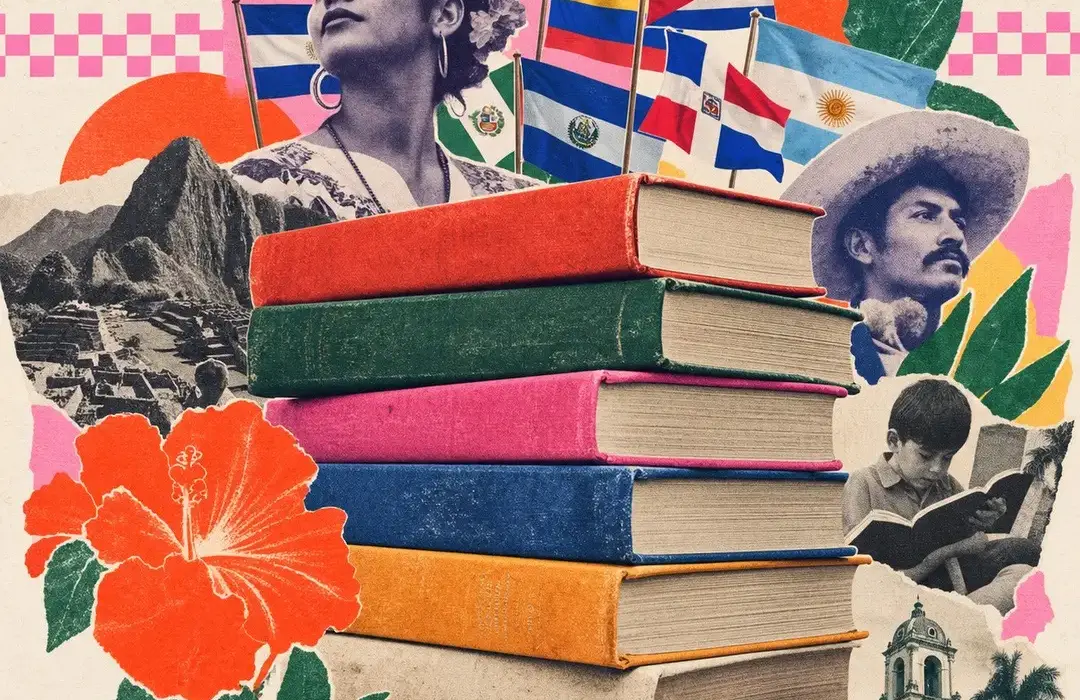
Latino history stretches across borders that have continually moved and shifted around populations, tracing a grand migration shaped by geopolitics, shifting economies, labor movements, urban neighborhoods, diverse racial identities, music, fashion, and families whose deeply personal stories illuminate forces much larger than themselves. To truly understand the fabric of the United States, one must look closely at these interconnected narratives, which span centuries and touch every corner of American society.
The finest historical works capture this immense complexity without ever sacrificing the fundamental element that makes history worth reading in the first place: a compelling, human-driven story. Rather than treating the past as a static collection of dates and dry facts, these texts bring history to life through the struggles, triumphs, and daily realities of real people. For readers looking to deepen their understanding of this vast and vital heritage, particularly during observances like Hispanic Heritage Month, scholars and journalists recommend starting with a foundational shelf of literature that reframes how we view the American experience. Here are five essential places to begin that journey.
Harvest of Empire by Juan González
For readers seeking the big picture, the journey begins with veteran journalist Juan González. In Harvest of Empire, González connects five centuries of Latin American and United States history to explain how Puerto Rican, Mexican, Cuban, Dominican, Central American, and various other Latino communities came to occupy their particular and often complex socio-economic places within the United States. Spanning more than five hundred pages, the book maintains a relentless momentum largely because of the immigrant families woven seamlessly throughout the historical analysis.
The central thesis of the work is both compelling and urgent: contemporary Latino migration cannot be understood or addressed separately from the long, deeply intertwined economic and political relationship between the United States and Latin America. González traces how military interventions, corporate investments, and diplomatic policies forged by Washington over generations directly created the economic pressures and political upheavals that drove millions northward. For anyone looking to grasp the historical roots behind modern demographic shifts, this volume serves as an indispensable roadmap.
Barrio America by A. K. Sandoval-Strausz
Another common misconception challenged by modern scholarship centers on the physical revival of American cities in the latter half of the twentieth century. Traditional narratives have long credited young professionals, artists, and the so-called "creative class" with sparking the urban revival of the 1990s and 2000s. However, historian A. K. Sandoval-Strausz shatters that familiar myth in Barrio America.
Through meticulous examinations of neighborhoods like Chicago’s Little Village and Dallas’s Oak Cliff, Sandoval-Strausz documents how Latino immigrants actually drove the revitalization of urban centers. Following decades of population loss, white flight, and severe municipal disinvestment, these communities bought homes, established thriving local businesses, repopulated decaying neighborhoods, and restored vibrant street life. By combining rigorous economic statistics with extensive oral histories, the author grounds his economic arguments in the authentic voices and lived experiences of the characters and neighborhoods that saved the American city from permanent decay.
The Woman in the Zoot Suit by Catherine S. Ramírez
Fashion has always served as a profound form of self-expression, but in mid-century America, clothing could also become a dangerous battlefield for civil rights and cultural acceptance. While the zoot suit remains an iconic and widely recognized piece of Mexican American history, the young women who wore them—known as pachucas—have historically been much easier to overlook or mischaracterize in mainstream historical accounts.
In The Woman in the Zoot Suit, scholar Catherine S. Ramírez restores Mexican American women to their rightful place in the turbulent history of 1940s Los Angeles. She examines the young women whose distinctive clothing, elaborate hairstyles, open assertion of sexuality, and outright refusal to conform challenged deeply entrenched expectations from both mainstream Anglo America and their own traditional communities. Furthermore, Ramírez revisits the infamous Sleepy Lagoon murder case and the broader cultural politics surrounding the Zoot Suit era, using fashion as a unique doorway into complex discussions of gender, identity, rebellion, and historical memory.
The Injustice Never Leaves You by Monica Muñoz Martinez
History is rarely a neutral recording of facts; rather, it is frequently a contested terrain shaped by those who hold power. Some historical trauma survives because official institutions meticulously preserve records, while other dark chapters survive simply because ordinary families refuse to forget what the official record attempts to erase.
Historian Monica Muñoz Martinez investigates the harrowing history of anti-Mexican violence along the volatile Texas-Mexico border between 1910 and 1920. Her research brings to light numerous killings committed not only by vigilantes but also by law enforcement officers acting with impunity. Yet, what makes the book particularly fascinating is its compelling second narrative: an exploration of how official government accounts systematically minimized and justified that violence, while the surviving witnesses, victims’ descendants, and local communities tenaciously preserved alternative memories across generations. It stands as a profound study of institutional power and a reminder of the ongoing struggle over who ultimately gets to decide what becomes accepted as official history.
My Beloved World by Sonia Sotomayor
History is not exclusively found in dusty archives or sweeping geopolitical analyses; it is also lived, breathed, and shaped by individuals who navigate the corridors of power. Sonia Sotomayor’s acclaimed memoir, My Beloved World, demonstrates that not every essential historical work needs to look backward from a historian’s traditional academic desk.
Sotomayor’s personal journey takes readers from her upbringing within a working-class Puerto Rican family in the Bronx through her undergraduate years at Princeton, her rigorous training at Yale Law School, and her distinguished career as a prosecutor and federal judge before ultimately joining the United States Supreme Court. The profound historical and sociological value of the book lies in its remarkable specificity. Through the lens of one extraordinary life, readers experience the intricate intersections of family dynamics, language, class mobility, educational barriers, personal ambition, and the complex quest for belonging in America. In 2009, Sotomayor shattered a historic glass ceiling by becoming the first Latina to ever serve on the highest court in the nation.
The Bottom Line
Commemorations such as Hispanic Heritage Month can easily devolve into predictable exercises in looking backward with nostalgia. However, works of literature and historical research like these make the past useful for the exact opposite reason.
Together, they complicate and enrich familiar, oversimplified stories about who actually built American cities, who shaped its foundational institutions, how its national borders came to matter, and whose lived experiences managed to make it into the official historical record. The finest history rarely feels like the tedious memorization of bygone eras. Instead, it feels like the vital discovery of why the modern world looks the way it does today.