









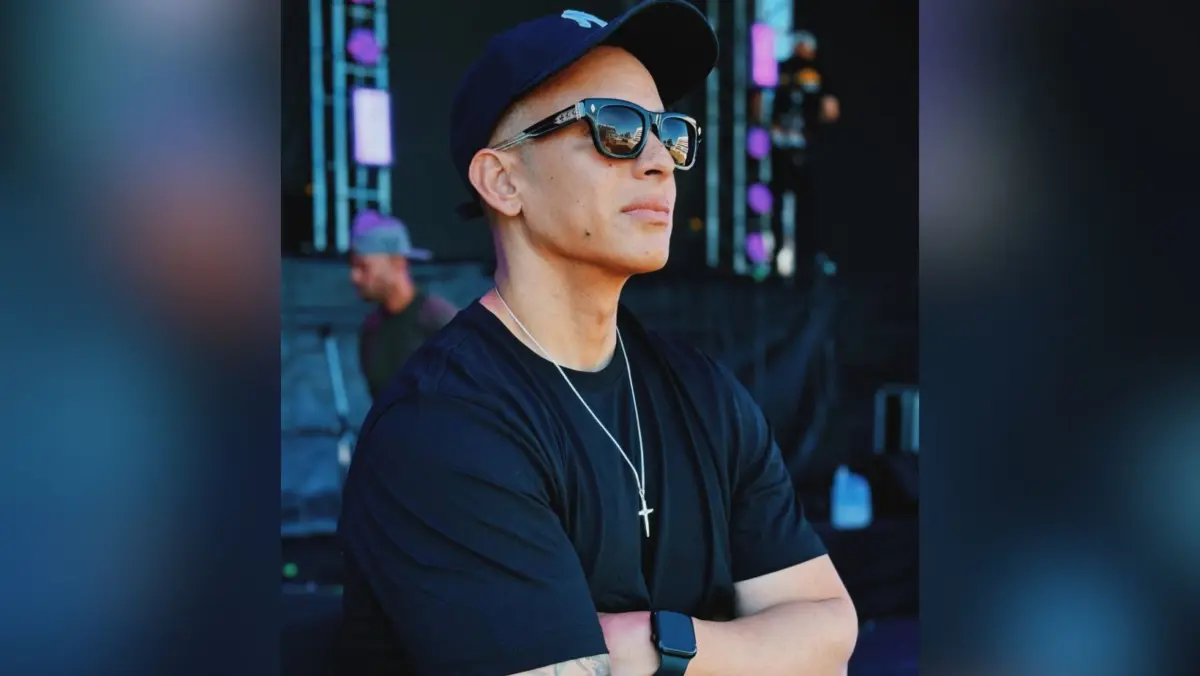
Ramón Ayala, the internationally renowned Puerto Rican urban music pioneer globally celebrated as Daddy Yankee, has taken decisive legal action in the United States. Ayala has filed a federal defamation lawsuit seeking $10 million in damages against Spanish businessman León Fernando Fiksman. The legal action was formally lodged in the United States District Court for the Southern District of Florida, marking a major escalation in an ongoing multi-layered legal battle between the parties.
According to the federal complaint, the lawsuit stems from a series of statements made by Fiksman during a podcast interview published on January 14th. In the interview, Fiksman publicly linked the legendary reggaeton artist to serious allegations, including money laundering and associations with the financial network of former Venezuelan president Hugo Chávez, alongside broader Venezuelan political corruption. Ayala’s legal representatives have firmly characterized these accusations as entirely fabricated, asserting they were strategically timed and disseminated to severely damage the artist’s hard-earned global reputation ahead of an impending jury trial.
The federal filing brings into sharp focus the intersection of public media platforms and ongoing courtroom litigation. The two men have already been entangled in a separate, contentious legal dispute in Miami-Dade County since 2024. That state-level case originated when Fiksman filed a lawsuit against Ayala, his then-wife Mireddys González, and other associated parties, alleging various forms of financial fraud connected to a padel sports company operating in Florida.
According to the newly filed federal complaint, the Miami-Dade fraud case is officially scheduled to go before a jury beginning in August of this year. Ayala’s legal counsel argues that Fiksman’s appearance on the Spanish-language podcast was not a random media engagement, but rather a deliberate and calculated maneuver designed to reach, influence, and potentially prejudice prospective jurors before the official jury selection process could even begin.
What Fiksman Said and Why Ayala Says It Was a Lie
During the disputed January podcast interview, Fiksman discussed the ongoing Miami-Dade County litigation in extensive detail. He claimed during the broadcast that he had personally reviewed discovery materials produced during the legal proceedings, and that these documents purportedly supported his negative characterizations of Ayala’s conduct and business dealings.
Fiksman reportedly told the expansive podcast audience that internal messages examined during the discovery process showed Ayala explicitly agreeing with statements suggesting that corporate assets had been improperly diverted or taken. He allegedly summarized his interpretation of the evidence by tightly binding the concepts of money laundering, Hugo Chávez, and Daddy Yankee into a single narrative description of what the evidentiary record supposedly revealed.
Ayala’s federal complaint directly challenges these claims, stating unequivocally that no such messages or communications exist within the case files. The legal filing argues that none of the documents, electronic messages, formal communications, or evidentiary productions exchanged during the discovery phase of the Miami-Dade lawsuit—nor any materials originating from any other source whatsoever—provide any factual basis for what Fiksman told the podcast audience.
The complaint expands upon these assertions by alleging that Fiksman deliberately falsified, distorted, or completely fabricated the content of the discovery materials. It claims he deliberately cited a nonexistent message to lend an aura of false credibility to his accusations in front of an audience counting hundreds of thousands of listeners.
Furthermore, the federal filing contends that Fiksman acted with "actual malice," a legal standard indicating that he either knew his public statements were entirely false when he uttered them, or that he proceeded with a reckless disregard for the truth. Ayala’s legal team reinforced the factual record within the complaint, reiterating that the artist has never participated in, nor maintained any connection to, money laundering operations, the financial networks of Hugo Chávez, or Venezuelan political corruption of any kind, and that Fiksman was fully aware of these realities when he made the statements.
Why the Timing and the Audience Mattered
The newly introduced federal lawsuit places considerable emphasis on the specific choice of venue and audience for Fiksman’s remarks. The complaint notes that the podcast where the statements were made commands a large Spanish-language audience exceeding 737,000 followers. Many of these listeners, the filing suggests, either reside directly in South Florida or maintain close cultural, familial, and economic ties to the region.
The legal reasoning points out that Miami-Dade County draws its prospective jury pools from one of the most heavily Latino demographic regions in the United States. This population includes substantial communities of Venezuelan and Cuban descent. For these specific communities, public accusations linking a prominent public figure to Hugo Chávez’s financial networks and the broader culture of Venezuelan political corruption carry a deeply emotional and visceral impact.
By targeting that specific audience with inflammatory accusations at a crucial juncture, Ayala’s legal team argues that Fiksman engineered a scenario to ensure his narrative would penetrate the very community from which the trial jurors would soon be chosen. The lawsuit frames this as a dual-purpose strategy: inflicting maximum reputational harm on the music icon while simultaneously contaminating the potential jury pool ahead of the state court proceedings.
The State of Both Legal Battles
The underlying state-level legal battle in Miami-Dade County—where Fiksman originally claimed he was pushed out of a padel sports company at a severely devalued price, resulting in substantial financial losses—has experienced significant shifts in momentum. In December, the Miami-Dade case suffered a notable setback when a presiding judge officially excluded Fiksman’s primary expert witness.
Ayala’s federal complaint characterizes this judicial ruling as the elimination of the sole mechanism through which Fiksman could attempt to legally quantify the financial damages he has claimed. Consequently, Ayala’s legal team portrays Fiksman’s original state court claims as resting entirely on conjecture and speculation. They argue that the January podcast appearance was a direct, reactionary response to losing ground inside the actual courtroom, substituting formal legal arguments with a campaign in the court of public opinion.
The federal defamation lawsuit outlines three distinct counts against Fiksman, demanding monetary compensation of no less than $10 million. This figure is calculated to account for direct damage to Ayala’s professional reputation, alongside the resulting economic and emotional consequences. The federal case has been formally assigned to Judge José E. Martínez within the United States District Court for the Southern District of Florida.
With the Miami-Dade jury trial slated to commence in August, both high-stakes legal proceedings will run concurrently over the coming months. As these parallel dockets move forward, the federal defamation suit will test the legal boundaries of public commentary and witness conduct during active multi-million-dollar litigation, while the state trial will ultimately address the core financial disputes surrounding the Florida-based sports enterprise.