









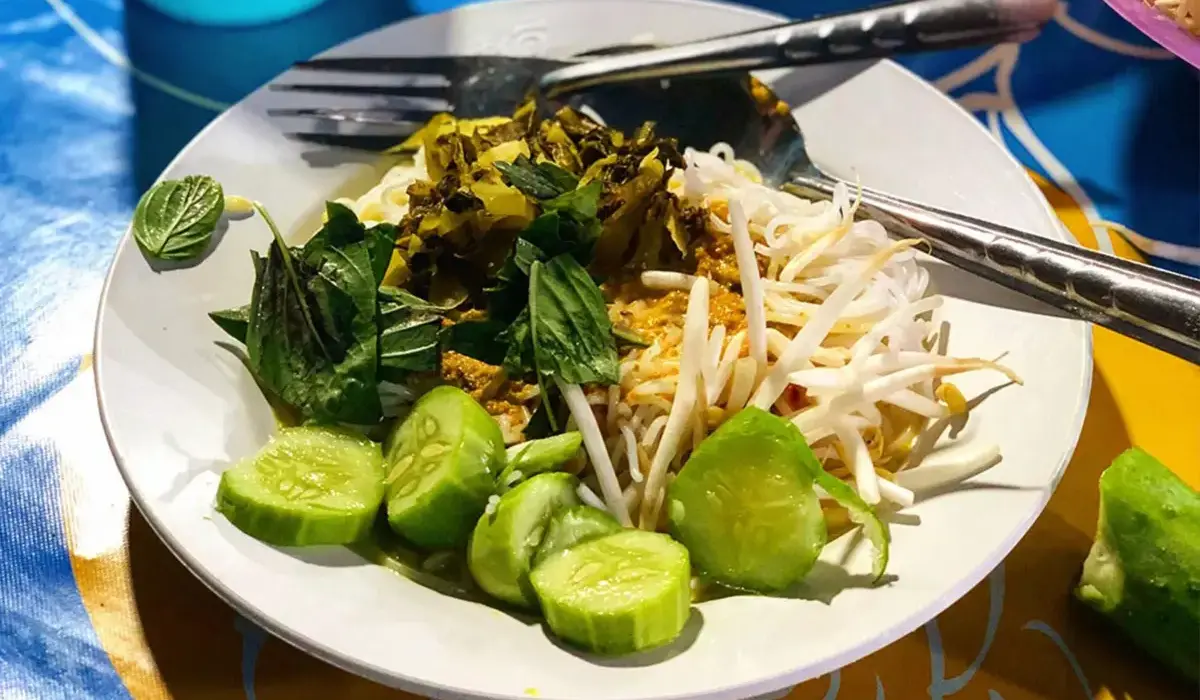
When chefs Justin Ahn and Alex McCoy launched Alfie’s as a pop-up restaurant in 2016, they never imagined that the journey to securing a permanent, brick-and-mortar home would span nearly an entire decade. Initially, the temporary Washington, D.C. location served northern Thai cuisine to the city’s tight-knit service industry crowd and dedicated regulars for just a few fleeting months. Following that initial run, Ahn and McCoy transformed the project into a roving concept, hosting pop-ups in various cities around the world. Now, nearly ten years after their first service, the duo is finally making a permanent return to the District with a tiny, intimate venue tucked away in Georgetown.
Today, the team is fully settled into a cozy 25-seat space located down an alleyway just off of Georgetown’s bustling M Street. There, they serve northern Thai dishes crafted thoughtfully with Mid-Atlantic ingredients, paired with natural wines produced just across the Potomac River in Virginia. Despite finally putting down permanent roots, the restaurant preserves the spirited, agile elements of its pop-up origins—including a run-and-gun service style and a dynamic chalkboard menu that shifts daily based on what regional purveyors have in season. To learn more about how the team successfully translated a scrappy pop-up model into a permanent brick-and-mortar concept while keeping its chaotic yet magnetic energy intact, we caught up with co-owner Alex McCoy to discuss the evolution of the brand.
Why Launch Alfie’s as a Pop-Up?
Reflecting on the restaurant’s origins, McCoy explains that the pop-up format was born out of a specific window of opportunity rather than a grand, multi-year strategy. At the time, the team already had a permanent space in the Petworth neighborhood that they were actively building out for their brick-and-mortar restaurant. Coincidentally, another restaurant space further down the street was slated for demolition, prompting Ahn and McCoy to approach the landlords to see if they could utilize the interim vacancy.
The landlords agreed, offering the space until either the permanent location was ready or the demolition project commenced. According to McCoy, it presented a golden opportunity to train the incoming staff, test out food ideas, and refine the menu concepts while their primary location remained under construction. Situated in a relatively quiet part of town, the founders simply wanted to have fun with the experimental venture. However, it rapidly snowballed into an unexpected cult sensation, remaining packed months in advance. Publications like Vogue wrote about the phenomenon, while Bon Appétit named it one of the top new restaurants in America. Yet, looking back, McCoy notes that the pop-up was only open for a total of about six months before closing its doors in 2017.
Complications ultimately derailed the Petworth space, forcing the team to search for an entirely new venue. During the intervening years, Ahn and McCoy kept the concept alive by hosting pop-ups in New York, Washington, D.C., and London, spending considerable time overseas. According to McCoy, those extended stints abroad—particularly the larger pop-ups hosted with friends at Carousel in London—truly shaped and evolved the brand into what it is today.
The Evolution of the Concept on the Road
The time spent traveling and operating temporary spaces deeply influenced the operational blueprint of the modern restaurant. In the wake of the COVID-19 pandemic, the hospitality industry experienced widespread turmoil as operators struggled to make traditional restaurant models financially viable amid rising operational and staffing costs. Many businesses resorted to creative service styles characterized by reduced front-of-house staff, fewer servers, an absence of traditional table service, and a heavy reliance on QR codes. To McCoy, the math simply did not add up.
Instead of following domestic trends toward automation and lean corporate staffing, McCoy looked to Europe for inspiration, drawing from the intimate, neighborhood hole-in-the-wall establishments found throughout Paris and London. In those cities, chefs typically do not own six or seven distinct venues; rather, they are physically present in a single space alongside one or two core team members. That hands-on approach felt like the true heart and soul of what Alfie’s had always represented, while also serving as the most viable path forward for the brand’s future.
Following their final pop-up appearance in London, the team discovered a quirky, unassuming location in Georgetown—a neighborhood that McCoy feels captures a distinctly European ambiance unlike anywhere else in Washington, D.C. Tucked away in an alleyway directly behind the high-traffic commercial corridor of M Street, the 25-seat venue possesses a certain gritty charm. Patrons step down off the main street into an alley where they occasionally have to dodge passing cars, revealing a space bursting with character and personality. For the proprietors, it was an immediate match that encapsulated the exact vibe, ambiance, and dynamic energy they sought to cultivate.
Maintaining the Pop-Up Mindset in a Permanent Home
Even with a permanent address, Alfie’s continues to operate with the same scrappy mindset that defined its early days. The day-to-day operations are driven almost exclusively by a tiny crew: Justin Ahn, Alex McCoy, and sous chef Ian make up roughly 90 percent of the restaurant’s total staff.

From a culinary perspective, a 25-seat dining room is considered the ideal size because it allows the chefs to pour their attention into meticulously crafted small batches of food. If the kitchen prepares a curry for the service, they will typically produce only about 30 orders. This intimacy grants the culinary team the freedom to evaluate the menu on a daily basis, making immediate adjustments based on whichever ingredients arrive from the docks or farms. If a local fishmonger drops off a handful of pristine sea breams, the chefs can seamlessly add them to the chalkboard menu without needing to retrain a massive staff or overhaul complex operational systems.
This agile approach directly mirrors Thailand’s vibrant market culture, which serves as the fundamental ethos of the entire brand. The team continuously challenges itself to create compelling dishes utilizing what is locally available in the Mid-Atlantic region, incorporating regional delicacies such as rockfish, soft-shell crab, foraged asparagus from the Eastern Shore, and morel mushrooms.
Embracing Local Ingredients on the Drink Menu
The beverage program follows a similar philosophy of hyper-locality inspired by European wine regions. In France, Italy, or other historic wine-producing areas, patrons sitting at a local bar or restaurant naturally consume beverages produced in the immediate vicinity—a dynamic that is rarely replicated in Washington, D.C., despite world-class wineries operating just 15 to 20 minutes away by car. To bridge that gap, the majority of Alfie’s wines available by the glass originate from Virginia vineyards, while the bottle list features selections from more than 2,000 local producers.
Pricing strategy is another critical component of the guest experience at Alfie’s. Most of the restaurant’s wine bottles are priced accessibly between $35 and $75, with only a select few exceeding that range. McCoy notes that many diners frequently go out to eat with a sense of underlying dread when the check arrives. By keeping wine approachable and affordable, the team hopes guests can immerse themselves entirely in the dining experience without worrying about the cost of trying something new or unfamiliar. Diners are encouraged to take culinary risks without constantly calculating the financial impact of every item they consume.
Building Community Through an Exclusive Wine Club
To further nurture relationships with its devoted following, Alfie’s established an intimate wine club designed for its most frequent guests. Having historically attracted a strong base of regulars, the team wanted the restaurant to function as an extension of a living room for wine enthusiasts who wish to spend considerable time there.
Limited strictly to 19 spots, the wine club requires a monthly fee of $150, which grants members a dedicated wine rack of their own inside the restaurant. Diners can bring in bottles from their personal home collections or lean on the staff to curate custom selections for their private locker. Additionally, club members gain access to special wine selections at a steep discount compared to standard restaurant markups, allowing them to purchase rare bottles that are otherwise too costly to feature on the standard public menu at roughly 50 percent off typical restaurant pricing.
Overwhelming Community Reception
When Alfie’s finally released its initial batch of reservations to the public, the response was immediate and overwhelming, yielding 700 bookings almost instantly. While McCoy admits he could not explicitly anticipate the scale of the reaction, he had a strong intuition based on early signs of interest circulating on social media in the weeks leading up to the opening.
For McCoy, the massive demand indicates that Alfie’s successfully satisfies a distinct craving among D.C. diners—one that has largely gone unfulfilled since 2020. As the city experiences growing fatigue from independent small businesses being continually replaced by large corporate restaurant groups, Alfie’s positions itself as the literal antithesis of sterile corporate hospitality. Guests step through the door to find Ahn and McCoy actively working the kitchen line, greeting visitors personally and running plates directly out to the tables—a warm, unfiltered neighborhood energy that the local dining scene has missed for years.