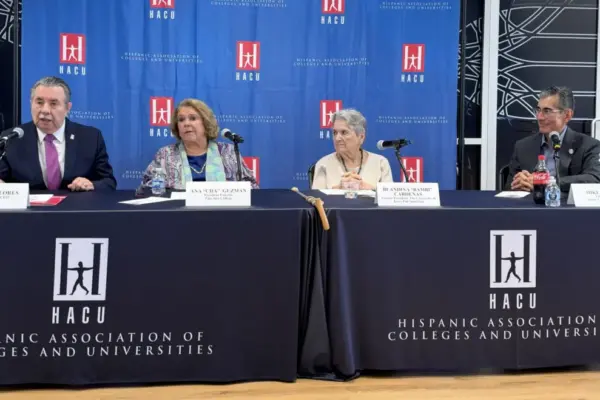









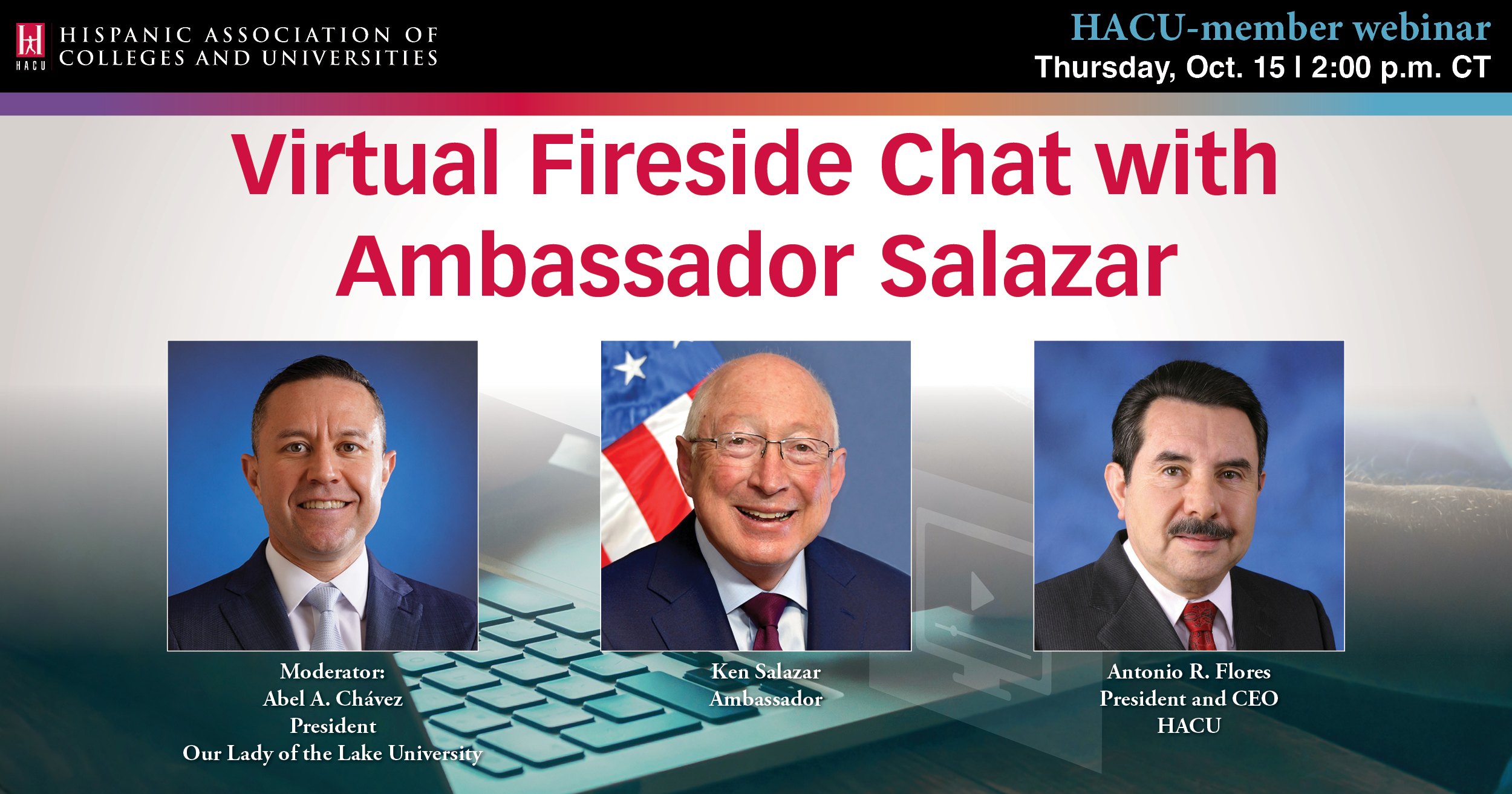
The Hispanic Association of Colleges and Universities (HACU) recently convened an engaging and deeply reflective virtual fireside chat featuring Ambassador Ken Salazar, a distinguished public servant, diplomat, and author of the acclaimed book Borderlands: My Fight for an Inclusive America. Held on October 15, 2026, the online event brought together educators, students, and community leaders from across the nation to discuss the intersection of personal heritage, educational opportunity, and the ongoing pursuit of a more inclusive American society.
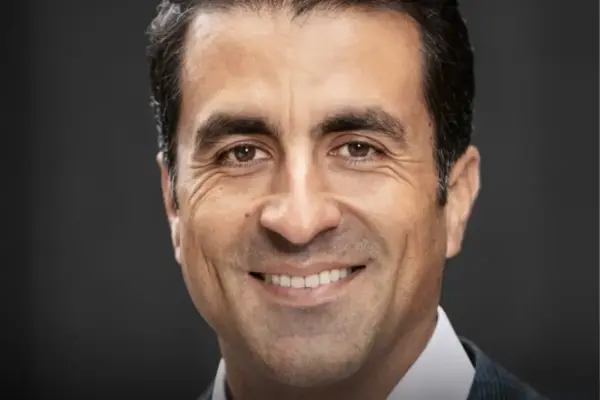
The special session was led by HACU President and CEO Antonio R. Flores, who joined Ambassador Salazar for the main dialogue. Guiding the conversation as moderator was Abel A. Chávez, President of Our Lady of the Lake University. The trio’s dynamic discussion touched upon the core themes of Salazar’s literary work, drawing heavily from his remarkable life journey from a modest ranch in the American West to the highest echelons of domestic governance and international diplomacy.
Ambassador Salazar’s life story forms the bedrock of Borderlands. Growing up on his family’s ranch in Colorado’s picturesque San Luis Valley, Salazar was part of a tight-knit community deeply rooted in the land and cultural traditions of the American Southwest. Breaking barriers as the first member of his family to attend college, he went on to pursue higher education with vigor, ultimately earning a law degree that paved the way for a long and impactful career in public service. Over the decades, Salazar has worn many hats of immense responsibility, serving the public as Colorado’s attorney general, a United States senator, the secretary of the interior under the federal government, and, most recently, as the United States ambassador to Mexico. Throughout Borderlands, Salazar reflects upon these decades of high-stakes public service, utilizing his personal experiences to make a passionate and reasoned case for building a stronger, more cohesive, and fully inclusive America.
The virtual fireside chat leveraged these rich autobiographical insights to explore broader questions concerning leadership, civic duty, and the transformative power of education. A central focus of the discussion was the profound influence that family values and academic access have on shaping dedicated public servants. Salazar and the academic leaders discussed how early encouragement and access to higher education serve as critical catalysts for individuals from underrepresented backgrounds, allowing them to step into roles of influence and effect meaningful change within their communities.
Furthermore, the dialogue addressed the pivotal role that institutions of higher education play in identifying, nurturing, and developing the next generation of leaders. Particular emphasis was placed on Hispanic-Serving Institutions (HSIs) and their unique position and responsibility in preparing students for leadership roles across various sectors of society. As key drivers of social mobility and academic excellence, HSIs were highlighted during the event as vital incubators of talent, providing the necessary academic rigor, cultural affirmation, and professional networks to help students succeed in an increasingly interconnected world.
The conversation seamlessly expanded from campus environments to broader domestic and international landscapes, examining strategies for bridging persistent political and cultural divides within the United States. In an era often marked by polarization, the speakers explored how dialogue rooted in mutual respect and shared values can foster unity. Additionally, the fireside chat delved into the intricacies of U.S.-Mexico relations, exploring the diplomatic, economic, and cultural ties that bind the two neighboring nations together. Building on his extensive firsthand diplomatic experience, Salazar shared perspectives on how to strengthen these bilateral ties and expand vital opportunities for cross-border collaboration in areas such as education, academic research, and workforce development. These collaborative efforts, the participants agreed, are essential for addressing shared regional challenges and ensuring mutual prosperity in North America.
Toward the end of the virtual gathering, Ambassador Salazar introduced a significant initiative designed to bring the themes of his book directly into academic communities. He shared details regarding how colleges and universities can integrate Borderlands into their curricula and campus programming through "One Book, More Voices." This new initiative, established under the auspices of the Borderlands New North American Alliance Fund, is designed to provide matching copies of the book for classrooms, university libraries, and student-focused programs. By facilitating broader access to the text, the initiative aims to spark meaningful campus-wide conversations about inclusion, civic engagement, and the future of North American relations.
The event concluded with an outlook on the enduring importance of educational equity and cross-cultural understanding, leaving attendees with a renewed sense of purpose regarding the role of higher education in shaping an inclusive society. Through events like this virtual fireside chat, HACU continues to foster vital dialogues that inspire students, educators, and leaders to champion diversity, educational achievement, and collaborative progress across borders.