











In an era defined by instant gratification, where virtually any song ever recorded can be summoned to a smartphone in a matter of seconds, the bustling Argentine capital continues to champion a far more tactile, deliberate way of discovering music. Buenos Aires maintains a vibrant and deeply rooted passion for browsing the physical shelves of independent record stores, keeping alive a cultural ritual that resists the fleeting nature of modern digital consumption.
The city’s long-standing tradition of disquerías extends well far beyond the mere commercial transaction of selling music. For decades, these establishments have functioned as vital cultural hubs, acting as informal social clubs for musicians, curious listeners, and dedicated collectors alike. Within these walls, a dynamic new generation of young audiophiles is regularly introduced to emerging indie artists, underground cult heroes, and historical pioneers.

Many of these specialized stores have remained at the very heart of the city’s cultural life for over half a century. They have weathered seismic shifts in the music industry, successfully surviving the introduction of compact discs, the rise of massive digital retail chains, and the subsequent streaming revolution. At the same time, a wave of new independent shops has opened across various neighborhoods over the past decade, proving that the appetite for physical media remains remarkably robust.
While the majority of these establishments specialize heavily in rock music, their inventories are expansive. Shoppers can easily find extensive jazz and world-music catalogs, alongside classical masterpieces, traditional Argentine folklore, and the melancholic rhythms of tango. These inventories typically range from deluxe, heavy-duty 180-gram vinyl reissues to used records housed in unsorted bins. These bargain and mystery bins frequently yield rare, hard-to-find editions, original first pressings, and long-out-of-print albums, turning every routine shopping trip into an unpredictable treasure hunt.
This distinctive retail culture extends well beyond traditional storefronts tucked away in the city’s commercial corridors. The famous used-record stands at Parque Rivadavia and Parque Centenario have long drawn dedicated collectors seeking hidden gems in the open air, while the bustling antique markets of the historic San Telmo neighborhood provide yet another essential destination for vinyl enthusiasts hunting for vintage sonic artifacts.

In any typical Buenos Aires disquería, the process of finding an unfamiliar album remains a multisensory experience. It involves flipping rhythmically through endless rows of record sleeves, pulling out a promising record, examining its cover art in detail, reading the liner notes, and striking up an impromptu conversation with the person behind the counter. More often than not, a customer leaves the shop with a treasured acquisition that was never on their original shopping list.
Among the anchors of this enduring cultural ecosystem is Zivals, located at Callao 395 on the corner of Avenida Corrientes in the Congreso district. Operating for more than five decades, its catalog of new vinyl reissues spans everything from Argentine and international rock to tango, jazz, and classical compositions. In addition to music, Zivals functions as a specialized music bookstore, offering a rich selection of artist biographies and critical essays. Visitors stopping by the store are also greeted by a striking, massive exterior mural of legendary rock musician Charly García, painted by renowned street artist Martín Ron.
Further downtown, Casa Piscitelli stands as one of the oldest operating record stores in the city. Founded in 1939 at San Martín 450, it holds a notable place in local music history, reportedly becoming the very first store in Argentina to sell compact discs when they were introduced in 1983. While the store has naturally evolved over the decades, it maintains a strong focus on classical music while continuing to carry a broad and carefully curated selection of jazz, tango, and rock records.

Tucked away on Uruguay Street in downtown Buenos Aires, Cactus Discos offers a markedly different, atmospheric experience. Entering the dimly lit shop reveals seemingly endless corridors of records spanning a wide variety of genres. The store carries a mix of new and used vinyl, frequently featuring deeply discounted bargain bins that offer exceptionally tempting deals for budget-conscious collectors.
Another foundational pillar of the city’s music scene is RGS, located inside the Galecor arcade at Avenida Corrientes 5233 in Villa Crespo. Founded in 1966, this historic shop expanded its industry footprint by establishing its own record label, through which it has actively reissued hard-to-find Argentine albums that might otherwise have been lost to history. RGS regularly hosts special events, listening sessions, and live performances, serving as a key community focal point during annual celebrations like Record Store Day.
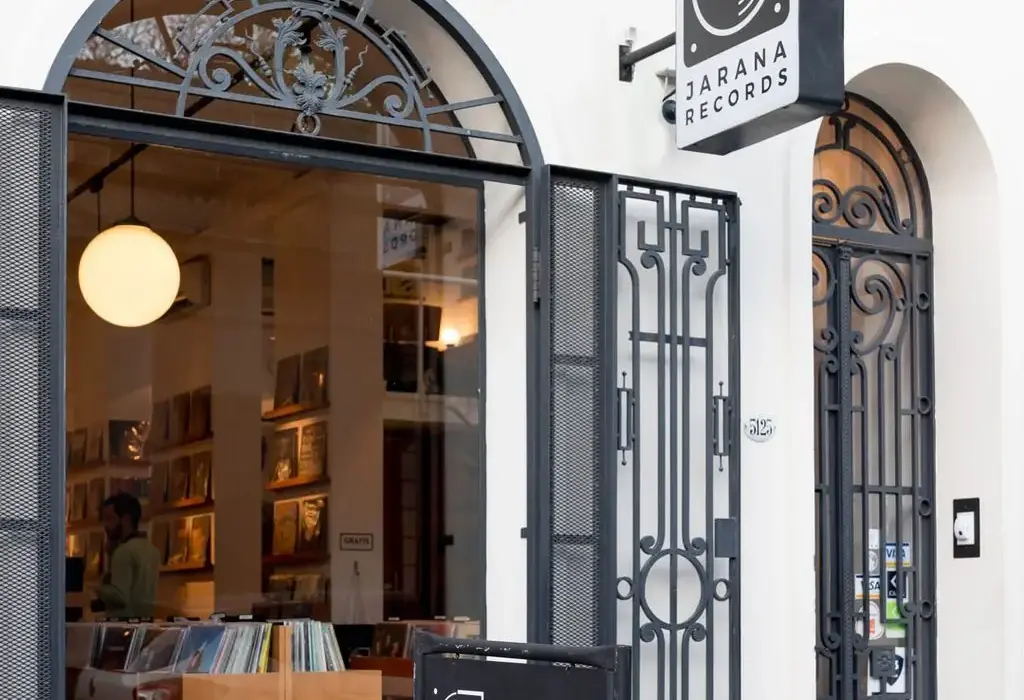
In the trendy Palermo neighborhood, Jarana Records has been a fixture near Plaza Serrano since opening its doors in 2016. Specializing in the buying, selling, and trading of vinyl records and audio accessories, the shop features expansive bins housing more than 10,000 new and used albums. The inventory covers nearly every conceivable music genre, ranging from obscure global rarities and special editions to the newest commercial releases and high-end reissues. The store’s second level is dedicated entirely to first pressings and essential reissues of historic Argentine rock, complete with dedicated listening stations for customers.

Hidden away inside unassuming commercial arcades, smaller specialty shops offer intimate spaces for dedicated diggers. El Gallo Cantor, located within the Apolo arcade at Avenida Corrientes 1582 in the Tribunales district, is a small, hole-in-the-wall paradise. The cramped shop is packed not only with vintage records but also with rare books and magazines, overseen by owner Hugo, whose encyclopedic knowledge and personal recommendations are an invaluable resource for visitors.
Similarly, Oid Mortales is situated right next to the iconic Obelisk at Avenida Corrientes 1145. Tucked into a quaint downtown arcade, it serves as a quiet haven for music lovers, housing a curated selection of records alongside an impressive assortment of books and films.
In the Chacarita neighborhood, Musicomio offers a distinct architectural experience. Located at Avenida Álvarez Thomas 540, a modest doorway and a short flight of stairs lead visitors to an impeccably organized second-floor space where neatly arranged rows of bins and impressive box sets are prominently displayed for collectors.

Back in Palermo, Exiles Records operates out of Honduras 5270. Behind an unassuming entrance lies a refined selection of Argentine and international rock records, complemented by a specialized and celebrated section devoted entirely to African music. Beyond its physical shelves, the store maintains an active online presence and frequently hosts community-focused listening parties.
Rounding out the city’s prominent independent record shop landscape is Eureka, situated at Defensa 1281 in the heart of San Telmo. This dedicated vinyl destination specializes primarily in used records, encompassing rare editions, original first pressings, and out-of-print titles. Because its inventory changes constantly as local collectors sell or trade their personal libraries, Eureka ensures that no two visits are ever alike, maintaining the sense of anticipation and discovery that has kept Buenos Aires’ record store culture thriving across generations.