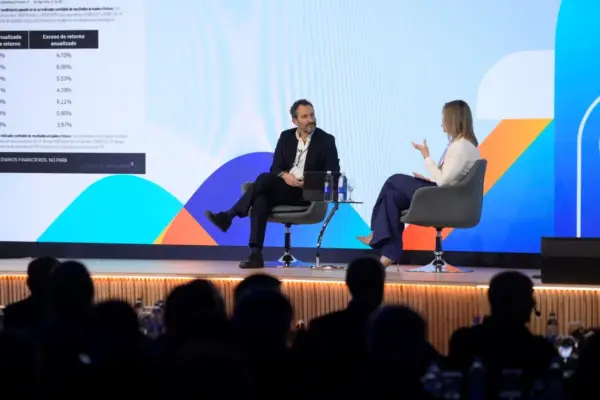











Stability. Over the course of three tightly packed days at the annual IDEA Colloquium, no single word appeared more often on the main stage of the Sheraton hotel in Mar del Plata. A comprehensive review of every presentation, panel discussion, and keynote speech delivered on the main stage confirmed it as the overriding fixation of the country’s economic and political leadership.
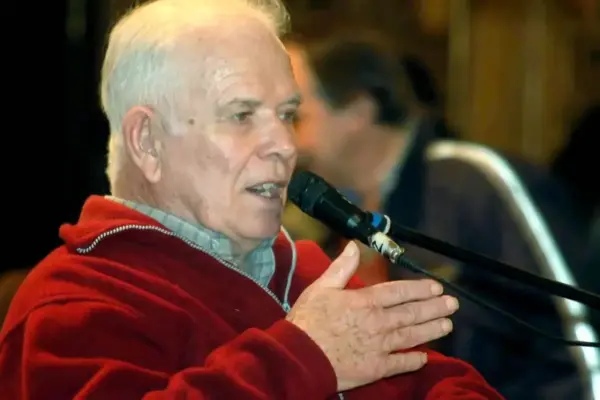
Organized annually by the Institute for Business Development of Argentina, widely known by its Spanish acronym IDEA, the high-profile colloquium gathers senior executives from the country’s largest corporations, prominent politicians, and leading economists. In the landscape of Argentine public policy, the event serves as a crucial barometer. What government officials say from its podium is parsed meticulously by markets and boardrooms alike, read as a definitive indicator of the ruling administration’s evolving relationship with the private sector.
For Argentine executives, stability is far less a corporate buzzword than a deeply felt, long-denied wish. In the four decades since the restoration of democracy in 1983, Argentina has rarely known stable prices or predictable macroeconomic foundations. The historical volatility is staggering: since the formal end of the Convertibility regime—which pegged the peso one-to-one with the U.S. dollar—in 2002 alone, cumulative inflation has exceeded a mind-boggling 250,000 percent.
By stark contrast, according to historical estimates compiled by the Federal Reserve Bank of Minneapolis, consumer prices in the United States have risen by roughly 1,900 percent since 1800. The contrast underscores the unique structural affliction that has plagued South America’s second-largest economy for generations, grinding down middle-class savings and repeatedly forcing businesses to operate in a permanent state of crisis management.
Javier Milei understood that profound hunger for predictability better than anyone else on the national political stage. During the tumultuous electoral cycle of 2023, he harnessed society’s desperate demand for economic certainty and transformed it into a winning campaign promise. Waving a literal chainsaw on the campaign trail to symbolize his radical intentions, he vowed to balance the national budget once and for all, aggressively shrink the bloated apparatus of the state, and reverse decades of uninterrupted economic decline.
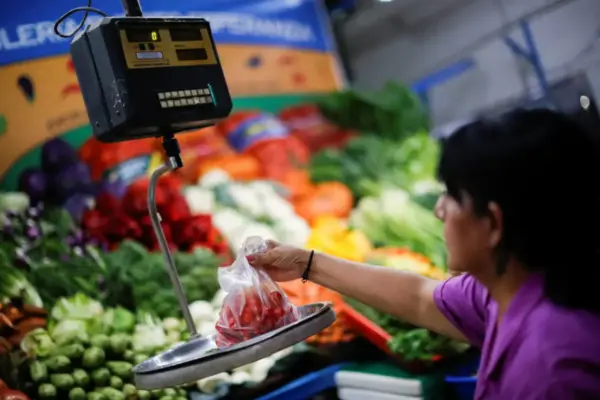
Crucially, Milei made inflation his primary yardstick of governance—a simple, brutal number that anyone can track in real-time, from elite Wall Street economists to everyday shoppers navigating supermarket aisles. In Argentina, inflation has long ceased to be merely an economic indicator; it measures politics, social stability, and government survival.
Now, three years into the libertarian administration’s grand experiment, the inevitable trade-offs have arrived, and the political cost is mounting by the day.
“We are in the era of disappointment,” one seasoned political and economic analyst remarked on the sidelines of the gathering, capturing the shift in sentiment. The hard macroeconomic data thoroughly backs up the somber assessment. Economic activity contracted sharply by 2.9 percent on a month-on-month basis in July, prompting major financial institutions like J.P. Morgan to forecast that the broader economy will contract throughout the third quarter. Following five bruising months of tight liquidity and falling consumer demand, loan delinquencies have surged to their highest levels in years. The resulting economic pain has seeped upward, reaching even the core base of supporters who originally swept the president to power.
President Milei himself acknowledged these harsh realities during the event. Speaking via video link from Paris in an interview with journalist José del Río at the close of the colloquium’s first day, the Argentine leader conceded that it was “perfectly reasonable” for cautious investors to hold off on committing capital until after upcoming legislative and political milestones. “The option of waiting has value,” he told the audience, validating a cautious posture that many corporate leaders had already adopted.
Argentina’s business leaders seemed to take the president entirely at his word. A distinct “wait-and-see” attitude was the dominant mood lingering in the sunlit hallways and crowded coffee breaks of the Sheraton hotel, though the brutal pressures of the present weighed just as heavily on their minds. “Where is the economic activity? Has anyone seen it?” one prominent executive quipped, summarizing the pervasive frustration over the prolonged slump that has accompanied the administration’s stabilization efforts.
Another executive pointed out a striking irony in the president’s evolving rhetoric and tone. In 2023, when faced with skeptical questions about feasibility and governance during the heat of the campaign, Milei projected absolute confidence, promising to take on every entrenched interest simultaneously and rapidly overhaul the system. Now, with the real economy stalling and recovery proving more elusive than anticipated, he frequently points to the institutional checks and balances, legislative limits, and political constraints inherent in a democracy regarding what a single president can actually accomplish.
The doubts expressed among the business and financial elite during the colloquium were not solely focused on lagging economic results, but also on the underlying methods being deployed. An economist attending the event shared a critical assessment with the Herald, describing the administration’s macroeconomic program as “very dogmatic, especially monetary policy.” In his analytical view, the administration’s rigid focus on strictly targeting the monetary base makes domestic interest rates highly volatile. That kind of sharp volatility is hardly the calm predictability that the domestic and international business community journeyed to Mar del Plata to find.
For the time being, as executives packed their bags and departed the coast, the prevailing sentiment in Argentina remained unchanged: the only thing truly stable in the country is instability itself.