




As a Black Dominican American woman—someone who is often perceived as "racially mixed" or "racially ambiguous"—I have spent much of my adult life defending my Blackness. Beyond the personal exhaustion of constantly having to assert my identity, I have also faced criticism from within my own circles for consistently speaking out against anti-Haitian rhetoric. This delicate and often painful intersection of race, national identity, and cultural belonging is a reality that many Afro-Latinos navigate daily, caught between the rigid racial binaries of the United States and deeply ingrained nationalist ideologies rooted in Latin America and the Caribbean.
This ongoing cultural friction was brought sharply into focus earlier this year when I received a wave of unkind comments following an article I wrote about now-Congresswoman Darializa Avilés Chevalier. Critics accused her of not being "Dominican enough," a familiar weaponized phrase used to marginalize public figures whose politics, lineage, or worldview challenge narrow definitions of national purity. Some detractors took issue with her public support for solidarity between the Dominican Republic and Haiti, while others pointed to her French last name, attempting to use it as flawed "evidence" that she must secretly be of Haitian descent.
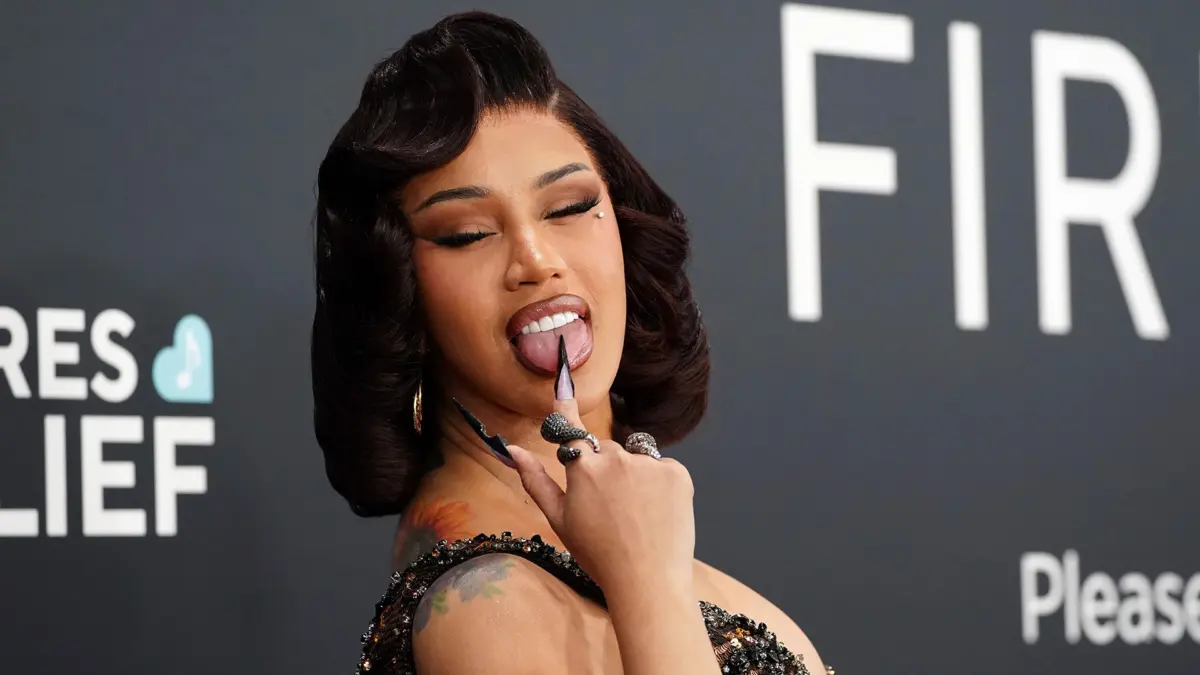
The backlash sparked countless conversations within the Dominican diaspora about the persistent confusion surrounding race, ethnicity, and Latinidad, illuminating the powerful role that Dominican nationalism continues to play in fueling these misunderstandings. As I reflected on those intense discussions and the vitriol directed at public figures, I realized that one of the most high-profile Dominican celebrities who has consistently and publicly engaged with these exact issues is Cardi B.
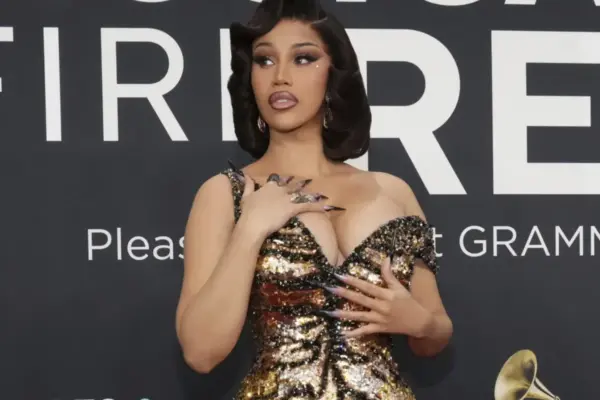
For years, the Grammy-winning superstar has repeatedly used her massive platform to clarify the fundamental differences between race, ethnicity, and Latinidad—distinctions that traditional schooling, mainstream media, and even our own communities often fail to articulate. Cardi has continuously explained that Blackness and Latinidad are not mutually exclusive, while simultaneously pushing back against the toxic anti-Haitian rhetoric that surfaces far too often in Caribbean politics. As someone who has spent years navigating these exact conversations, seeing a Dominican woman with Cardi’s global visibility articulate what I have long felt has been deeply validating.
The roots of Cardi’s public education campaigns on identity date back several years. In 2019, following social media speculation and questioning over whether she could truly be considered Black, Cardi took to Instagram Live to break down the complexities of nationality, race, and ethnicity for her millions of followers.
"A lot of people don’t know the difference between nationality, race, ethnicity, and that’s not nobody’s fault," she said during the broadcast. "That’s actually the school’s fault because schools don’t be teaching this s— to people."
During the broadcast, she detailed her family background, explaining that her father is Dominican and her mother is Trinidadian, while emphasizing that being Dominican is a nationality and an ethnicity—not a race. She firmly identified as Black due to her African ancestry and distinct physical features, pushing back against the widespread misconception that being Latine somehow excludes being Black. Furthermore, she challenged the dangerous and pervasive assumption that having a lighter complexion or mixed features automatically means someone is exempt from Blackness.
That is a conversation I have had countless times myself. Like the ancestry of many Dominicans, my family history reflects centuries of colonization, migration, and complex racial mixing. My caramel complexion, hazel eyes, looser curl pattern, and mixed-race features have frequently led people to question, interrogate, or attempt to police my identity. Yet, being multiracial does not negate my Blackness. Blackness is a core component of my racial identity, not something separate from or contradictory to it.
Cardi captured this sentiment succinctly during her 2019 live stream, addressing her detractors directly. "People just don’t be understanding s—," she said. "It’s like, ‘Cardi’s Latin, she’s not Black.’ And it’s like, bro, my features don’t come from white people… I have Afro features."
During that same broadcast, she also pushed back against rigid pan-Latin American expectations, rejecting suggestions that she should represent Mexican culture simply because she speaks Spanish and falls under the broad umbrella of being Latina. "I’m not Mexican at all. I’m West Indian, and I’m Dominican. I speak Spanish because I’m Dominican."
Her point was both simple and profoundly important: Latines are not a monolith. The diverse experiences of the Spanish-speaking Caribbean cannot be conflated with those of Central America, South America, or Mexico, just as Afro-descendant experiences within those regions vary wildly.
Just a year later, following the global protests sparked by the murder of George Floyd, Cardi once again found herself educating the public—this time taking aim at deep-seated anti-Haitian prejudice. After posting a photograph of activists holding Dominican and Haitian flags side by side, accompanied by the caption, "Unity is what I stand for, and it’s what I’m about," she faced a fierce backlash. Hardline Dominican nationalists accused her of advocating for the political unification of the two neighboring countries that share the island of Hispaniola—a sensitive geopolitical topic loaded with historical trauma.
Refusing to back down, Cardi responded with a lengthy Instagram Live session conducted primarily in Spanish to clear up the misinterpretations and defend her stance.
"Yo puse esa foto porque es un símbolo de paz," she explained, emphasizing that the image represented peace, not a radical restructuring of state borders. She followed that statement by asserting, "Yo me sé mi historia," making it abundantly clear that acknowledging the complicated and often painful history between Haiti and the Dominican Republic should never be used as a justification for dehumanizing Haitians today.
Cardi went on to address the human element directly, stating, "Hay que tratar a los haitianos bien, como gente también"—reminding viewers that Haitians must be treated well, as human beings. She also drew attention to the immigrant experience in the United States, pointing out that in North America, Dominicans and Haitians are frequently racialized in remarkably similar ways. Whether facing discrimination because of accents, immigrant status, or anti-Black racism, both communities often navigate overlapping struggles. Her argument was never that the two countries or their cultures are identical, but rather that shared experiences of racism and marginalization should foster empathy rather than division.
The scrutiny surrounding her identity did not stop there. In 2021, she was forced to defend her background once again after internet critics questioned whether she was genuinely Afro-Latina. She responded by sharing vintage photographs of her Dominican father, Trinidadian mother, grandparents, and extended family, noting that she had always been transparent and proud of her multi-island roots.
More recently, in a 2025 interview with CBS News, Cardi reiterated her identity as an Afro-Latina while discussing the rich Dominican musical influences woven throughout her artistic projects. Even years after those initial heated debates on social media, she has remained remarkably consistent in how she defines herself, her heritage, and her place within the global diaspora.
That unwavering consistency is precisely what resonates with so many people who share her background. For years, Cardi B has effectively taken on the role of cultural educator—filling the gaps left by institutional education systems—by reminding the public that race, ethnicity, and nationality are entirely separate categories. Her platform consistently reinforces the truths that Blackness and Dominican identity are not mutually exclusive, and that standing against anti-Haitian discrimination is not an attack on Dominican culture. If anything, speaking out against xenophobia and racism is a profound affirmation of our shared humanity. Her perspective aligns with the belief that our common African ancestry and immigrant journeys should serve as an opportunity to build solidarity, not only with our Haitian neighbors, but across the entire African diaspora.
Ultimately, this is why cultural conversations like the one sparked by Darializa Avilés Chevalier matter so much. They force our communities to confront the inherited myths and monolithic narratives surrounding race, Blackness, and Latinidad. For too long, we have treated these necessary discussions as divisive controversies when they are actually vital opportunities for collective growth and historical reckoning.
Public figures like Cardi B have spent years reminding us that being proudly Latine and proudly Black are never competing identities. Furthermore, they demonstrate that as Dominicans, rejecting anti-Haitian rhetoric is not a rejection of our rich heritage—it is an affirmation of empathy and human dignity.
Looking forward, the hope is that the next generation of Dominicans and other Afro-Latinos will not have to spend as much exhausting emotional labor defending their Blackness or explaining the basic distinctions between race, ethnicity, and nationality. Instead, they will grow up equipped with the language, the accurate history, and the visible representation needed to know with absolute certainty that they have belonged all along.