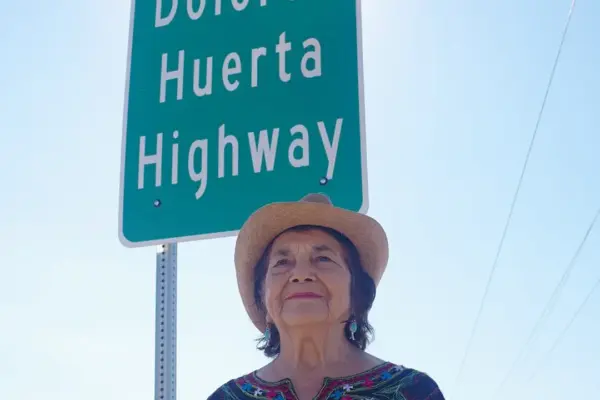









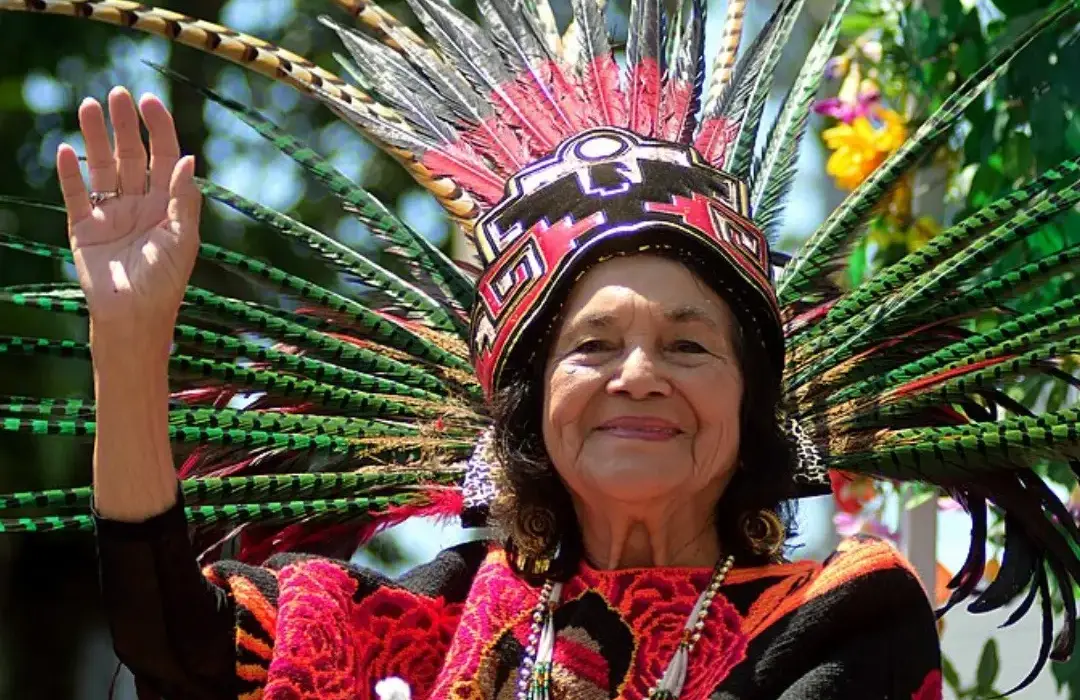
Dolores Huerta, the pioneering labor leader who helped transform American agriculture and fundamentally redefine the role of Latinos in the nation’s labor movement, died Wednesday, October 28, at her home in Bakersfield, California. She was 96 years old.
Best known throughout the world for coining the rallying cry “Sí, se puede” (“Yes, it can be done”), Huerta leaves behind a towering legacy that extends far beyond a single slogan. Over a career spanning more than six decades, she helped shift the balance of power between vulnerable agricultural workers and some of the largest, most entrenched agricultural corporations in California. Through tireless organizing, she secured historic labor agreements and advanced crucial protections that permanently reshaped an entire industry, altering the trajectory of civil rights and labor history in the United States.
Her remarkable influence was built not in corporate boardrooms or legislative halls of privilege, but across gritty negotiating tables, tense picket lines, and grassroots community meetings. She understood the pulse of the working class because she lived among them, translating their daily struggles into a powerful, organized political and economic force.
Roots in the San Joaquin Valley
Born in Dawson, New Mexico, in 1930, Huerta was raised in California’s fertile and demanding San Joaquin Valley. Her early life gave her a firsthand view of the grueling labor and systemic poverty experienced by the families who harvested the nation’s crops. Before she found her calling in full-time community organizing, Huerta initially worked as a teacher. In local classrooms, she witnessed the heartbreaking reality of children coming to school hungry, lacking proper shoes, and living in substandard housing because their parents earned meager wages under harsh, unregulated agricultural conditions.
Driven by a profound sense of justice and a determination to change these conditions, Huerta stepped away from the classroom and plunged into the world of community activism. In 1962, she took a monumental step by cofounding the National Farm Workers Association alongside legendary labor leader César Chávez. That grassroots organization would eventually evolve into the United Farm Workers (UFW), establishing itself as one of the most influential and transformative labor unions in American history.
While César Chávez often became the movement’s most recognizable public figure and spiritual anchor, Huerta quickly emerged as one of its principal strategists, brilliant negotiators, and fierce operational minds. She possessed a rare combination of sharp intellect, diplomatic skill, and uncompromising courage that made her a formidable force against hostile growers and skeptical political establishments.
Breaking Barriers at the Negotiating Table
In 1966, Huerta played a central and decisive role in negotiating a landmark collective bargaining agreement with Schenley Industries, a major agricultural producer and wine conglomerate. The contract, which was reached after months of grueling strikes, relentless organizing, and coordinated consumer pressure, marked a historic breakthrough in the long, arduous struggle for collective bargaining rights among American farmworkers.
This breakthrough agreement shattered the illusion that agricultural giants were untouchable. It demonstrated unequivocally that workers who had long lacked any meaningful bargaining power, legal protections, or institutional voice could successfully organize, stand together, and negotiate on equal footing with major agricultural enterprises.
However, Huerta understood deeply that changing an industry’s abusive practices required leveraging influence far beyond the immediate workplace. Growers relied on the uninterrupted flow of their products to markets, and Huerta realized that public consciousness could be harnessed to disrupt that flow.
The Power of the Consumer Boycott
During the historic Delano grape strike, which began in 1965 and was initiated largely by Filipino farmworkers before joining forces with the UFW, Huerta proved her genius as a strategist. She helped plan, coordinate, and execute nationwide consumer boycotts that successfully brought the farmworkers’ struggle directly into American supermarkets, kitchens, and suburban households.
By mobilizing millions of everyday consumers, religious groups, and civil rights allies, and by drawing intense national attention to the deplorable working conditions in the fields, the movement placed immense economic and reputational pressure on growers who had previously ignored the workers’ pleas. This innovative strategy of ethical consumption and solidarity helped secure breakthrough collective bargaining agreements in 1970. The campaign served as a textbook example of how organized workers, backed by an informed and sympathetic public, could successfully challenge entrenched corporate and industrial power.
These hard-fought victories generated undeniable momentum that rippled across the political landscape, ultimately culminating in the passage of the California Agricultural Labor Relations Act of 1975. This milestone legislation established formal collective bargaining protections specifically for agricultural workers in the state—a legal first in American history.
Through the landmark contracts subsequently negotiated by the UFW under Huerta’s guidance, farmworkers finally gained access to critical life-enhancing improvements. These included formal healthcare coverage, retirement benefits, mandatory rest periods, access to clean drinking water in the blistering fields, and essential workplace safety protections that saved lives and restored basic human dignity to the labor force.
Redefining Leadership and Authority
For Huerta, however, the scope of the struggle always extended far beyond labor contracts and workplace grievances. Operating as a Latina in a mid-century political and labor landscape dominated almost entirely by men, she constantly challenged traditional assumptions about who could exercise authority, command respect, and drive institutional change.
While her immense contributions were sometimes overshadowed during the height of the movement by Chávez’s public prominence, history has firmly cemented Huerta’s place as a foundational architect of modern social justice. She helped establish a durable model of leadership rooted deeply in grassroots organizing, cross-cultural coalition-building, and an unwavering commitment to delivering tangible institutional change for marginalized populations.
Never one to rest on her past achievements, Huerta maintained an active presence in public life for decades. In 2002, she established the Dolores Huerta Foundation, a non-profit organization dedicated to continuing the vital work of grassroots organizing, fostering civic participation, and developing the next generation of community leaders. Through the foundation, she invested her energy in mentoring young activists and ensuring that disenfranchised communities retained the tools necessary to advocate for themselves.
In recognition of her lifetime of fearless activism and profound impact on American society, President Barack Obama awarded her the Presidential Medal of Freedom in 2012, the nation’s highest civilian honor. During the ceremony, she was celebrated not only as a champion of labor, but as a relentless fighter for equality, human rights, and democracy.
Dolores Huerta’s legacy remains permanently intertwined with the history of the American labor movement, but it also anchors the broader, ongoing story of Latino economic and political influence in the United States. Throughout her long and extraordinary life, she demonstrated definitively that true leadership is not defined solely by the official titles people hold or the positions they occupy, but by their enduring ability to transform the institutions around them and dramatically expand opportunities for those who have historically been excluded from power.