










Following recent high-profile electoral outcomes in Brazil and Israel, the administration of Argentine President Javier Milei is shifting its strategic gaze firmly toward the Northern Hemisphere. Attention in Buenos Aires is now locked on the upcoming United States midterm elections on November 3, a monumental political litmus test for the White House and a crucial juncture for Argentina’s primary international ally.
These midterm contests carry profound weight for the current U.S. administration, marking the first major nationwide ballot since Donald Trump returned to the presidency in 2025. American voters are set to determine the entire composition of the House of Representatives, one-third of the Senate, and gubernatorial seats across 36 states. Beyond the typical legislative tug-of-war, the midterms are widely viewed by political analysts as an effective referendum on the broader economic and political trajectory of the administration, particularly as the White House grapples with public discontent fueled by a contentious tariff war. These protectionist trade policies have steadily driven up the cost of living for everyday American citizens, a domestic pressure further exacerbated by the economic fallout from the ongoing conflict in the Middle East.
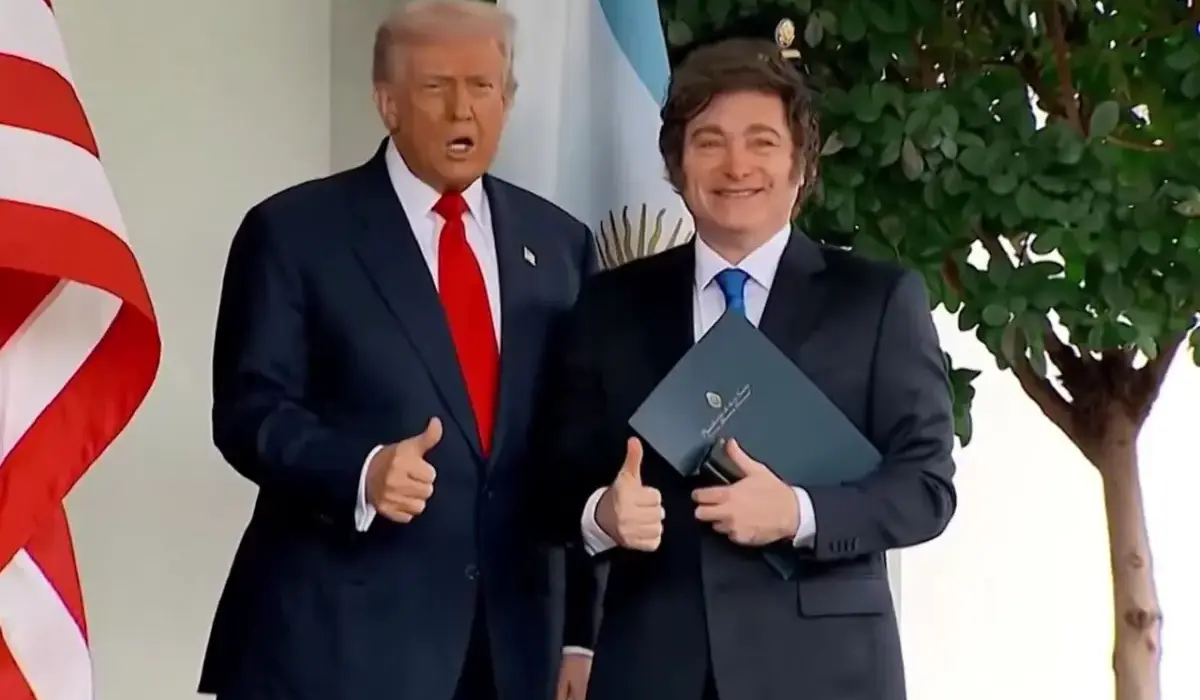
In South America, Argentine policymakers and economic observers are monitoring the U.S. political landscape with intense interest. This vigilance stems directly from the Milei administration’s unwavering geopolitical alignment with Washington’s foreign policy agenda. That close diplomatic partnership has already yielded tangible economic dividends for Buenos Aires. Notably, it helped secure critical financial support via a vital currency swap arrangement engineered by the U.S. Treasury under the leadership of Scott Bessent, alongside the announcement of a $7 billion investment package tied to the bilateral Andes-Atlantic Corridor initiative.
Yet, as financial analysts consulted by the Herald point out, while an electoral setback for Trump—potentially including the loss of his majority in the House of Representatives—is widely anticipated, the direct financial and foreign-exchange repercussions for Argentina are expected to remain relatively contained. This stands in distinct contrast to the domestic market tremors triggered earlier by Luiz Inácio Lula da Silva’s surprise electoral victory in Brazil, which sent immediate shockwaves through regional trading floors.
Markets Expect a Trump Defeat in the House
As the campaign enters its final stretch, financial analysts are already baking political outcomes into their economic models. Historically, the political party occupying the White House tends to shed legislative ground during midterm cycles, a trend that market participants expect to repeat.
“Historically, incumbent parties tend to lose ground in midterm elections,” Eric Ritondale, chief economist at the brokerage firm Puente, told the Herald. According to Ritondale, international financial markets have already priced in a Republican loss of control in the House of Representatives. Consequently, institutional investors, economists, and political forecasters have shifted their primary focus to the U.S. Senate, where the prevailing consensus has long pointed toward Republicans retaining their grip.
However, recent polling data from several pivotal swing states indicates an increasingly tight race, introducing a genuine uncertainty that Democrats could pull off an upset and secure a Senate majority as well. A comprehensive analytical report published by the consulting firm Prisma assigns a 60.7% probability to Democrats taking control of the upper chamber, projecting a median outcome of 52 seats. “The Senate currently stands at 53-47 in favor of Republicans: Democrats need to win four seats,” the report outlines, underscoring the razor-thin margins involved.
Echoing this outlook, financial markets economist Gustavo Ber told the Herald that he projects Democrats will capture the House and stand a realistic chance of winning the Senate as well, though he emphasizes that the upper chamber race remains exceptionally close. Meanwhile, Sergio González, head of asset management at the brokerage Cohen Aliados Financieros, offered an even broader Democratic sweep in his assessment. He told the Herald that “both chambers will probably end up in Democratic hands,” transforming the midterm results into an unmistakable political rebuke of the administration.
González noted that a dual-chamber Democratic victory would significantly alter the balance of power in Washington, equipping the opposition with formidable leverage over key components of the national agenda. A House controlled by Democrats, for instance, could adopt a far more aggressive oversight posture regarding executive branch spending and trade policies. Simultaneously, a Democratic-led Senate would wield heightened influence over judicial appointments, potentially reshaping the ideological makeup of the U.S. Supreme Court and other federal benches.
The Impact of a Trump Defeat on Argentina’s Financial Markets
For Argentina’s domestic markets, the primary question is how a potential legislative defeat for the U.S. executive branch will translate into asset valuations in Buenos Aires and New York. According to Ritondale, market watchers should not anticipate any severe or direct shocks to Argentine financial instruments, maintaining that the divergence between a U.S. shift and the sharper impact of Brazil’s election remains clear.
Any transmission to Argentina’s economy, Ritondale explained, would likely be marginal and indirect, filtering down primarily through fluctuations in the yields of U.S. Treasury bonds. Because U.S. government debt serves as the foundational benchmark for global risk-free assets, shifts in its valuation ripple across international debt markets. When the price of U.S. Treasuries drops and yields rise, upward pressure is frequently exerted on the sovereign debt yields of emerging market economies, thereby driving up their external borrowing costs.
Nevertheless, Ritondale emphasized that the prospect of a divided or opposition-controlled U.S. Congress has already been fully priced into Argentine financial assets. This market adaptation, he noted, significantly limits the likelihood of any sharp, destabilizing reaction in the yield curve of Argentina’s sovereign debt, as institutional investors have long since adjusted their portfolios to accommodate this political risk scenario.
Other analysts strike a slightly more cautious note regarding short-term volatility. Gustavo Ber suggested that a definitive electoral defeat for the sitting U.S. administration could temporarily prolong the underlying weakness currently observed across certain financial assets. This soft patch could impact Argentine sovereign bonds traded on Wall Street as well as the American Depositary Receipts (ADRs) of prominent Argentine banks operating in the international arena.
González added an additional layer of perspective, observing that Argentina’s domestic stock market is currently tracking regional trends much more closely—particularly those originating in Brazil—while also remaining sensitive to internal domestic developments. Domestic investors, he explained, are largely pausing their aggressive positioning as they await greater clarity regarding Argentina’s own upcoming electoral calendar for the following year.
Uncertainty in the Foreign-Exchange Market
Beyond bond yields and equity prices, currency markets represent another critical channel through which international politics could intersect with Argentina’s fragile stabilization efforts. On this front, Ritondale expressed confidence that no immediate pressure on the official foreign exchange rate is expected to materialize from the U.S. midterms, reiterating that a negative outcome for Republicans in the House has already been factored into prevailing market expectations.
Conversely, Ber cautioned that the broader foreign exchange landscape could see Argentina entering a phase of slower dollar acquisitions by the Central Bank. Such a slowdown could be catalyzed by heightened private-sector demand for foreign currency—a dynamic that has already surfaced in recent trading sessions following the unexpected electoral outcome in neighboring Brazil.
A central point of discussion among economists involves the degree to which U.S. executive discretion might be hemmed in by a hostile legislature. Ritondale pointed out that the U.S. Treasury’s potential discretionary authority to extend financial assistance to Argentina—much like the mechanisms utilized in 2025—stems from executive branch prerogatives that are formally independent of the exact numerical composition of Congress. Consequently, he argued, a political realignment in Washington would not inherently alter baseline exchange-rate dynamics or disrupt existing bilateral financial understandings.
Ber concurred that existing commitments of U.S. Treasury support for Argentina are largely baked into current market sentiment, a reality reinforced by the fact that President Milei has firmly consolidated his position as Washington’s premier geopolitical partner in Latin America following the political setbacks experienced by figures in the broader regional conservative movement.
However, González offered a nuanced caveat regarding the longer-term political economy of bilateral rescue packages. He noted that if the U.S. executive branch were to contemplate direct interventions or financial assistance regarding Argentina’s foreign exchange market next year, doing so under a strongly Democratic Congress could prove considerably more complicated. Such initiatives would likely face intense legislative scrutiny and carry a markedly higher political price tag for the White House.
While González stressed that financial backing would not necessarily be ruled out entirely under a divided or opposition-led Washington, any future intervention would inevitably command heavier scrutiny in public opinion and require more strenuous justification from executive policymakers.