








Billboard joins the Colombian superstar’s pack once again, this time for the closing night of her European residency at Estadio Shakira.
Ever since the Las Mujeres Ya No Lloran World Tour kicked off in February 2025, I had seen Shakira’s walk, surrounded by her “She-Wolf pack,” countless times—first through social media and later during her residency in Madrid from different spots in the custom-built Estadio Shakira venue, including the stands, the VIP area, and the floor. On the final night, Monday, October 12, after watching it from so many angles, I finally got to experience it from the inside.
I didn’t show up expecting a photo, a greeting, or a personal moment with Shakira. My only intention was to enjoy the experience and feel firsthand what it was like to be part of that entrance I had watched so many times from the outside—an entrance that always seemed to transform the entire stadium into one big pack.
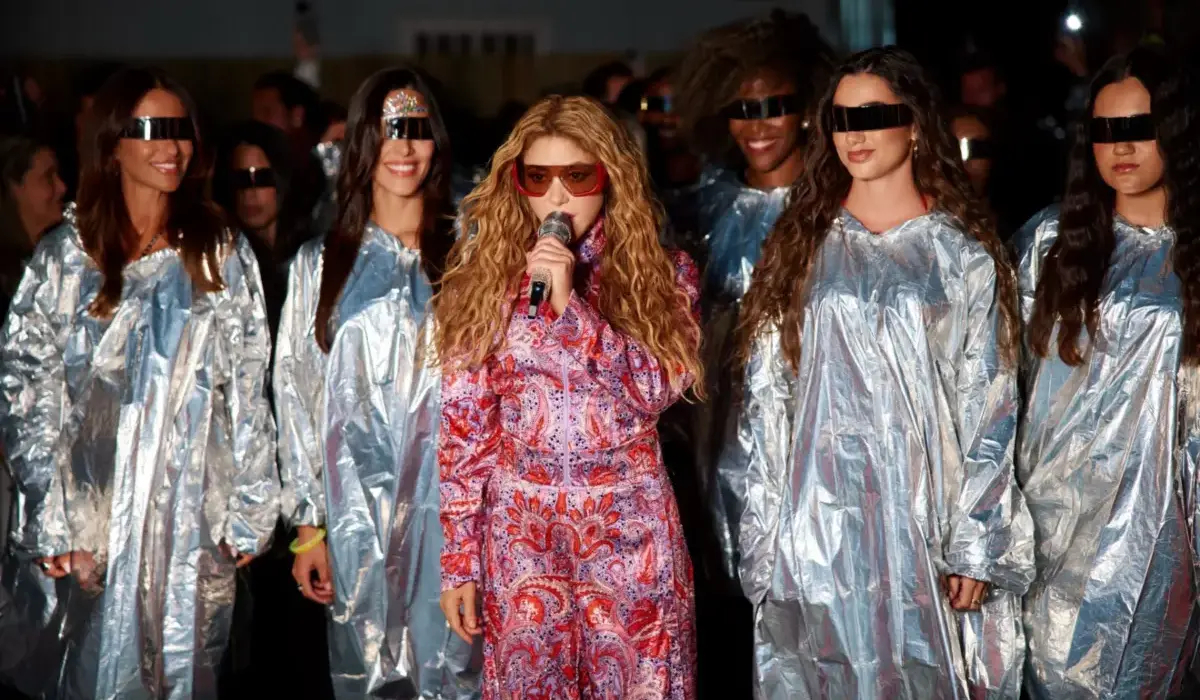
“Camina con La Loba” is a roughly two-minute walk where a group of guests accompanies the artist from one of the stadium entrances to the main stage, while the crowd welcomes her right at the start of the concert. It has become one of the most talked-about and immersive pre-show rituals of the massive global tour, bridging the physical gap between the mega-star and her most dedicated supporters in a way that feels intimate yet intensely grand.
A few days earlier, I had written to Tomás Palacios, Shakira’s publicist in Spain, to request to participate in the walk, and the confirmation came just one day before the concert, in an email with a QR code and instructions. We were asked to gather at 7:30 p.m. local time in a tent set up near the back of the stage, where we were divided into four groups identified by numbered wristbands and organized by height, from shortest to tallest, just like in school.
Among those of us waiting were journalists, influencers, and fans who had traveled from other countries specifically for the culmination of the European leg. In front of me, there were fans from Peru holding their national flag high as they waited for their turn, and a little farther ahead, in a separate area, were some of the night’s VIP guests, including models Esther Cañadas and Blanca Padilla, content creator Laura Escanes, writer and TV host Nuria Roca, and journalist Pilar Vidal. The eclectic mix of attendees highlighted the broad, cross-demographic appeal of Shakira’s cultural footprint, drawing everyone from high-fashion figures to everyday devotees who had saved for months to make the journey.
Then came the silver capes and dark shades that are essential elements of the walk’s signature aesthetic. My colleagues at Billboard, Jessica Roiz and Natalia Cano, had already shared their experiences accompanying Shakira in Miami and Mexico City, respectively, so I had a solid idea of how hot those metallic capes could get, especially after wearing them for a prolonged period in a confined backstage holding area. I had also read that the dark sunglasses made visibility quite challenging, so I was fully prepared to enjoy the moment even if I could barely make out what was directly in front of me.
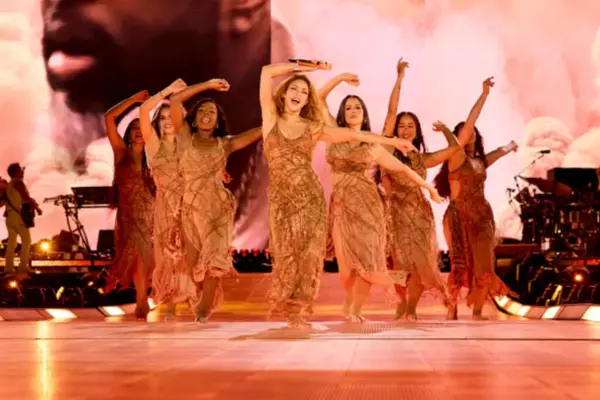
The concert was officially scheduled to start at 8:30 p.m. but began about half an hour later, meaning that by the time it was our turn to move, we had been waiting for nearly an hour and a half. During that time, the tent buzzed with nervous energy, punctuated by howls, cheers, and spontaneous, a cappella bursts of Shakira songs breaking out among the various groups. With the sunglasses firmly on, I could barely make out what was in front of me, and honestly, I didn’t even see Shakira—not even from a distance. But it ultimately didn’t matter. The moment we stepped foot into the stadium, the sound of over 50,000 people screaming, singing, and clapping combined with the thumping music, the blinding lights, and the collective adrenaline of walking through it all completely overpowered everything else.
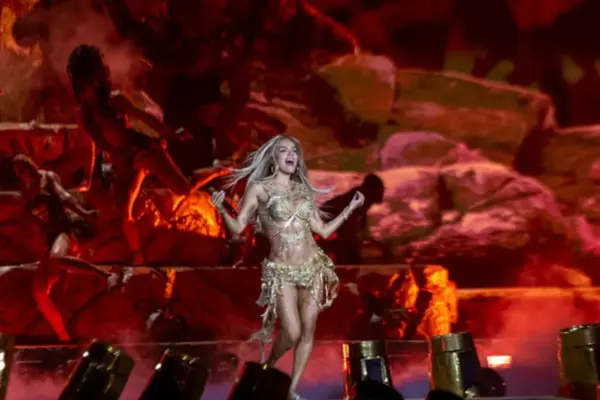
Those two minutes of walking felt entirely different from all the times I had watched the procession from the outside. Being submerged in that human current connected directly with an overarching theme Shakira wanted to emphasize during her extensive time in Madrid. Throughout those weeks of performances, she spoke often about latidad—not just as something narrowly defined by language or birthplace, but as a profound bond built through culture, shared roots, and a deep sense of belonging. More than just an abstract concept, it was something she actively instilled during her stay in the city, successfully bringing together diverse cultures, rhythms, and traditions, and reminding us, time and time again, of everything that unites the global Hispanic and Latin diaspora.
That night was also marked by powerful emotional resonance beyond the spectacle of the staging. Before singing “Antología,” special guest Laura Pausini took the stage to speak about what it means for other women to witness a long, enduring, and solid career like Shakira’s, and to remember that age does not have to be a limiting factor when it comes to chasing your dreams. Pausini’s heartfelt words made me think about my eight-year-old daughter, who had accompanied me to one of Shakira’s earlier concerts in Madrid and whom I now frequently hear singing “Las de la intuición” and “Ojos así”—songs that I knew intimately long before she was born, and that, in a wonderful twist of fate, now belong to her too. That bridging of generations and shared musical heritage gave the walk a much more personal, lingering meaning for me than I could have ever initially imagined.