










As communities across the United States mark Hispanic Heritage Month from September 15 to October 15, advocates, researchers, and public health organizations are emphasizing that one of the most meaningful ways to honor the culture is by honoring oneself and prioritizing long-term brain health. Cognitive well-being is a critical component of overall health, particularly as populations age. To address this need, public health initiatives are highlighting comprehensive strategies and resources tailored to support brain health, cognitive longevity, and caregiving within Hispanic and broader communities.
Experts point to a multifaceted approach required to combat cognitive decline and manage Alzheimer’s disease and related dementias. By exploring risk factors, environmental influences, social connections, and emerging research, individuals and families can take proactive steps to safeguard their neurological health.
Familiarizing Yourself with Cognitive Decline Risk Factors
Several lifestyle and health factors significantly impact an individual’s risk for developing Alzheimer’s disease and related dementias. Understanding these modifiable risk factors is the first step toward implementing lifestyle changes that promote long-term cognitive health. Public health organizations provide extensive educational materials in both English and Spanish to help community members identify these risks and make informed decisions regarding their cardiovascular and neurological wellness.
Understanding Environmental Impacts on Brain Health
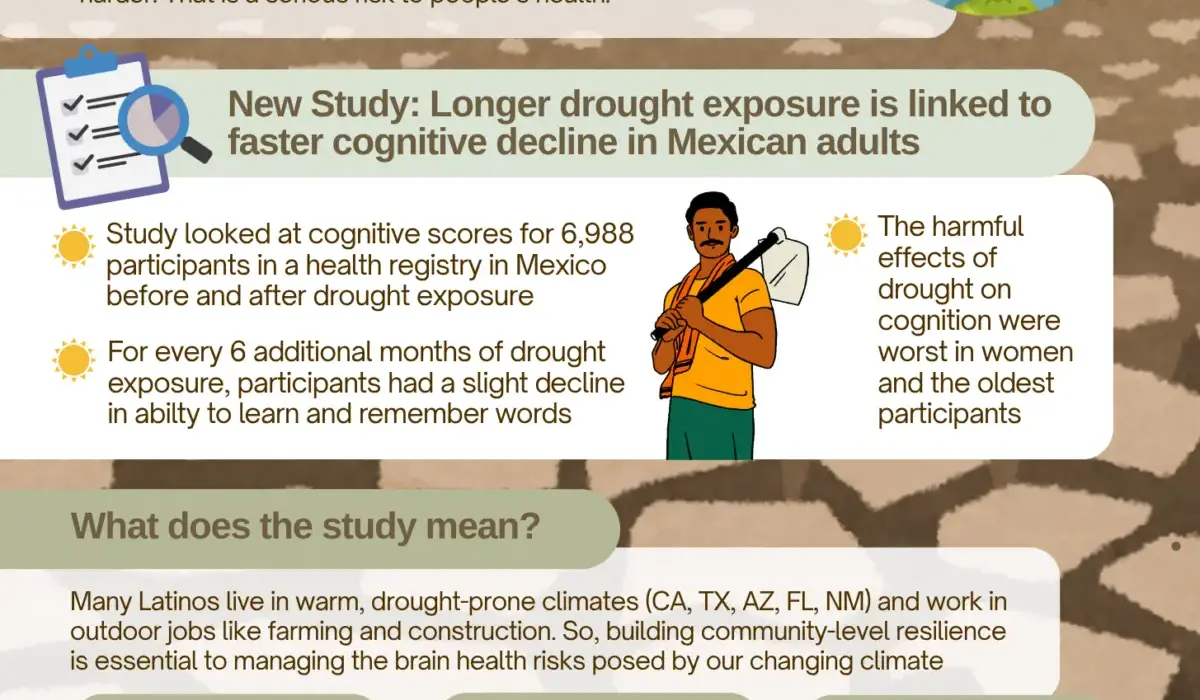
While diet, physical activity, and social interactions are well-documented contributors to brain health, growing scientific inquiry is exploring how broader environmental factors influence cognitive aging. Recent studies have established links between environmental stressors, such as prolonged drought exposure, and accelerated cognitive decline among older populations.
Educational resources, including specialized fact sheets developed by public health advocates, aim to help aging adults and their caregivers understand how environmental conditions intersect with neurological health. These materials serve as vital tools for community centers, healthcare providers, and senior living facilities, offering insights that can be used to advocate for better environmental and public health responses at the local level. Bilingual resources are readily available to ensure that Spanish-speaking communities have access to this critical information.
Examining the Role of Social Isolation in Cognitive Health
The frequency and quality of human interaction play a profound role in cognitive health, particularly among older adults. Recent scientific investigations have highlighted the detrimental effects that social isolation can exert on brain health, with impacts varying depending on geographic and demographic factors.

Public health campaigns have released targeted fact sheets to help families and older adults recognize how a lack of social engagement affects different populations. These resources outline actionable steps to minimize the cognitive toll of isolation, providing guidance in both English and Spanish to ensure widespread accessibility.
Navigating Social Isolation Versus Loneliness
Understanding the distinct psychological and physiological differences between social isolation and loneliness is essential for mitigating their combined harmful effects on brain health. Social isolation refers to an objective lack of social contacts and integrated community ties, whereas loneliness is the subjective distressing feeling of being alone or lacking companionship.
To help aging adults navigate these challenges, health experts—including Dr. Amelie G. Ramirez of Salud America! and UT Health San Antonio—have developed specialized guides. A Guide for Combating Social Isolation & Loneliness equips older adults and their loved ones with the tools to spot early warning signs and offers practical strategies for maintaining meaningful social connections throughout the aging process.
Understanding Vision Impairment After Stroke and Dementia Risk
Medical research continues to uncover complex intersections between cardiovascular events, sensory function, and cognitive decline. Stroke is known to cause long-term visual impairments, and emerging data suggest these sensory deficits can heighten an individual’s vulnerability to dementia.
To bridge the educational gap surrounding this issue, public health initiatives have introduced targeted fact sheets examining how specific types of post-stroke vision impairment influence dementia risk. These resources detail the physiological connections between visual processing and cognitive preservation, offering crucial insights for stroke survivors and their caregivers. Bilingual guides are available to support diverse patient populations in navigating these complex medical realities.
Engaging with Educational Webinars on Aging and Brain Health
Because aging affects individuals differently, identifying disparities in health outcomes is vital for developing effective interventions that slow the progression of cognitive decline. This is particularly urgent for historically overlooked communities, such as Latinos, who often experience unique barriers to early diagnosis and care.
Educational programming, such as webinars hosted by institutions like UT Health San Antonio, brings together experts in aging research, caregiving, and community health. Sessions titled "Zeroing in on Alzheimer’s, Brain Health, and Caregiving in At-Risk Populations" explore the state of Alzheimer’s disease across diverse groups, addressing early warning signs, diagnostic pathways, and the profound impact of cognitive conditions on family structures and caregiving networks.

Amplifying Caregiver Stories and Lived Experiences
Caregivers, healthcare professionals, and researchers remain at the forefront of efforts to improve health outcomes for aging populations. Firsthand experiences and institutional knowledge provide invaluable perspectives that can guide others navigating the complexities of Alzheimer’s and related dementias.
Personal narratives, such as the account of Carlos Olivas, shed light on the realities of caregiving while actively working to dismantle cultural stigmas surrounding male caregivers. Olivas, who cares for his father living with Alzheimer’s, emphasizes the importance of establishing routines, finding moments of levity, and seeking community support to navigate the unpredictable nature of the disease. These stories offer solidarity and practical wisdom to other families walking similar paths.
Staying Informed Through Advanced Aging Research
The scientific landscape surrounding Alzheimer’s disease is continuously evolving as researchers investigate the biological, social, and environmental determinants of cognitive health. Nationally recognized research hubs, such as the Center for Alzheimer’s Disease and Related Dementias Population Aging and Social Studies (CAPAS) at UT Health San Antonio, play a pivotal role in advancing this mission.
Co-led by multidisciplinary teams of demographers, sociologists, epidemiologists, and public health experts, CAPAS integrates research from the molecular level to neighborhood and community dynamics. By combining strengths across disciplines, researchers aim to address Alzheimer’s disease comprehensively. Community members can access bilingual resources and sign up for ongoing updates regarding aging health issues impacting their regions.
Participating in Clinical Trials and Advancing Therapeutic Research
In addition to observational research, the scientific community relies heavily on clinical trials to evaluate novel therapies designed to mitigate and manage the symptoms of Alzheimer’s disease. Volunteer participation is essential for determining the efficacy and safety of potential treatments.
Public health leaders emphasize that clinical trial cohorts must reflect the diversity of the population to ensure that all communities benefit from medical advancements. Historically, overlooked populations, including Latinos, have been underrepresented in clinical research studies. By volunteering, participants not only contribute to personal health insights but also help build a foundation for future treatments that benefit their families and broader communities.
Individuals interested in participating can access information through regional academic health centers, such as the Glenn Biggs Institute for Alzheimer’s & Neurodegenerative Diseases and the Mays Cancer Center at UT Health San Antonio, or through national databases such as clinicaltrials.gov. Through continued education, research participation, and community support, stakeholders across the nation continue striving to improve cognitive health outcomes and care systems for aging populations.