


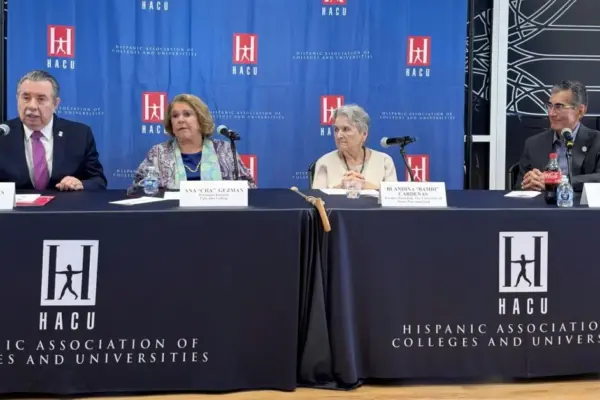







The Hispanic Association of Colleges and Universities (HACU) recently convened an engaging and far-reaching virtual dialogue, hosting Ambassador Ken Salazar for a special fireside chat on October 15, 2026. The event brought together educators, students, and leaders from across the nation to discuss themes of leadership, civic engagement, and the ongoing pursuit of a more inclusive American society.
At the center of the conversation was Salazar’s newly released book, Borderlands: My Fight for an Inclusive America. HACU President and CEO Antonio R. Flores joined the Ambassador for the session, which was thoughtfully guided and moderated by Abel A. Chávez, President of Our Lady of the Lake University. The virtual gathering served as an important platform for exploring how the personal backgrounds of public servants intersect with national policy, educational equity, and the vital role that institutions of higher education play in shaping the future of the United States.
Ambassador Salazar’s journey to the highest echelons of public service provides a compelling lens through which to examine these broader themes. Growing up on his family’s traditional ranch nestled in Colorado’s picturesque San Luis Valley, Salazar was the very first member of his family to pursue and attain a college education. This foundational experience deeply shaped his worldview, instilling a profound appreciation for hard work, community resilience, and the transformative power of education.
From those humble beginnings in rural Colorado, Salazar went on to build a remarkable and multifaceted career in public office. His impressive resume includes serving as the Attorney General for the State of Colorado, a United States Senator representing the state, the Secretary of the Interior under the federal administration, and most recently, as the United States Ambassador to Mexico. Throughout Borderlands, Salazar reflects candidly on the triumphs and challenges of these diverse leadership roles, utilizing his personal history to make a persuasive, passionate case for a stronger, more united, and fundamentally more inclusive America.
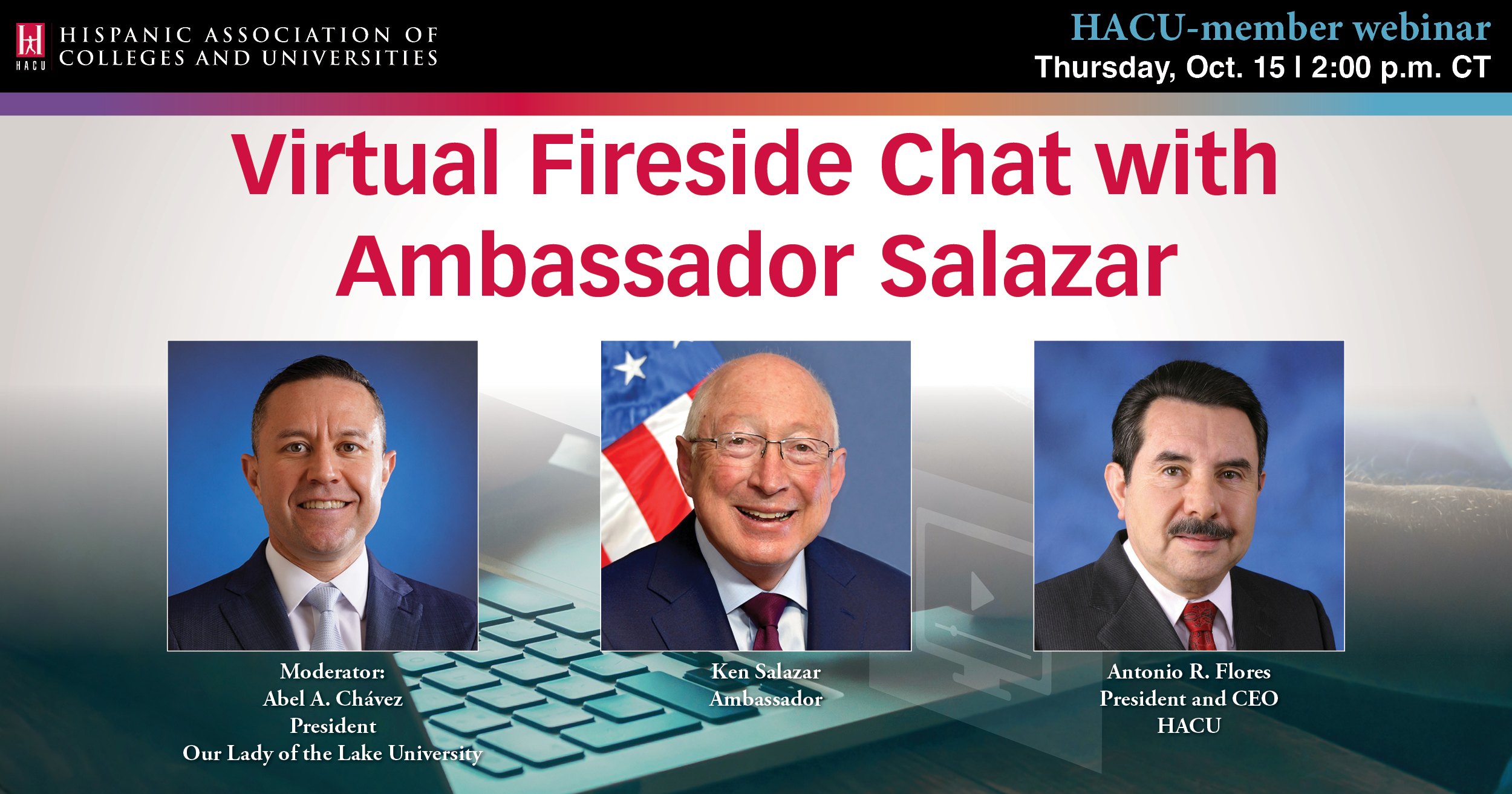
During the virtual fireside chat, President Flores and Moderator Chávez led Ambassador Salazar through a rich discussion that probed the intricate links between family heritage, educational opportunity, and a lifelong commitment to public service. The dialogue delved deeply into how contemporary colleges and universities can actively identify, nurture, and develop the next generation of civic and professional leaders. Particular attention was paid to the indispensable role that Hispanic-Serving Institutions (HSIs) play within the American educational landscape, specifically highlighting how these institutions are uniquely positioned to prepare diverse student bodies for leadership positions in an increasingly interconnected world.
The conversation naturally expanded to address some of the most pressing geopolitical and social issues of the day. Participants and speakers explored actionable strategies for bridging deep-seated political and cultural divides both within the United States and across international borders. Furthermore, the dialogue emphasized the critical importance of strengthening bilateral relations between the United States and Mexico, identifying numerous avenues to expand opportunities for cross-border collaboration. These collaborative efforts span multiple vital sectors, including higher education partnerships, joint academic and scientific research initiatives, and comprehensive workforce development programs designed to benefit communities on both sides of the border.
A major highlight of the virtual event was the introduction of an innovative initiative designed to bring the vital messages of Borderlands directly into classrooms and student communities. Ambassador Salazar shared details regarding "One Book, More Voices," a newly launched effort spearheaded by the Borderlands New North American Alliance Fund. This program is structured to provide matching copies of the book for academic classrooms, campus libraries, and specialized student programs, ensuring that the book’s themes of inclusivity and leadership can be deeply integrated into academic curricula and student engagement activities. Through this initiative, educational institutions are given a practical tool to foster meaningful classroom discussions, encourage civic participation, and inspire students to reflect on their own potential to contribute positively to society.
The virtual fireside chat concluded by reinforcing the shared mission of HACU, its member institutions, and leaders like Ambassador Salazar: to champion educational excellence and equity for Hispanic students while fostering leadership that bridges divides and strengthens the social fabric of the nation.