










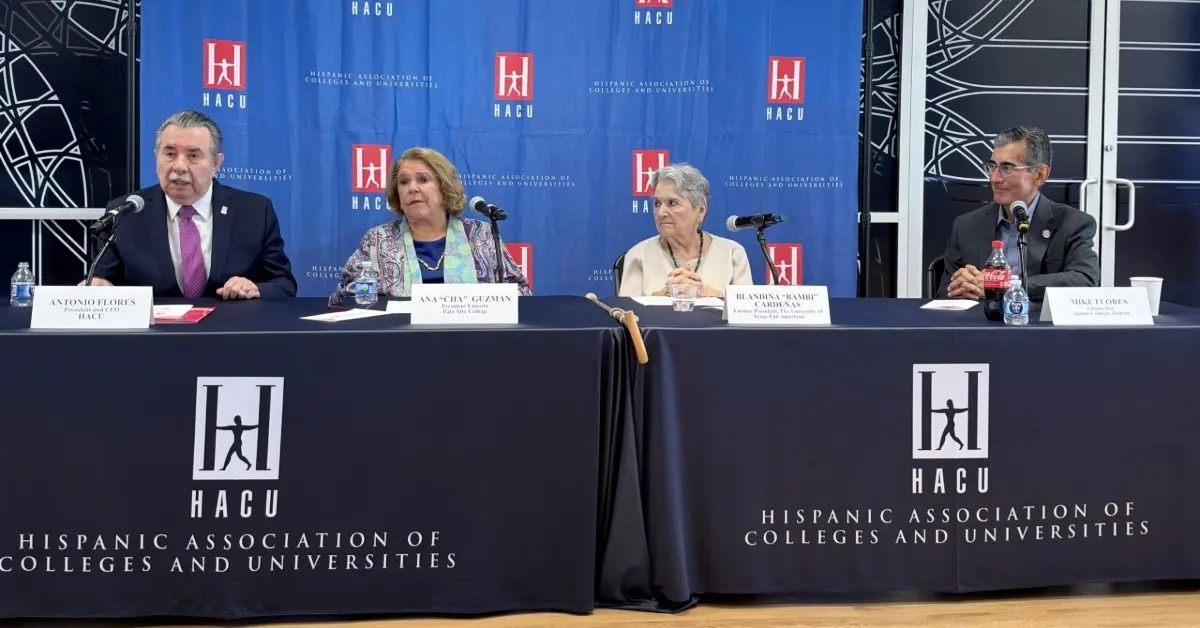
The Hispanic Association of Colleges and Universities and Our Lady of the Lake University recently came together to mark a significant milestone in the landscape of American higher education, hosting an insightful retrospective event titled “The Road to 40 Years: A Conversation.” Held on October 7, 2026, at the Our Lady of the Lake University campus in San Antonio, Texas, the panel discussion served as a cornerstone event for the broader festivities surrounding HACU’s upcoming 40th anniversary celebration.
The special gathering drew educators, administrators, students, and community leaders to the very historic city where the organization first took root four decades ago. By bringing together legendary figures who have shaped the trajectory of Hispanic-Serving Institutions over generations, the university provided an ideal backdrop for a profound look backward at decades of institutional growth and a forward-looking examination of the challenges and opportunities yet to come.
The afternoon discussion featured a prominent lineup of higher education leaders whose careers have been deeply intertwined with the mission, advocacy, and expansion of HACU. The panel was anchored by HACU President and CEO Antonio R. Flores, alongside Alamo Colleges District Chancellor and immediate past chair of the HACU Governing Board, Mike Flores. They were joined by Blandina “Bambi” Cárdenas, former president of the University of Texas-Pan American, and Ana “Cha” Guzman, president emerita of Palo Alto College. Guiding the conversation as moderator was Our Lady of the Lake University President Abel A. Chávez, whose institution holds a unique and foundational place in the history of the national association.
The conversation successfully bridged multiple eras of educational leadership, uniting individuals who have not only witnessed the evolution of Hispanic-Serving Institutions firsthand but have actively fought for their recognition, funding, and institutional maturation. Throughout the event, panelists reflected deeply on the association’s rich history, its landmark accomplishments, and its tireless federal and regional advocacy efforts. At the same time, the dialogue smoothly transitioned into pressing contemporary issues, addressing current educational challenges, policy landscapes, and future opportunities for Hispanic-Serving Institutions and the millions of diverse students they support every day.
To fully understand the weight of the conversation at OLLU, one must look back to the origins of the organization itself. HACU was founded in 1986 during a historic meeting held at Our Lady of the Lake University in San Antonio. At that initial gathering, representatives from just 18 charter member institutions came together with a shared vision: to champion the unique needs of colleges and universities that enroll significant populations of Hispanic students and to ensure these institutions received the recognition and resources necessary to thrive.
Over the past four decades, that modest coalition of 18 pioneering schools has expanded exponentially. Today, the association has grown into a powerful international network that includes member institutions not only across the United States but extending into Latin America and Spain. This remarkable geographic and institutional expansion mirrors the demographic shifts of the nation and the world, cementing HACU’s role as the premier champion, voice, and advocate for Hispanic-Serving Institutions and the diverse student populations they serve.
As the panel discussion unfolded on the OLLU campus, speakers emphasized that while the quantitative growth in the number of Hispanic-Serving Institutions has been staggering over the last forty years, the qualitative mission remains remarkably consistent. The leaders on stage discussed how the early struggles to secure foundational support and institutional identity have evolved into modern battles regarding equitable funding, student retention, degree completion, and workforce readiness. They noted that the original founders laid a sturdy framework, but the contemporary landscape demands continuous adaptation, resilience, and strategic vision to meet the needs of a new generation of learners.
The reflections shared by Antonio R. Flores, Mike Flores, Blandina “Bambi” Cárdenas, and Ana “Cha” Guzman offered attendees a rare, multidimensional perspective on educational equity and institutional leadership. Each panelist brought distinct experiences from their respective tenures at the helm of major colleges, university systems, and advocacy organizations. Their shared narratives underscored the reality that the success of Hispanic-Serving Institutions is inextricably linked to the broader economic and social vitality of the nation. As the event concluded, participants and audience members alike were left with a renewed sense of purpose, honoring the struggles and triumphs of the past forty years while steeling themselves for the vital work that lies ahead on the road to the future.