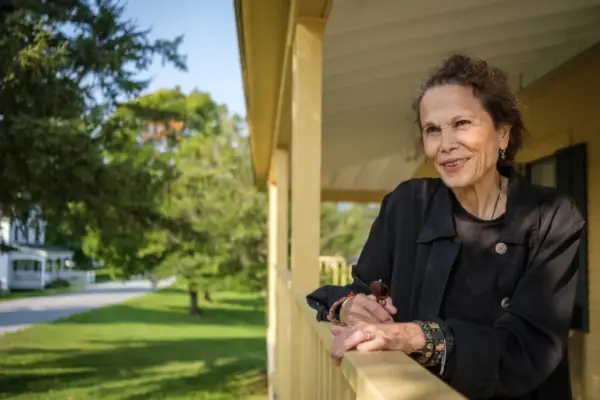




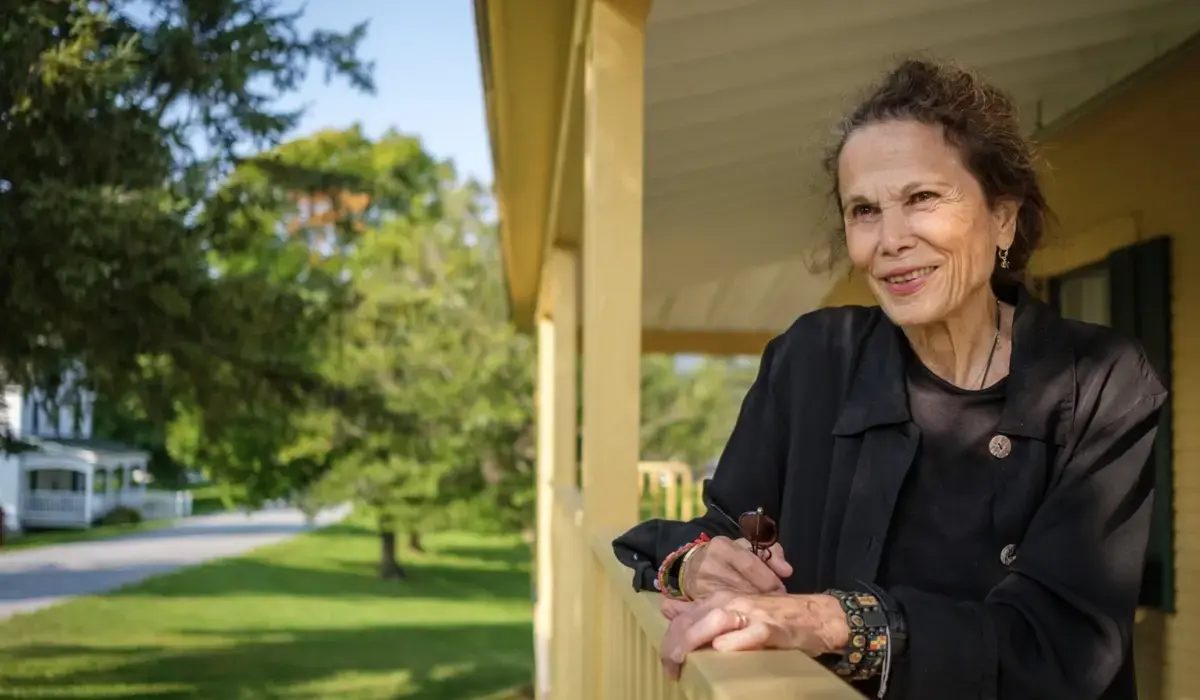
For more than four decades, acclaimed Dominican writer Julia Alvarez has used the written word to explore identity, displacement, family dynamics, and the complexities of the immigrant experience. From her foundational 1984 poetry collection, Homecoming, to her groundbreaking 1991 debut novel, How the García Girls Lost Their Accents, Alvarez has continuously pushed the boundaries of American and Caribbean literature. Her landmark works, including the celebrated historical fiction In the Time of the Butterflies—which immortalized the lives of the four Mirabal sisters who bravely fought against the brutal dictatorship of Rafael Trujillo in the Dominican Republic—cemented her enduring place in literary history.
As one of the very first Dominican writers to achieve widespread critical and commercial recognition in the United States, Alvarez became a defining and visionary voice for the Dominican diaspora. Her trailblazing path helped open doors and clear the way for a vibrant new generation of celebrated contemporary authors, such as Angie Cruz, Elizabeth Acevedo, and Cleyvis Natera. For countless readers, particularly within the Dominican community, Alvarez achieved something truly revolutionary by placing Dominican narratives squarely at the center of mainstream American literature, proving that these stories possess universal resonance.
Now, following the release of her poignant new poetry collection, Visitations, Alvarez is taking time to reflect deeply upon her remarkable career, her lasting legacy, the unvarnished realities of aging, and how the passage of time directly shaped her latest creative output. The resulting collection stands as perhaps the most vulnerable and intimate work of her career, offering readers a rare glimpse into the mind of a literary master entering a reflective chapter of her life.
Reflecting on her enduring relationship with poetry, Alvarez explains that the genre has always served as her artistic anchor, even amid decades of writing bestselling novels.
"Four decades of my life, what the publishers wanted was novels, and I was working on those, but in between and sometimes in the middle of that, I would always return to my rock bottom, which was poetry," Alvarez tells HipLatina. "It was my first love, and I still think of poetry as the purest form of expression. So, to keep returning to it is like to keep reminding myself of the best that language can be."
Alvarez shares that the poems collected within Visitations were composed across vastly different phases of her life. Some pieces were drafted years ago when she was a much younger woman navigating the turbulent waters of cultural displacement and identity formation, while others were written much more recently, capturing her current mindset. Among these varied inspirations, one overarching theme commands the collection: the profound, often overlooked experience of getting older.
Throughout her life and career, Alvarez has confronted numerous societal barriers, but she now finds herself navigating an entirely different kind of systemic marginalization.
"I encountered racism, ethnic prejudice, repulsion of the immigrant, the other, the alien—all those isms that erase people now in this stage of life. I’m now in the ism of ageism," she observes. "So often, older people are not the main characters in any story. They’re usually in the background dispensing advice or the witch that’s getting in the way of the protagonist."
At 76 years old, Alvarez notes that part of the essential inspiration behind Visitations stems from an urgent desire to understand and validate the specific stage of life she currently inhabits. Rather than turning away from the physical and emotional shifts of later years, she chooses to confront them head-on through her art.
"If we’re lucky, we’re all going to get old. So it’s a landscape that is worth exploring," she says. "What are the stories of this stage of my life? What is it when we’re very much at that ending of things rather than the crescendo and the excitement? What does it mean to be so close to the dead we have lost? To have more people dead that we love than alive? What does that mean?"
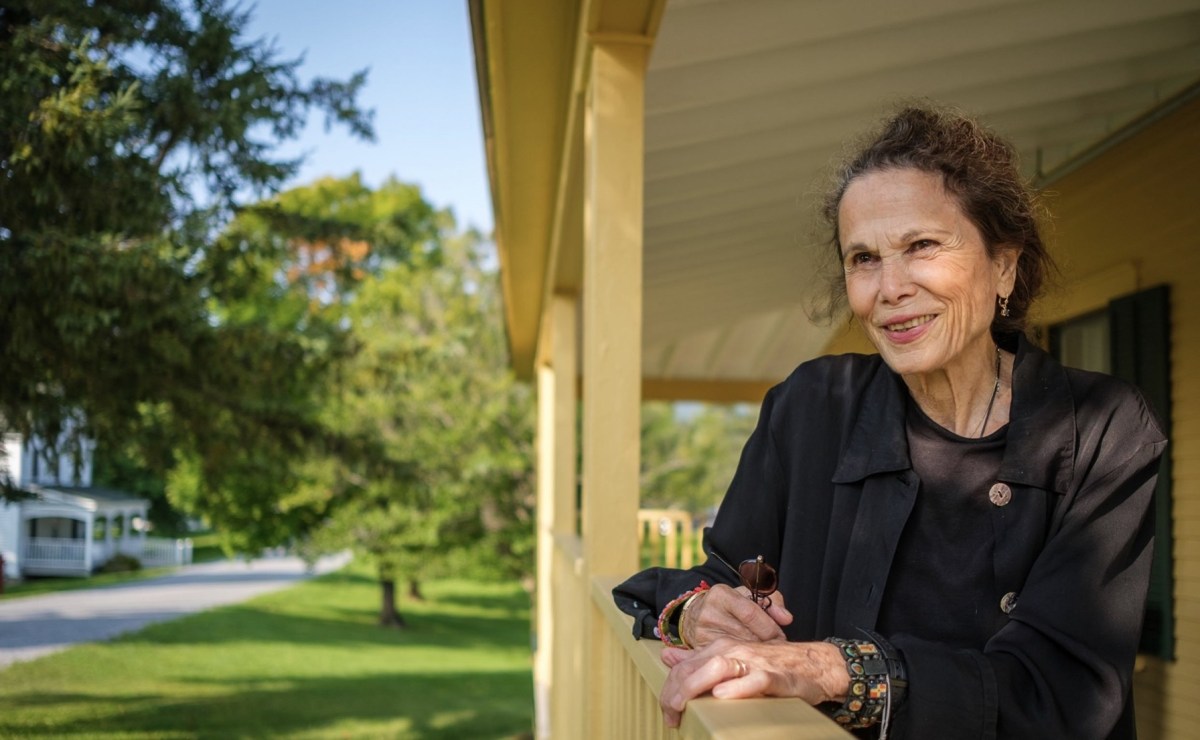
These profound, melancholy questions emerge powerfully in poems like "The Red Bathrobe," where Alvarez examines the quiet realization of stepping back as younger, more conventionally powerful generations take center stage. The poem captures this precise cultural and social shift:
We were talking tonight about who we are now that we’ve put away the lab coats, the lecture notes, taken down the framed picture of Sisyphus rolling his stone uphill, the degrees broadcasting our expertise, turned in the keys to the van with the logo. Now that we’ve gone back to being the people whose shoulders other people look over at parties, checking out who of more beauty, youth, self-importance and power is arriving.
"That invisibility, I think, is important to acknowledge and to name and to story about," she adds, emphasizing the lack of nuanced narratives addressing this phase of human existence. "Because I feel like there’s not a lot of story around that specifically."
Despite her foundational role in shaping a generation of Dominican and Latinx writers—and receiving high honors at events like the Dominican Writers Summit 2026—Alvarez insists that she actively tries not to dwell on her own legacy or historical footprint.
"I really don’t think about it. If I thought about it, I would lose my focus, actually," she notes. "When you’re writing, you’re in the service of the story and the characters. I can’t be looking at my audience or thinking about anybody, whether positive or negative, and how they might react. You are just true to the story. Later, you can make decisions about what to release or how to revise it. But not in the moment."
Yet, when she does pause to reflect on the trajectory of her career, she invariably returns to the initial spark that drove her to pick up the pen: a glaring absence of stories that mirrored her own lived reality as a young immigrant woman settling in the United States.
"When I started writing, there was that gap in the shelf. I couldn’t see myself. There were immigrant stories already out there, but they were all by men. Many of them were Mexican Americans, and all of a sudden it was just like we’re all under the same umbrella, but it’s not the same kind of family, history, or ways of looking at things," she explains. "I needed to understand what is happening to me, my sisters, and I go into story not because I have answers but because I have questions."
As she looks back over a decades-long career defined by literary triumphs, Alvarez maintains a profound sense of gratitude for the journey that brought her here, and for the simple privilege of continuing to practice her craft at 76 years old.
Reflecting on her life’s work, she shares, "I have immense gratitude because I mean, how lucky is it to be able to do what is your passion to do in this world and get paid for it?"