




After spending eight years away from Argentina, Sam Hewson, Citibank’s Head of FX Sales, recently returned to Buenos Aires to find a domestic landscape vastly different from the one he left behind. His visit coincided with a period of heightened macroeconomic turbulence across international markets, propelled by the artificial intelligence boom, the shifting landscape of U.S. politics following the recent presidential elections, and persistent geopolitical conflicts in the Middle East. At the same time, the domestic market is increasingly fixing its gaze on the horizon, anticipating the political and economic implications of upcoming elections.
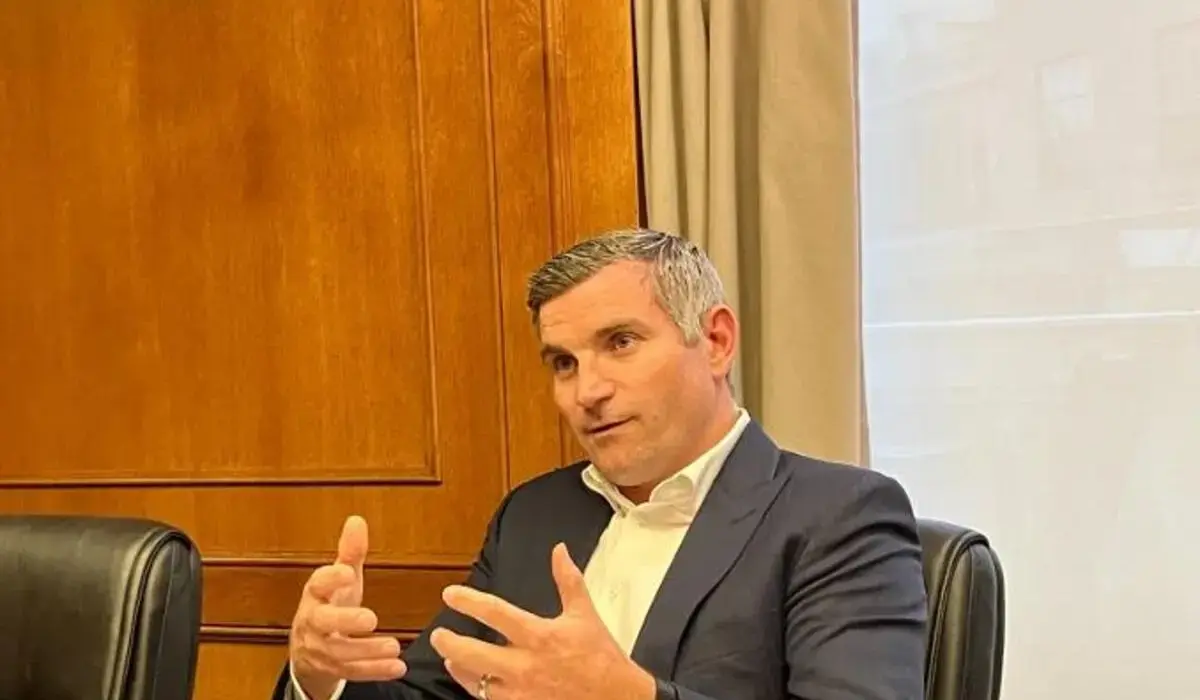
Sitting down at Citi’s regional offices in Buenos Aires for an exclusive interview, Hewson shared insights with the press regarding the dramatic developments in the global foreign exchange (FX) market, which has weathered an extraordinary degree of volatility over the past twelve months.
"The FX volumes we’ve recorded this year are the best we have seen since 2010 in our global franchises," Hewson noted, illustrating the sheer scale of currency trading activity driven by recent global shocks.
He pointed out that escalating geopolitical tensions and multifaceted risks are continuously generating fresh waves of volatility. This environment is forcing corporate and institutional clients to adopt a far more calculated and sophisticated approach toward hedging their exposures and managing financial risk. From a broader strategic perspective, Hewson emphasized that the corporate need for supply chain resiliency has never been more urgent. Following the severe disruptions and logistical bottlenecks of recent years, global producers are definitively moving away from single-source geographic supply bases.
This structural shift means that corporate foreign exchange exposures have inevitably become more complex. The ongoing diversification of supply chains, combined with mounting logistical challenges and the fundamental requirement to operate across a multitude of currencies, creates a highly dynamic and continuously evolving operational space. Consequently, Hewson argued, this multifaceted global environment has drastically increased the necessity for active risk management and comprehensive hedging strategies to protect corporate balance sheets from unforeseen currency swings.
Carry Trades: The Dollar’s Diminished Appeal and Growing Interest in Latin America
Delving deeper into institutional investment strategies, Hewson discussed how global market participants are approaching currency carry trades. He revealed that his clients currently "don’t have great conviction on the dollar in general" when structuring carry trades that involve the U.S. currency as a primary vehicle.
However, he was quick to emphasize that institutional investors maintain a significantly stronger conviction when looking toward emerging markets, with a distinct and growing preference for Latin America.
"Latin America has been a strong conviction story from our clients who have been looking to invest in currencies that have strong signals from a carry perspective, from a momentum perspective, and, to some extent, resilience from the interest rate environment and the fiscal environment," Hewson explained.
In this regard, international investors have actively hunted for regional currencies backed by fundamentally robust terms of trade and reliable fiscal surpluses. Clarifying the mechanics of these cross-border maneuvers, Hewson noted that the U.S. dollar is frequently bypassed as the funding mechanism for these specific trades. Instead, alternative low-yielding currencies are deployed to finance high-yielding regional assets.
"It’ll be through another currency, which will be the funding vehicle for that expression," he said, pointing to historical precedents such as the Japanese yen. "The yen has long been a currency against which investors have sold a low-yielding currency and bought a high-yielding one like the Colombian peso or the Brazilian real."
Argentina’s Economic Outlook and the Road to 2027
Shifting the conversation toward the local economy, Hewson reflected on his return to Argentina after nearly a decade away. He expressed an overwhelmingly positive impression regarding the current direction and momentum of the nation’s economy, as well as the ambitious structural reforms driving these sweeping changes.
Comparing the prevailing economic climate directly with the conditions of 2023, he observed a striking contrast. "It feels from an international point of view like a material positive change in dynamic and one in which huge progress has been made in actually a very short amount of time," he remarked.
Among the core achievements of President Javier Milei’s administration, Hewson specifically highlighted the marked improvement in the national trade balance, the achievement of a primary fiscal surplus, a noticeable deceleration in inflation, and the establishment of a more stable exchange rate regime.
"All of that makes it much more attractive from an international institutional community, and we see that with our clients. We see that much more so now in the conversations we’re having with our clients looking to express positive views on Argentina, and we see that through the activity that we trade with our clients," he stated.
Addressing the political horizon and the approaching elections, Hewson acknowledged that electoral cycles inherently introduce a degree of uncertainty and market volatility, regardless of whether they take place in Argentina or any other democratic nation. However, he refrained from predicting the exact trajectory that this potential volatility might take.
"I think the overwhelming story in Argentina is one of positivity now," he emphasized.
Jorge Lonegro, Citi’s Head of Markets for Argentina and South Sub-Cluster, who participated in the discussion, echoed these sentiments. He noted that while uncertainty naturally tends to surface during election seasons, the upcoming period is "totally manageable" for market participants. When asked whether the domestic peso has become excessively overvalued, Lonegro offered a pragmatic assessment, stating simply that "the price is the price." He explained that the current valuation is a direct reflection of underlying foreign exchange flows, encompassing the totality of export activities, import demands, and inbound financial liquidity.
Furthermore, addressing the government’s comprehensive financing plan leading up to 2027, Lonegro acknowledged that public officials have maintained a transparent stance regarding their capacity to secure necessary funding from international and domestic sources.
The Dollar: Tariffs, AI, and the Federal Reserve
Examining the broader dynamics governing the greenback, Hewson addressed the dollar’s relative weakness in international markets following the return of Donald Trump to the White House. He described the period as a challenging phase that commenced with the policy announcements of "Liberation Day" in April 2025, which immediately ignited an initial knee-jerk sell-off in the U.S. currency.
At that juncture, Hewson explained, global markets had been heavily positioned in favor of a stronger dollar, fueled by a surging narrative of "American exceptionalism" that had captured the imagination of investors across the United States.
"The macro community and our clients were expressing that through this long-dollar type exposure and long-dollar expressions in foreign exchange," he recalled.
However, the subsequent introduction of sweeping global tariffs abruptly disrupted those assumptions. "That flipped that on its head and people started selling the dollar," Hewson said, noting that devaluation discussions quickly transformed into a prominent market hypothesis.
Despite that turbulent stretch, Hewson believes that the prevailing pessimistic narrative has largely dissipated. He argues that American exceptionalism is once again reclaiming its status as a relevant market story, heavily propelled by the ongoing artificial intelligence supercycle and its widespread impact on productivity, trade, and economic growth. This transformative phenomenon, he noted, is particularly visible within the United States, as well as in specific technological hubs across North Asia, including Taiwan and South Korea, which have positioned themselves as primary beneficiaries of the AI boom.
Additionally, Hewson pointed out that the Federal Reserve’s interest rate hike under the leadership of Kevin Warsh was received with notable approval by financial markets. This monetary policy move has successfully reinforced the institution’s credibility, effectively calming earlier market anxieties concerning the degree of independence the central bank chief would maintain relative to the executive branch.
"I think that is also no longer driving that weak-dollar theme," Hewson added.
Providing further institutional perspective, André Secron, Citi’s Head of Latin American Corporate FX Sales, emphasized that the fundamental valuation of the dollar remains tightly correlated with prevailing U.S. interest rates. Consequently, while the Federal Reserve under Warsh has signaled institutional independence—a development welcomed by traders—it has simultaneously injected volatility through alternative communication channels.
"Now we have a Fed who already communicated to the market that he doesn’t want to communicate or give guidance on what’s going to happen to interest rates," Secron observed.
He concluded that this deliberate shift in central bank transparency introduces an additional layer of unpredictability regarding the future trajectory of the dollar, as currency values continue to react to incoming economic data and the ongoing debate over potential future rate adjustments.