


Growing up in New Jersey, telenovelas and variety shows connected millions of children of immigrants to their families and heritage—even when those broadcasts did not tell their exact stories. For many growing up in dual-cultural households, the defining memories of childhood are rarely grand historical milestones; rather, they are rooted in the ambient glow of a television set in the corner while dinner was being prepared in the kitchen.
Spanish would pour through the television speakers, competing with the everyday clatter of pots and pans, overlapping family conversations, and the occasional good-natured argument over who earned the right to control the channel. More often than not, the household split came down to a toss-up between Univision and Telemundo, the twin pillars of Spanish-language broadcasting in the United States.
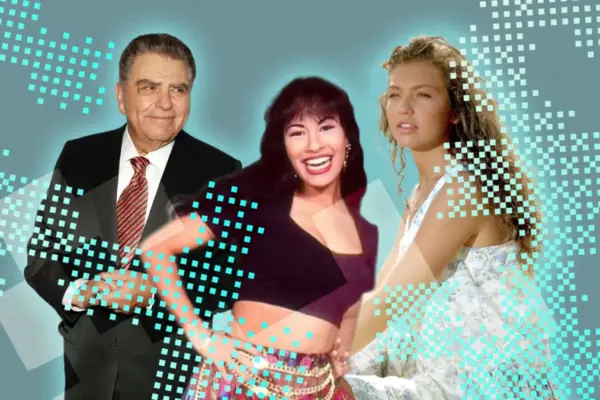
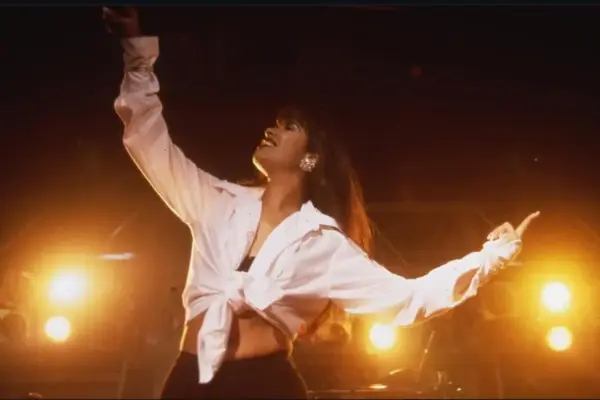
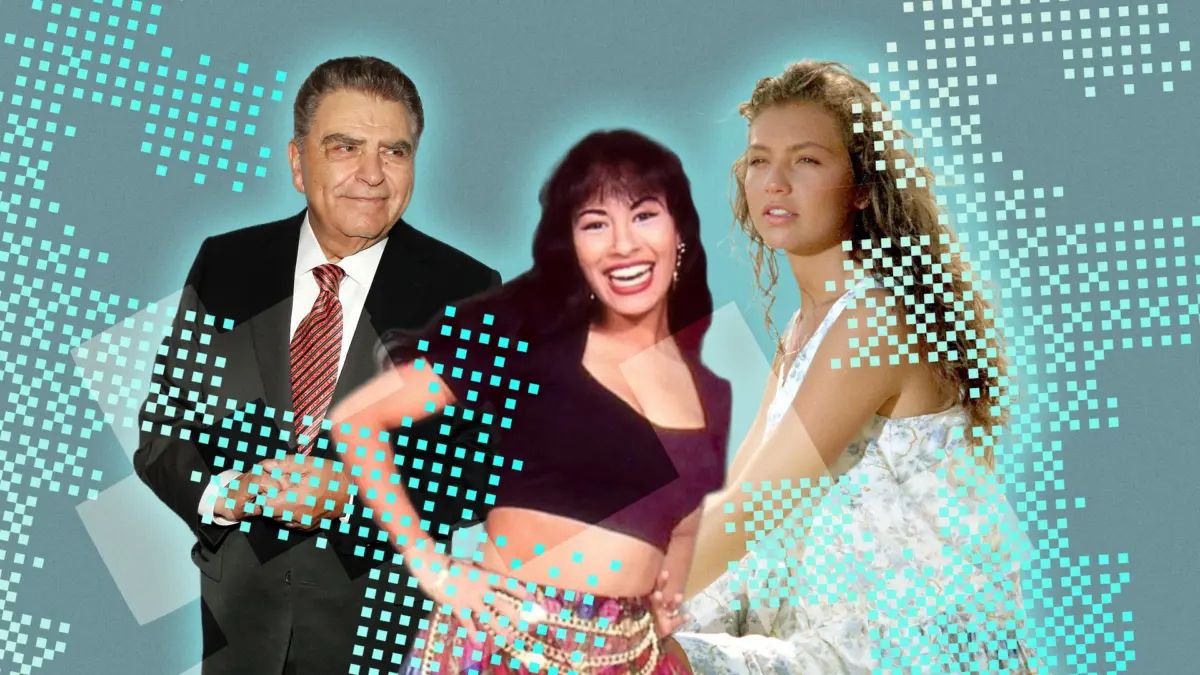
Those screens introduced audiences to iconic cultural touchstones. Viewers watched Marimar, starring Thalía and Eduardo Capetillo, which served as a first television crush for many young viewers across the country. Weekends brought Sábado Gigante and host Don Francisco, a massive television event that families looked forward to all week long. Viewers watched Selena perform and endlessly replayed her televised interviews and music videos, drawn to an artist whose presence families never seemed ready to let go of.
There was something profoundly powerful about hearing Spanish spoken naturally within the domestic sphere. Even when the narratives unfolding on screen were not specifically Dominican, Puerto Rican, Mexican, or Cuban, they still felt intimately familiar. The linguistic expressions, complex family dynamics, vibrant music, distinct humor, and larger-than-life personalities reflected recognizable pieces of a broader cultural tapestry.
Watching a program like Marimar with family was never a quiet, passive experience. Mothers would shake their heads at a character’s questionable life choices, and another family member would immediately chime in with a knowing, “¡Te dije que eso iba a pasar!” Within moments, the room would fill with overlapping voices, laughter, gentle teasing, and spirited debates over who was right and who had misread the plot.
This dynamic mirrored the exact energy found at traditional family gatherings, where adults laughed over old memories and debated everything from neighborhood gossip to the dramatic twists unfolding on the television screen. Someone was always calling out from another room, and somehow, everyone was drawn into the conversation. While the broadcast might not have told a uniquely Dominican story, watching it alongside loved ones instantly transformed the living room into a sanctuary of belonging.
Marimar was not a Dominican production, and Selena was a Mexican American icon. Yet, cultural connection does not always rely on direct, literal representation. Often, it emerges through pure recognition—the shared cadence of an emotion, a style of humor, or a collective sense of warmth.
For many children growing up at the time, those evenings were not viewed as intentional acts of cultural preservation. They were simply kids growing up in suburban New Jersey, watching television with their families at the end of a long week. Decades later, however, those ordinary moments reveal themselves as foundational lessons in identity, teaching young people who they were and where their families came from.
For countless immigrant families across the United States, broadcast media functioned as far more than mere evening entertainment. It served as a vital bridge connecting the world parents had left behind with the new, unfamiliar landscape where their children were growing up. For Dominican households navigating the complexities of the diaspora, these programs helped preserve language, musical tastes, humor, and an enduring emotional connection to the homeland while building a stable life in America.
That was the unique magic of appointment television. Families watched because a show was scheduled to air at a specific hour, and it organically became part of everyday household conversation because everyone had experienced it together. Children could navigate English-dominant environments at school all day and return home to a living room wrapped in Spanish, growing up in New Jersey while simultaneously keeping a window open to Latin America and the Caribbean. They never had to choose between being Dominican and being American—they could effortlessly be both.
Even today, hearing the opening notes of a classic telenovela theme song instantly conjures memories of those evenings spent with family. Yet, the entire landscape of television consumption has shifted dramatically. Modern audiences no longer wait anxiously for a designated airtime or gather in the living room to negotiate a single screen. Today, viewers stream content individually on personal devices whenever their schedules permit. When a contemporary show triggers a laugh or stirs a memory of home, that connection is shared differently—typically through a quick clip, meme, or video link sent across a family group chat.
While the connection remains just as strong, it has taken on a completely different shape. Decades ago, a telenovela episode, a musical performance on Sábado Gigante, or a televised concert could spontaneously become the centerpiece of family conversation the very next day without anyone planning it. Everyone had watched it; everyone possessed an opinion. Today, amid a vast ecosystem of endless choices and personalized algorithmic feeds, audiences consume divergent shows, follow distinct creators, and discover culture through fractured pathways. Shared cultural moments have not vanished entirely, but they have undeniably become less automatic.
At the same time, Latino creators are no longer waiting patiently for mainstream institutions to grant them representation; they are actively building that representation themselves. A young person today can open a smartphone and instantly find a digital community that mirrors their exact lived experiences. That unprecedented access and creative freedom mark a monumental leap forward for media diversity.
Yet, alongside this modern abundance, a quiet nostalgia remains for the collective experience of simultaneous viewing. Platforms have expanded exponentially—evolving from traditional telenovelas and variety shows to TikTok, podcasts, YouTube, and subscription streaming services—yet the fundamental human desire for connection has not wavered. Audiences still search for content that evokes the feeling of home, and they still yearn to share those discoveries with the people who made them feel at home in the first place.
For those who grow up straddling multiple cultural worlds, heritage is transmitted through far more than formal history lessons about family origins. It lives on in spoken language, cherished recipes, rhythmic music, and the quiet, ordinary moments spent together under one roof.
For many, that heritage is permanently etched into the memory of a television glowing in a New Jersey living room, filling the house with Spanish dialogue and laughter. What once seemed like simple family entertainment reveals itself, in hindsight, as a powerful formative force. The true impact stemmed not just from the programs themselves, but from the act of watching them together.
Modern audiences possess more pathways to cultural connection than at any point in history. The ongoing challenge, however, lies in preserving those connections as shared collective experiences. Culture is never merely something passively consumed; it remains something deeply experienced, collectively remembered, and actively passed down from one generation to the next.