






What if someone who could hear and see the dead fell into a city’s water supply and decomposed? Would that ability spread around town?
That chilling premise—hailed as a “cool idea” by master of sci-fi horror Stephen King in a post on X—serves as the conceptual hook for My Sad Dead, Netflix’s striking new miniseries. The project is adapted from the acclaimed short stories of Argentine journalist and writer Mariana Enriquez, widely recognized as one of the leading and most innovative figures in contemporary horror literature.
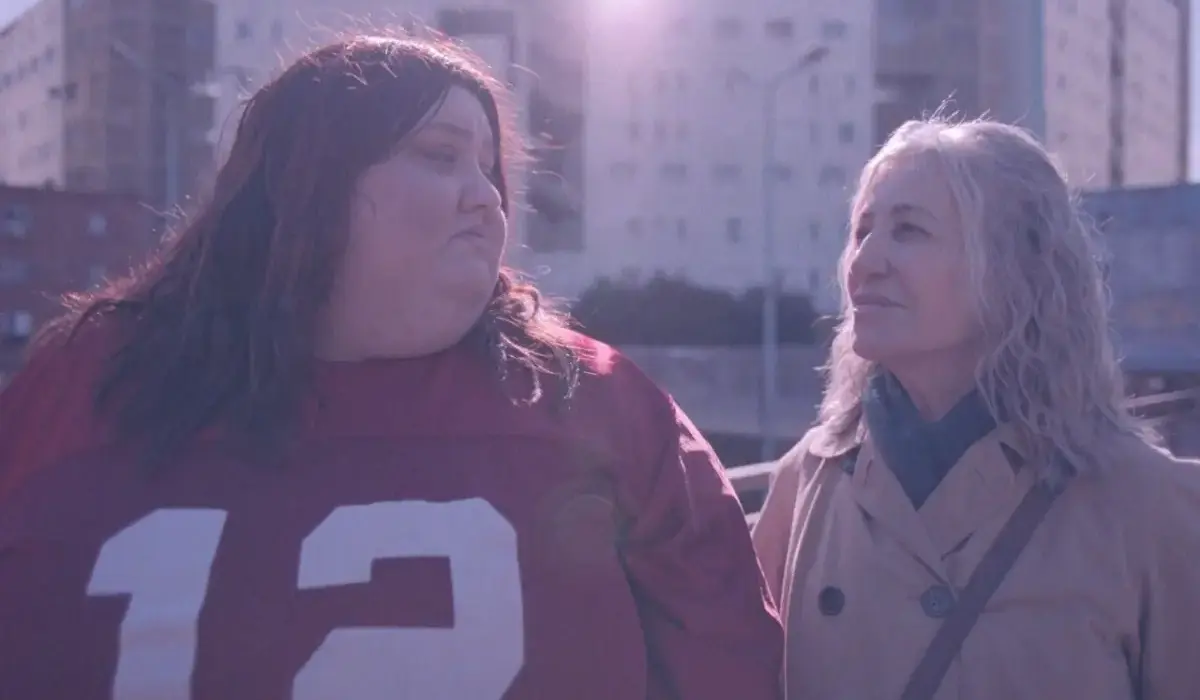
Following its high-profile premiere at the San Sebastian Film Festival, My Sad Dead debuted globally on Netflix, bringing a distinct brand of Latin American gothic horror to international audiences. The miniseries is directed by acclaimed filmmaker Pablo Larraín and features a stellar cast that includes Mercedes Morán, Dolores Fonzi (known for Blondi), Alejandra Flechner (from Argentina, 1985), and Carolina Alvarez.
At the center of the narrative is Ema, a recently retired doctor played by Morán. Ema possesses the burdensome ability to see the dead, a supernatural affliction she must navigate while simultaneously trying to process her own mother’s death and a myriad of unresolved personal matters. Her fragile existence is upended by two major catalysts: the arrival of her niece Julie, portrayed by Alvarez, and the brutal murder of three teenagers in Piedrabuena. This working-class neighborhood on the rugged edge of Buenos Aires City is heavily marked by systemic violence and social neglect.
These events trigger a strange, irreversible phenomenon that shatters the fragile barrier separating the living from the dead. What had long been Ema’s lonely, isolating burden suddenly begins to permeate the entire neighborhood. The dead start to make their presence unmistakably known, plunging the community into a reality where no one can escape the haunting sounds of their own ghosts.
Rather than offering a straightforward page-to-screen translation, the series takes a daring approach to adaptation. The script was crafted collaboratively by Larraín, Guillermo Calderón, Anastasia Ayazi, and Enriquez herself. The production uses the short story of the same title—the one focusing on Ema—as its central narrative anchor, while organically weaving in characters, plotlines, and motifs from several of Enriquez’s other literary works.
In his director’s notes, Larraín detailed the collaborative and interpretive nature of the project. He described it as a very non-canonical adaptation, noting that individual short stories do not neatly correspond to separate chapters. Instead, the narratives are thoroughly interwoven, resulting in what Enriquez herself has rightly characterized as a profound reinterpretation of her written universe.
This adaptation arrives on the heels of a growing international appetite for Enriquez’s literary works, which have proven to be a rich seedbed for cinematic translations. Last year, Argentine filmmaker Laura Casabé adapted her writing into the feature film The Virgen of the Quarry. That coming-of-age horror tale, drawn from two short stories in Enriquez’s celebrated collection The Dangers of Smoking in Bed—specifically "Our Lady of the Quarry Lake" and "The Cart"—made it to the shortlist of the Argentine Film Academy as the country’s potential Oscar submission for the year.
From Chile to Hollywood
For Pablo Larraín, My Sad Dead represents a return to exploring deeply rooted regional complexities after a prolific career that bridges Latin American cinema and Hollywood prestige. Larraín first broke out internationally from Chile in the early 2000s with his critically acclaimed sophomore feature film, Tony Manero. His global profile skyrocketed after earning an Academy Award nomination for No, his gripping political drama about Chile’s historic 1988 plebiscite that ultimately ended General Augusto Pinochet’s military dictatorship and restored democratic elections.
Following the success of The Club in 2015, which won the prestigious Silver Bear at the Berlinale, Larraín embarked on a series of biographical films focusing on real, complex historical figures. These projects included 2016’s Jackie, chronicling the days of John F. Kennedy’s widow following his assassination; Spencer, which starred Kristen Stewart as Princess Diana; and Maria, a biographical drama about legendary opera singer Maria Callas starring Angelina Jolie. Notably, his 2023 Oscar-nominated satirical fantasy The Count offered a biting, surreal reimagining of Augusto Pinochet as an aging, centuries-old vampire.
Transitioning from those major international projects back to a television format rooted in Argentine literature required a careful balancing act, according to the director. When working with a writer who possesses a universe as complex, sophisticated, and meticulously constructed as Enriquez’s, Larraín noted that a filmmaker must completely immerse themselves in that world. He emphasized the necessity of doing everything possible to preserve its integrity throughout the production process to ensure the adaptation never strays from the author’s distinct atmosphere.
At the same time, Larraín pointed out that this task presented the greatest challenge of the production. Certain elements that Enriquez expertly explains or evokes through the written word—such as abstract concepts, elusive sensations, and deeply psychological emotions—must be laboriously translated into the entirely different visual and auditory language of film and television.
In Enriquez’s literature, the most terrifying elements are rarely the supernatural entities that populate the shadows. Instead, the true horror usually stems from the dimensions and conflicts of contemporary human and social nature lurking right behind them.
In a country and a region where the act of remembering individuals whose deaths were rooted in systemic injustice carries immense cultural and political weight, the socio-political backdrop is crucial. Larraín explains in his notes that social violence plays a central role in the series. It highlights the glaring failure of institutions and underscores how Latin American society has gradually abandoned vulnerable social classes, leaving them to fend for themselves amid systemic decay.
Consequently, the horror in My Sad Dead emerges organically from the oppressive, suffocating atmosphere of inhabiting a space where human life has slowly begun to lose its intrinsic value. As Larraín describes it, the result is a unique brand of horror that builds gradually—at times profoundly painful, at others deeply sad—while retaining a distinct undercurrent of humor that is satirical, farcical, and heavily ironic.