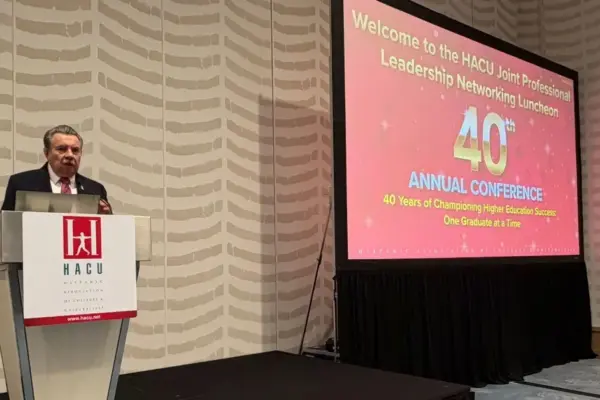










The Hispanic Association of Colleges and Universities (HACU) officially commenced its milestone 40th Annual Conference on October 31, 2026, drawing over 1,800 registered attendees to the vibrant coastal city of Chula Vista, California. Guided by the resonant theme, “40 Years of Championing Higher Education Success: One Graduate at a Time,” the three-day gathering serves as a national focal point for educators, administrators, policymakers, and corporate partners dedicated to expanding opportunities and academic excellence for Hispanic and minority students across the United States.
The landmark conference opened with a high-energy Opening Plenary session convened by University of California, Merced Chancellor Juan Sánchez Muñoz, who also serves as a valued member of the HACU Governing Board. Chancellor Muñoz set the tone for the multi-day event by emphasizing the critical role that Hispanic-Serving Institutions (HSIs) and visionary leadership play in shaping the future of American higher education. He highlighted the transformative impact HACU has achieved over the past four decades, growing from a fledgling coalition into a powerful national voice advocating for equity, access, and success for millions of college students.
Following the opening remarks, the Honorable John McCann, Mayor of Chula Vista, took the stage to deliver a warm official welcome to the thousands of educators and leaders gathered in his city. Mayor McCann underscored Chula Vista’s pride in hosting such a prestigious national event, noting the vital contributions that higher education institutions make to regional economic vitality and community development. In recognition of his leadership and support for the conference, Mayor McCann was presented with a special token of appreciation on behalf of the association.
The welcome ceremonies continued with remarks from University of California President James B. Milliken. President Milliken stressed the ongoing imperative for collaboration among public research universities, community colleges, and regional institutions to remove systemic barriers to higher education. His address reinforced the conference’s overarching message that institutional partnerships are essential for driving sustainable student achievement in an increasingly complex and competitive global landscape.
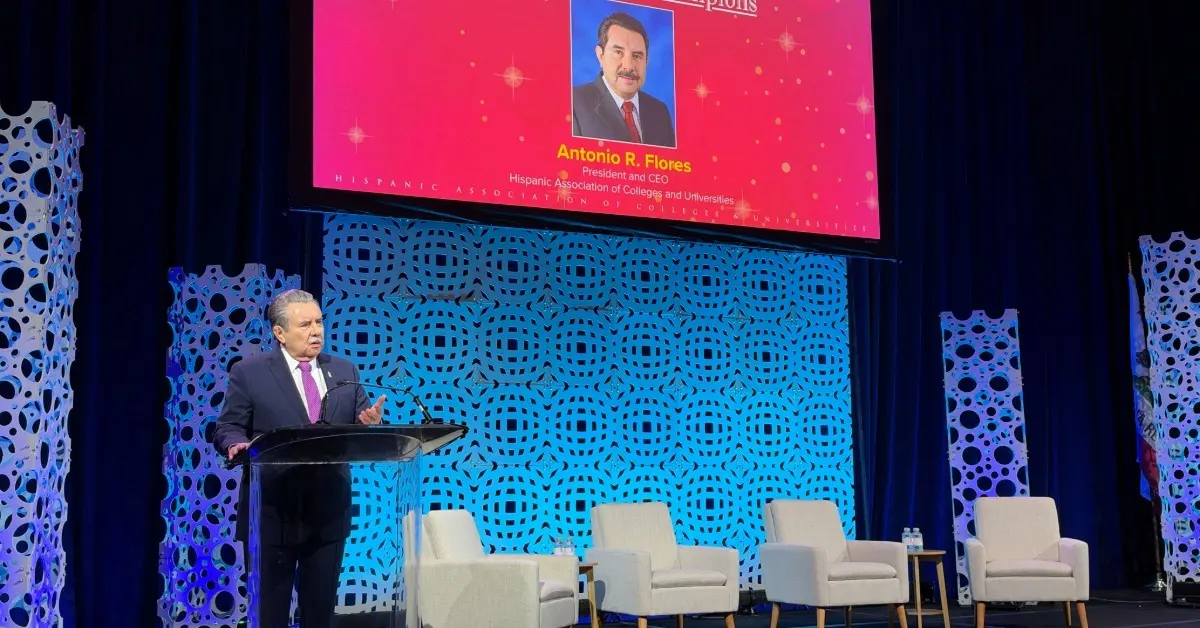
A central highlight of the opening day’s morning sessions was the prestigious HACU Hall of Champions induction ceremony. This year, the association bestowed its highest honor on HACU President and CEO Antonio R. Flores, recognizing his decades of tireless dedication, visionary leadership, and relentless advocacy on behalf of Hispanic higher education. The induction celebrated President Flores’s monumental contributions to expanding the organization’s reach, strengthening federal support for HSIs, and championing the dreams of countless students who have walked across college graduation stages over the last forty years.
Building upon the celebratory momentum of the morning, the plenary transitioned into a dynamic and thought-provoking special panel presentation titled “Higher Education in a Changing Landscape.” Guided by the conference’s landmark 40-year theme, the panel brought together four prominent leaders from HACU-member institutions to examine the profound economic, technological, and demographic shifts transforming the academic sector.
The panel was expertly moderated by Community College of Aurora President Mordecai Brownlee, who guided the conversation through critical issues facing modern campuses. The distinguished panel featured San Bernardino Community College District Chancellor Diana Z. Rodriguez, Harold Washington College President Daniel López, and Northeastern Illinois University President Katrina Bell-Jordan. Together, these academic leaders engaged in a robust exploration of the forces currently shaping higher education, openly discussing both the acute challenges and the unprecedented opportunities confronting institutions today.
The conversation deeply explored the specific types of visionary leadership required to navigate institutional change during uncertain times. Panelists shared institutional strategies for prioritizing student success, enhancing retention and graduation rates, and proactively aligning academic curricula with the demands of an evolving, technology-driven workforce. The leaders emphasized that higher education institutions must remain agile, culturally responsive, and deeply connected to their local communities if they are to successfully prepare the next generation of diverse professionals for tomorrow’s careers.
Following the presidential panel, the focus shifted to corporate and community partnerships that make HACU’s mission possible. Sponsor acknowledgements and remarks were delivered by Maria Tamburri, Vice President of Intergovernmental Affairs at Dominion Energy, who highlighted the corporation’s ongoing commitment to fostering educational equity and workforce diversity.
In addition to corporate supporters, the association recognized pivotal advocacy organizations working on the front lines of social and civil justice. Francisca Fajana, Director of Racial Justice Strategy at LatinoJustice, accepted a special recognition award on behalf of the organization for its steadfast support of the association and its shared mission to advance civil rights and educational opportunities for the Latino community. HACU leadership expressed deep gratitude to all the partners, corporate sponsors, and allied organizations whose generous backing fuels the association’s ongoing initiatives and annual gatherings.
The three-day conference, running from October 31 through November 2, serves as the premier venue for recognizing exceptional leadership and institutional excellence. Throughout the multi-day event, a total of nine distinguished honorees are being formally recognized for their outstanding contributions to improving educational opportunities and career pathways for college students nationwide. These honors are being presented across various plenary sessions, luncheons, and specialized events designed to celebrate excellence within the academic community.
As the conference continues through its remaining schedule in Chula Vista, attendees are participating in numerous workshops, networking sessions, and collaborative forums aimed at scaling successful educational models. The milestone 40th anniversary event not only honors a rich history of advocacy and student achievement but also lays a strategic roadmap for the future, ensuring that the next generation of graduates continues to receive the support, mentorship, and educational quality they deserve.