











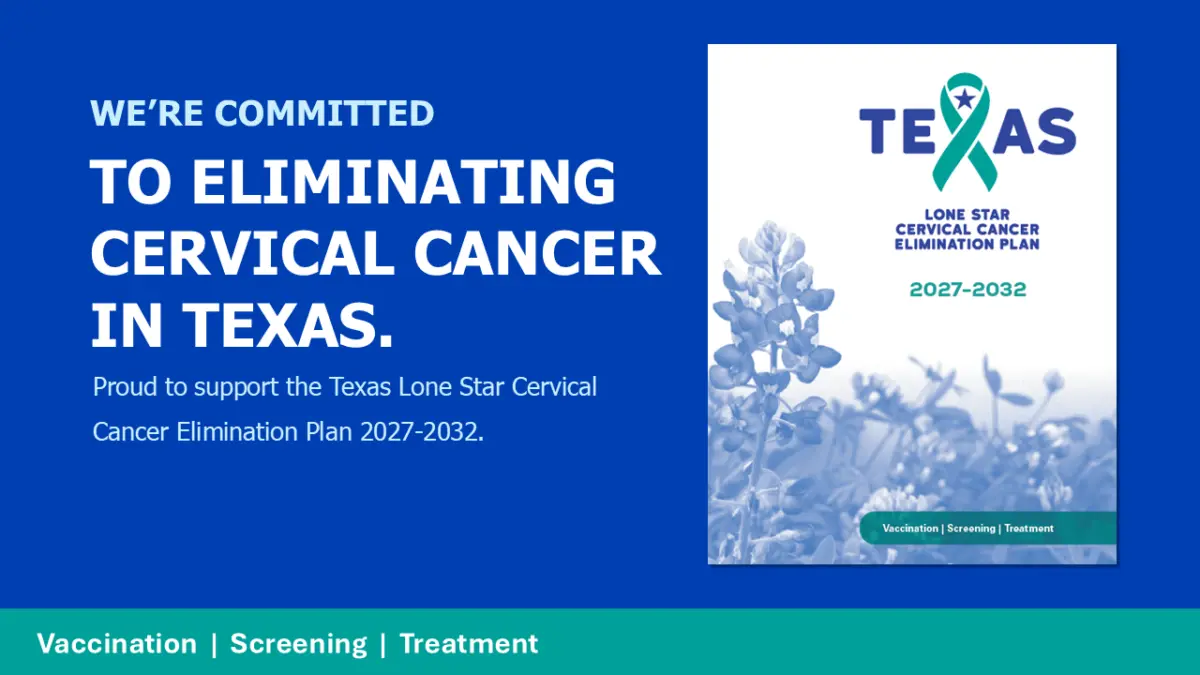
Texas stands at a pivotal crossroads in public health, armed with a comprehensive roadmap to eradicate a disease that continues to claim far too many lives across the Lone Star State. According to the newly released Texas Lone Star Cervical Cancer Elimination Plan 2027-2032, the state possesses a monumental opportunity to eliminate cervical cancer as a public health threat through a synchronized approach centered on widespread human papillomavirus (HPV) vaccination, routine clinical screenings, timely follow-up care, and robust patient navigation services.
The comprehensive framework driving this initiative has been developed by the Cervical Cancer Elimination Priority Area Workgroup and receives critical backing from the Cancer Alliance of Texas. Among the key contributors to this collaborative effort is Dr. Rebecca Jones, assistant director of the Institute for Health Promotion Research at UT Health San Antonio.
Public health experts behind the initiative emphasize that the state already possesses the medical tools necessary to prevent nearly all cases of cervical cancer. However, transforming this potential into reality will require coordinated statewide action, sustained partnerships across multiple sectors, and strategies that are carefully tailored to reach diverse and often underserved populations.
Why Cervical Cancer and Texas?
Cervical cancer occupies a frustrating paradox in modern medicine: it is almost entirely preventable and highly treatable when caught early, yet it remains a persistent and deadly health challenge. Nowhere is this paradox more evident than in Texas, which currently ranks as the eighth-highest state in the nation for cervical cancer incidence rates and the sixth-highest for mortality rates stemming from the disease.
This heavy burden is driven by a complex web of socioeconomic, geographic, and systemic factors. Texas boasts a vast geographic expanse, encompassing bustling metropolitan centers, sprawling rural areas, and unique border communities, each presenting distinct healthcare delivery challenges. Compounding these geographic hurdles are high uninsured rates, cross-border healthcare utilization patterns, and fragmented continuity of care that frequently causes dangerous delays in routine screenings and essential follow-up procedures.
Furthermore, healthcare systems across the state often struggle with incomplete medical records, making it exceptionally difficult for providers to accurately track an individual’s vaccination status, historical screening results, and subsequent care trajectories.
Despite these formidable obstacles, Texas also possesses unique systemic strengths that position it well for success. The state benefits from robust academic, clinical, public health, and community partners who are actively collaborating through the Cancer Alliance of Texas. Additionally, statewide prevention infrastructure is significantly bolstered by the Cancer Prevention and Research Institute of Texas, creating a fertile ground for impactful public health interventions.
Boost HPV Vaccination Rates
At the foundational level of the new strategic framework is a heavy emphasis on primary prevention through human papillomavirus vaccination. The plan establishes an ambitious target: to increase the percentage of Texas adolescents—both boys and girls—who are up to date on their HPV vaccinations by age 15, raising the current rate of 50.5% up to an impressive 80%.
To achieve this benchmark, health officials are advocating for a multi-pronged approach that includes the rigorous implementation of clinical interventions, enhanced community outreach and education campaigns, and the expansion of vaccine availability into non-traditional settings where families already congregate.
Advocates note that the stakes could not be higher for the state’s younger generations. Ludivina Hernández, a community outreach coordinator and cervical cancer survivor, emphasizes the urgent human element behind the statistics. No resident of Texas should suffer from or lose their life to a disease that is entirely preventable, she notes, adding that early detection, regular screening, and timely vaccination can prevent immense suffering and save countless lives.
Elevate Cervical Cancer Screening
Beyond primary prevention through vaccination, the second major pillar of the Texas Lone Star Cervical Cancer Elimination Plan focuses on dramatically increasing the rates of routine cervical cancer screening among eligible populations.
Addressing the state’s low screening rates requires confronting the structural and logistical barriers that prevent Texans from accessing care. To overcome these hurdles, healthcare leaders are strongly encouraged to integrate primary HPV testing and HPV self-collection kits as standard screening options. Crucially, these innovative tools should be made available even beyond traditional clinic walls to reach marginalized or isolated populations.
In tandem with expanding screening modalities, the plan underscores the absolute necessity of robust navigational support. Reducing barriers to screening is only half the battle; the healthcare system must also ensure that individuals can successfully complete their screenings, receive their results in a timely and easily understandable format, and seamlessly access any recommended follow-up diagnostic care.
Increase Cervical Cancer Diagnosis and Treatment
The third critical frontier outlined in the strategic plan involves ensuring prompt diagnosis and comprehensive treatment for individuals diagnosed with cervical precancer or active cancer. Timely intervention at these stages plays a decisive role in halting the progression of the disease and ultimately achieving elimination.
The framework sets a clear target: to ensure that 80% of women who require diagnostic follow-up and treatment successfully receive these services. Accomplishing this goal will rely heavily on community outreach initiatives, dedicated patient navigation, specialized provider training, and comprehensive survivorship support programs.
Experts point out that isolated interventions are rarely sufficient to address complex health disparities. Dr. Rose Gowen, a faculty associate at the UT Health Houston School of Public Health Brownsville Regional Campus, notes that multicomponent programs successfully bring together the critical elements needed to overcome systemic challenges. These integrated programs combine community outreach and education, patient navigation, targeted provider training, and strong clinical partnerships to form a cohesive safety net for patients.
Looking Toward the Future
As Texas looks toward the horizon of 2032 and beyond, the path forward relies on the continued application of evidence-based interventions and a commitment to continuous quality improvement. Public health leaders stress that the state must build a dynamic learning health system capable of evaluating outcomes, adapting strategies in real-time, and investing in ongoing healthcare innovations.
By systematically evaluating progress and maintaining collaborative momentum, Texas has a historic opportunity to accelerate its journey toward eliminating cervical cancer as a public health threat, setting a powerful example for the rest of the nation.