










Flooding accounts for approximately 11% of all billion-dollar weather and climate disaster events across the United States, according to recent data from the National Oceanic and Atmospheric Administration (NOAA). As severe weather patterns continue to shift and intensify, emergency management officials emphasize that having a comprehensive plan to deal with severe storms, flash floods, and unexpected climate disruptions is no longer just a precaution—it is a vital necessity for public safety.
Public safety agencies, including the Texas General Land Office, consistently urge residents to take proactive measures long before a storm makes landfall. Preparing for floods involves securing adequate flood insurance coverage, gathering essential disaster supplies ahead of time, and maintaining a constant state of awareness by monitoring official weather alerts. For local neighborhoods, families, and communities, understanding these risks and preparing accordingly can mean the difference between safety and disaster.
During times of severe weather and potential flooding, staying informed and knowing what is happening in the immediate area is the first line of defense. Keeping up to date with local news and weather broadcasts through television, radio, or digital media helps residents track the progression of storms and heed critical weather alerts such as flash flood warnings.
Public health organizations, including the Centers for Disease Control and Prevention (CDC), urge individuals to sign up for local emergency alerts and notifications wherever available. Smartphone users are strongly encouraged to enable the Wireless Emergency Alerts feature on their devices to receive immediate, geographically targeted notifications regarding life-threatening weather events. Understanding the specific differences and formal definitions of weather watches, advisories, and warnings is another necessary step during the preparation phase.

Furthermore, maintaining open lines of communication with family members, emergency contacts, local caretakers, and neighbors forms an integral part of any emergency strategy. As the CDC highlights, an individual’s ability to access, understand, and use reliable information during an emergency is paramount to protecting their overall health and safety.
In the event of a weather disaster, having a well-rehearsed plan can protect you and your loved ones from harm. Emergency plans should account for multiple scenarios, including designated meeting places in case household members become separated, up-to-date emergency phone numbers, and the safekeeping of important documentation such as identification, insurance policies, and medical records.
Organizations like Ready.gov emphasize the importance of making a comprehensive plan for the entire household, including domestic pets, so that every family member knows exactly what to do, where to go, and what supplies will be needed to protect against rising floodwaters. Ensuring that a safety plan is customized to fit specific daily living needs and household responsibilities is equally important. Plans and emergency supplies must accommodate pets, individuals with disabilities or specific medical needs, children, older adults, and other unique factors relevant to the household.
For residents in Texas, the Department of State Health Services provides a customizable Emergency Plan Form to help families organize their preparations. Additional comprehensive flood resources are readily available through federal and community agencies, including the FEMA Flood Map Service Center, Floods.gov, and the American Red Cross.
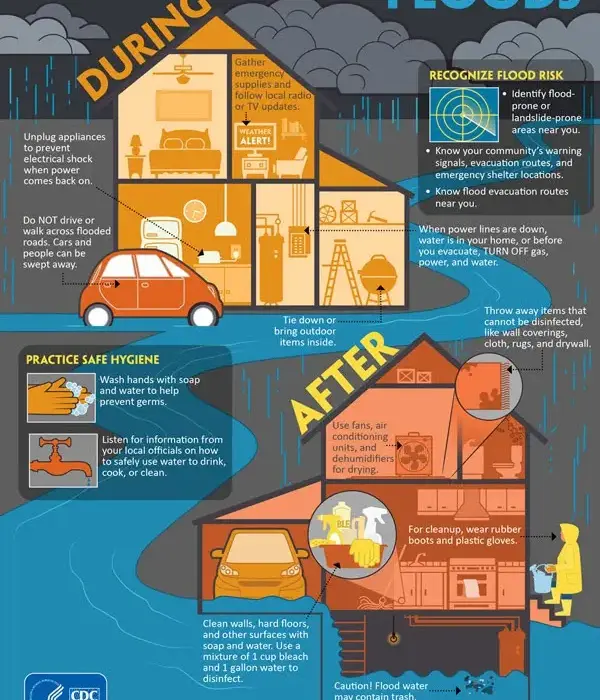
Beyond preparation and planning, officials stress that floodwaters pose an immediate and severe threat to human health and safety. It is critical to always heed official warnings regarding flooded roadways and to completely avoid driving or walking into flooded areas.

The CDC warns that floodwater presents a significant drowning risk for everyone, regardless of their individual swimming ability. Swiftly moving shallow water can carry immense force and prove deadly, while even shallow standing water can present hidden hazards and dangers for small children. Furthermore, floodwaters often contain hazardous particles, chemicals, and biological contaminants that are deeply harmful to human health.
The National Weather Service echoes these warnings, noting that many people severely underestimate the sheer force and power of water. A significant number of flood-related fatalities occur when motorists attempt to drive through water and find their vehicles swept downstream. Many of these tragic drownings are entirely preventable. Authorities emphasize that individuals should never drive around physical barriers or warning signs blocking a flooded road.
As communities evaluate their readiness for severe weather, local leaders and residents are also encouraged to look closely at the broader health and resilience of their neighborhoods. Events like floods, whether large or small, often disproportionately affect vulnerable populations and can deeply disrupt community infrastructure. Understanding the underlying vulnerabilities of a local area allows neighborhoods to better target their preparedness efforts and build long-term resilience against climate and weather-related challenges.